Case Studies
Industry-specific application case studies for natural zeolite.
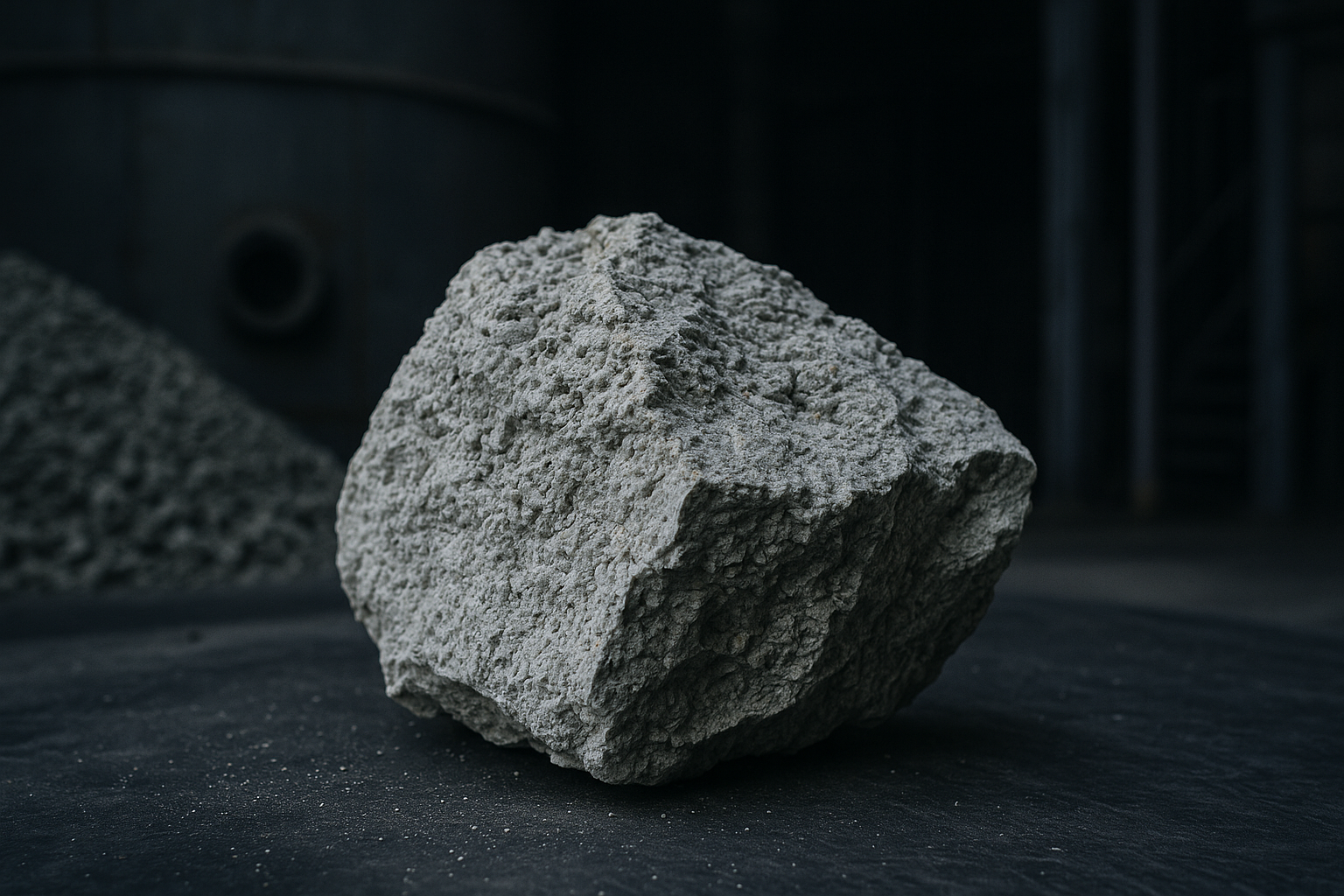
Case Studies
Zeolite is not a single-purpose material. KMI natural clinoptilolite (97.0% purity, CEC 1.6-2.0 meq/g) is being evaluated for use across a wide range of fields, including water treatment, agriculture, livestock, construction, environmental remediation, and indoor environmental management. The actual application method varies depending on the intended use, target substance, particle size, dosage, and process conditions.
This page is a reference resource compiled by KMIZEOLITE that organizes field-by-field case scenarios and evaluation points to help you more easily understand how zeolite is applied in practice. Each case is built on the particle-size and physical-property data of the KMIZEOLITE product range (100 mesh powder to 4x8 mesh extra-coarse).
Why the Case Studies Page Matters
Zeolite is a material that is difficult to select by name alone. Even among products based on the same clinoptilolite, the direction of use can differ depending on the field, the particle size, and the application method.
Accordingly, customers evaluating actual adoption tend to look first for the following information.
- Which industry sectors evaluate it most often
- What problem-solving purposes it is used for
- Which product form (powder / fine / medium / coarse) is suitable
- Which conditions should be considered alongside it in the field
- Which technical documents (TDS, MSDS, certificates) are required before adoption
This page serves to answer these questions by providing application-focused case information centered on intended use.
Field-by-Field Application Case Scenarios
1. Environmental Remediation & Adsorption
Scenario A: Industrial Wastewater Ammonium Reduction Project A situation requiring reduction of the ammonium (NH₄⁺) concentration in high-nitrogen wastewater generated by a food-processing plant. The plant evaluates adding 30x50 mesh fine grade (0.3-0.6mm) as an ion-exchange medium to the existing biological treatment process to manage the ammonium concentration. The ion-exchange capacity of CEC 1.6-2.0 meq/g is leveraged for the selective adsorption of NH₄⁺.
Scenario B: Stabilization of Heavy-Metal-Contaminated Soil A site where the leaching of heavy metals such as Pb²⁺, Cd²⁺, and Zn²⁺ from soil around an abandoned mine is a concern. The project evaluates a stabilization approach that mixes powder of 100 mesh or finer (<150μm) into the contaminated soil to reduce the mobility of the metal ions.
Scenario C: Responding to Livestock Odor Complaints A situation where odor complaints recur in residential areas near a pig farm. A simple adsorption column packed with 14x40 mesh medium grade (0.4-1.4mm) is installed at the outlet of the barn ventilation system to evaluate reduction of ammonia-based odor components.
→ See the Environmental Remediation & Adsorption field in detail
2. Water Treatment & Filtration
Scenario A: Replacing Swimming-Pool Sand Filter Media A swimming-pool facility that needs to improve the filtration efficiency of its existing sand-filtration system. The facility evaluates replacing the conventional sand filter media with 8x14 mesh coarse grade (1.4-2.4mm) to add an ammonium-adsorption function and extend the backwash cycle.
Scenario B: Ammonia Nitrogen Management at a Fish Farm A situation at an inland fish farm requiring management of the ammonia nitrogen (NH₃-N) concentration, the main cause of stress in fish. 30x50 mesh fine grade (0.3-0.6mm) is added to the filtration system as an ion-exchange medium to support water-quality management. The property of functioning stably across a pH range of 3.0-10.0 makes it suitable for the fish-farm environment.
Scenario C: Improving Aquarium Filter Media A case where biological filtration alone makes it difficult to manage ammonia in a large home aquarium. 30x50 mesh fine grade is added to the filter chamber to support water-quality stability through NH₄⁺ ion exchange.
→ See the Water Treatment & Filtration field in detail
3. Agriculture & Horticulture
Scenario A: Improving Fertilizer Efficiency in Open-Field Vegetable Cultivation A vegetable farm that needs to improve fertilizer efficiency in a sandy-soil environment where nitrogen-based fertilizer is frequently lost. The farm evaluates mixing 30x50 mesh fine grade (0.3-0.6mm) into the soil (5-10% of soil weight) to increase the nutrient-retention capacity for nitrogen (N) and potassium (K). With OMRI Listed (KMI-10365) certification, it is also applicable to organic cultivation.
Scenario B: Improving Water Retention in Golf-Course Turf Soil A golf course where it is difficult to maintain soil moisture during the summer turf growing season. The course evaluates mixing 30x50 mesh fine grade into the turf soil to improve water retention and, through CEC-based nutrient retention, reduce the frequency of fertilizer application.
Scenario C: Ammonia Reduction in Composting Processes A case where ammonia odor generated during the composting process is a problem at a large compost-production facility. 100 mesh powder or 30x50 mesh fine grade is evaluated as an auxiliary material mixed into compost feedstock to reduce ammonia generation and control moisture.
→ See the Agriculture & Horticulture field in detail
4. Livestock & Feed
Scenario A: Anti-Caking in Poultry-Farm Feed A poultry farm experiencing recurring caking (clumping) due to moisture absorption in pellet feed. The farm evaluates adding powder of 100 mesh or finer (<150μm, median 50μm) at no more than 2% of the feed blend to obtain an anti-caking effect. This is use within the permitted range under FDA GRAS regulations (21 CFR Parts 182.2729 & 582.2729).
Scenario B: Managing Ammonia in Pig-Barn Bedding A situation where high ammonia concentration in an enclosed pig barn raises concerns about worker health and livestock stress. The farm evaluates mixing 14x40 mesh medium grade (0.4-1.4mm) into the existing bedding to reduce ammonia generation at the floor surface.
Scenario C: Stabilizing a Manure Biogas Process A problem where high-concentration ammonium (NH₄⁺) inhibits microbial activity in an anaerobic digestion process based on livestock manure. 30x50 mesh fine grade is added to the digester to reduce the ammonium concentration via ion exchange and to maintain the activity of methane-producing microorganisms.
→ See the Livestock & Feed field in detail
5. Construction & Industrial Materials
Scenario A: Partial Cement Replacement in Concrete A public construction project that requires reduced carbon emissions and evaluates replacing part of the cement with a natural pozzolan. The reactive-silica content of 66.7% SiO₂ in powder of 100 mesh or finer (<150μm) is leveraged in a pozzolanic reaction (per ASTM C618) to reduce cement usage while promoting long-term strength development.
Scenario B: Moisture Supply for Warm-Mix Asphalt A road-construction project that needs a moisture source to lower the asphalt-mixing temperature. 100 mesh powder (moisture content up to 10%) is added to the asphalt blend to evaluate a foaming effect through the release of internal moisture.
Scenario C: Switching to Eco-Friendly De-Icing Material A local government that needs an eco-friendly alternative due to concerns about soil and stream contamination from conventional calcium-chloride-based de-icers. 8x14 mesh coarse grade (1.4-2.4mm) zeolite is evaluated as an auxiliary de-icing material for anti-slip and moisture-adsorption purposes.
→ See the Construction & Industrial Materials field in detail
6. Home & Pets
Scenario A: Odor Management at a Pet Cafe A situation where ammonia-based odors around the floor and sofas persist at a dog cafe. 14x40 mesh medium grade or 8x14 mesh coarse grade is placed in breathable pouches positioned throughout the indoor space and replaced periodically to evaluate a deodorizing support effect. As a material that PASSES the EN-71-3 European toy safety standard, it is safe for use in living spaces.
Scenario B: Ammonia Reduction in Cat Litter A pet-products brand evaluating an ammonia-odor reduction effect by mixing 10-20% zeolite into conventional bentonite-based cat litter. The NH₄⁺ ion-exchange selectivity is the core principle of ammonia adsorption, and commercialization is evaluated as an OEM small-package product.
Scenario C: Improving Water Retention in Gardening Potting Soil A problem of rapid summer moisture evaporation in balcony flowerpots in an apartment. 30x50 mesh fine grade (0.3-0.6mm) is mixed into potting soil at 10-15% to improve water retention, and CEC-based N/K nutrient retention also supports fertilizer efficiency. Being OMRI Listed, it is also suitable for organic gardening.
→ See the Home & Pets field in detail
Items to Check Alongside the Case Studies
Case studies are useful as reference material, but they do not guarantee identical results. In particular, because zeolite is a material whose results vary greatly with the application environment, it is advisable to review the following items together.
- Intended use: filtration / adsorption / deodorization / blending / soil improvement, etc.
- Target substance: ammonia (NH₄⁺), moisture, odor components, metal ions (Pb²⁺, Cu²⁺, etc.)
- Product form: 100 mesh powder / 30x50 fine / 14x40 medium / 8x14 coarse / 4x8 extra-coarse
- Dosage and contact time
- Replacement cycle or regeneration potential
- Whether related regulations and submission documents are required: OMRI, FDA GRAS, MSDS, TDS, etc.
Technical documents can be found at TDS, MSDS, and the Mesh Size Chart.
How KMIZEOLITE Organizes Case Studies
KMIZEOLITE does not simply list case studies in a "good for this" manner. The key is to clearly show which problem can be solved, under which conditions, and which product form can be evaluated.
Accordingly, application case studies are organized by the following criteria.
- Centered on the problem-solving purpose
- Classified by industry sector
- Linked to particle size and product form (based on the KMI 5 mesh specifications)
- Connected with technical documents
- Providing checkpoints before inquiry
Recommended CTAs
- Inquire About Case Studies — get a consultation on the application approach that fits your site
- Get a Product Consultation for Your Site — we review the suitable particle size and dosage together
- Inquire About a Sample Test — start a preliminary test with a 2.2kg sample
Notice
The case scenarios on this page are reference information intended to aid understanding of zeolite application. Because actual applicability may vary depending on the target substance, process conditions, product specifications, dosage, replacement cycle, related regulations, and other factors, please review the technical documents together with your site conditions before adoption.