Environmental Remediation & Adsorption
KMIZEOLITE is a natural clinoptilolite used for the adsorption of ammonia, odors, heavy metals, and a wide range of pollutants.
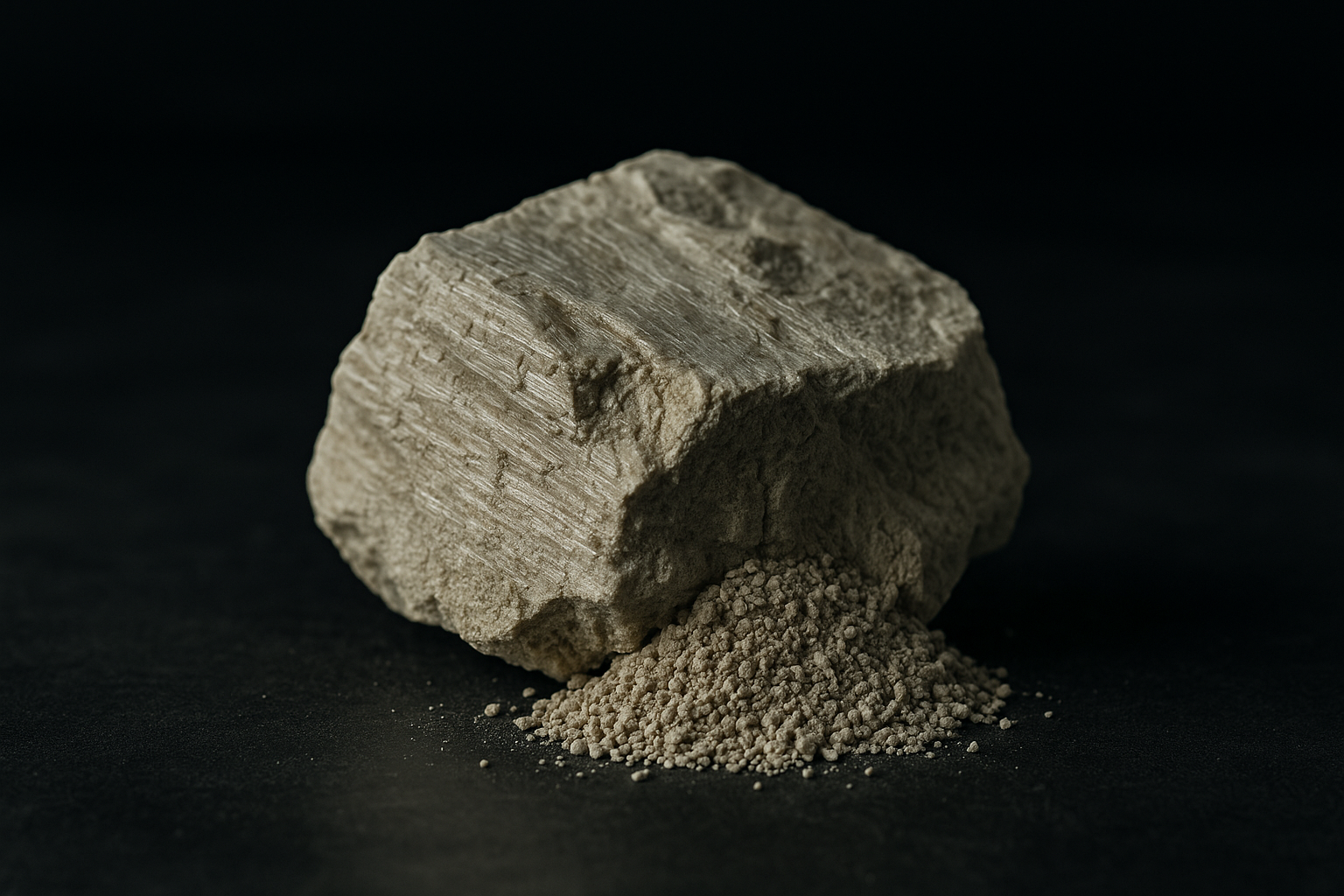
Environmental Remediation & Adsorption
There is one clear reason zeolite draws attention in environmental applications: its adsorption and ion-exchange properties are well matched to substances that need to be removed or have their mobility reduced, such as ammonia, heavy metals, odor-causing compounds, oil, and harmful ions.
This section outlines the key sub-applications where zeolite is considered in environmental remediation and adsorption.
Sub-Application Areas
Ammonia Removal
Introduces the principles and application criteria for use as a supporting material for ammonium ion management in water treatment, wastewater, livestock, and aquaculture environments. → Ammonia Removal
Heavy Metal Removal
Describes its role as a supporting material for adsorption and ion exchange in industrial wastewater, contaminated water, and soil leachate containing metal ions such as lead, copper, and cadmium. → Heavy Metal Removal
Odor & VOC Control
Explains the role of zeolite as a supporting material for managing odors and volatile compounds in indoor spaces, barns, workplaces, and storage areas. → Odor & VOC Control
Chemical & Oil Spill Cleanup
Describes its use as a supporting material for containing spread and aiding adsorption during oil and liquid chemical spills at workplaces, warehouses, and outdoor sites. → Chemical & Oil Spill Cleanup
Wastewater & Biogas Processes
Explains how it is considered as a supporting material for ammonium reduction and process stabilization in high-nitrogen wastewater, anaerobic digestion, and biogas plants. → Wastewater & Biogas Processes
Waste Stabilization & Encapsulation
Describes its role as a stabilization aid for reducing the mobility and leaching of metal-bearing sludge, contaminated soil, and industrial by-products. → Waste Stabilization & Encapsulation
Common Considerations When Applying to Environmental Remediation
Zeolite is a useful supporting material in environmental remediation, but actual performance varies depending on the following conditions.
- Type and concentration of the target substance
- pH and temperature
- Contact time and flow rate
- Presence of competing ions
- Whether it is standalone treatment or part of a combined process
It is advisable to first review the particle size and material property data suited to your application purpose and, where possible, to conduct a small-scale trial application before proceeding to full deployment.
Environmental Remediation & Adsorption
The reason zeolite draws attention in environmental applications is clear: its adsorption and ion-exchange properties are well matched to substances that need to be removed or have their mobility reduced, such as ammonia, heavy metals, odor-causing compounds, oil, and harmful ions.
KMI natural clinoptilolite has a cation exchange capacity (CEC) of 1.6–2.0 meq/g and offers outstanding ion-exchange selectivity, particularly for ammonium (NH₄⁺). It can also adsorb heavy metal cations such as Pb²⁺, Cu²⁺, Cd²⁺, Zn²⁺, and Ni²⁺, and is used to assist VOC adsorption, moisture management, oil adsorption and spread containment, and ammonium reduction in biogas processes. It functions stably across a pH range of 3.0–10.0, and its microporous structure with a specific surface area of 40.0 m²/g is the key to its adsorption performance.
In environmental remediation, the most commonly considered grades are 30×50 mesh (0.3–0.6 mm) fine particles for filtration and water-treatment adsorption, 14×40 mesh (0.4–1.4 mm) medium particles for filter beds, and 100 mesh and finer (<150 μm) powder for mixing and blending processes.
Sub-Application Areas
Ammonia Removal
Introduces the principles and application criteria for use as a supporting material for ammonium ion (NH₄⁺) management in water treatment, wastewater, livestock, and aquaculture environments. The selective NH₄⁺ ion exchange of clinoptilolite is the core mechanism. → Ammonia Removal
Heavy Metal Removal
Describes its role as a supporting material for adsorption and ion exchange in industrial wastewater, contaminated water, and soil leachate containing metal ions such as lead (Pb²⁺), copper (Cu²⁺), cadmium (Cd²⁺), zinc (Zn²⁺), and nickel (Ni²⁺). → Heavy Metal Removal
Odor & VOC Control
Explains the role of zeolite as a supporting material for managing odors and volatile organic compounds (VOCs) in indoor spaces, barns, workplaces, and storage areas. → Odor & VOC Control
Chemical & Oil Spill Cleanup
Describes its use as a supporting material for containing spread and aiding adsorption during oil and liquid chemical spills at workplaces, warehouses, and outdoor sites. Its lightweight nature, with a bulk density of 720–865 kg/m³, is advantageous for on-site handling. → Chemical & Oil Spill Cleanup
Wastewater & Biogas Processes
Explains how it is considered as a supporting material for ammonium reduction and process stabilization in high-nitrogen wastewater, anaerobic digestion, and biogas plants. → Wastewater & Biogas Processes
Waste Stabilization & Encapsulation
Describes its role as a stabilization aid for reducing the mobility and leaching of metal-bearing sludge, contaminated soil, and industrial by-products. → Waste Stabilization & Encapsulation
Common Considerations When Applying to Environmental Remediation
Zeolite is a useful supporting material in environmental remediation, but actual performance varies depending on the following conditions.
- Type and concentration of the target substance
- pH and temperature (stable range: pH 3.0–10.0)
- Contact time and flow rate
- Presence of competing ions
- Whether it is standalone treatment or part of a combined process
- Selected particle size and packing method
It is advisable to first review the particle size and material property data suited to your application purpose and, where possible, to conduct a small-scale trial application before proceeding to full deployment. Technical data is available in the TDS and MSDS, and specifications by particle size can be found in the Mesh Size Chart. If you need a sample for field testing, please use the Sample Request.
Pages
Ammonia Removal
Used to reduce ammonia in barns, aquaculture farms, and wastewater treatment environments.
High-Concentration Ammonia Stripping & Recovery
Demand for recovering and regenerating high-concentration ammoniacal nitrogen from landfill leachate, livestock digestate, and reject water via adsorption and ion exchange (converting it into a fertilizer source after backwashing). Distinct from ammonium-removal (low-concentration…
Algae & Cyanotoxin Control
B2B demand from water utilities and water-resource operators seeking to reduce cyanobacteria and algal toxins such as microcystin during major algal blooms in source water and reservoirs, using adsorption and coagulation aids.
Biogas CO2 & H2S Upgrading
PSA adsorption-column demand for removing CO2 and H2S via molecular sieves/adsorption to upgrade anaerobic-digestion biogas into biomethane.
Flue Gas Mercury Capture
B2B demand from environmental-equipment operators seeking to capture gaseous mercury (Hg0/Hg2+) in flue gas from coal-fired power plants, incinerators, and cement kilns using adsorbents. Heavy-metal vapor capture, distinct from general VOC/odor adsorption.
Phosphorus (P) Recovery & Eutrophication Reduction
Introduces the use of modified zeolite for phosphorus adsorption and recovery and for reducing eutrophication.
Heavy Metal Removal
Adsorbs heavy metal ions such as lead, cadmium, copper, and zinc.
Odor & VOC Reduction
Adsorbs odor-causing substances and volatile organic compounds.
Chemical & Oil Spill Cleanup
Used as an adsorbent at chemical and oil spill sites.
Wastewater & Biogas
Used as a supporting material in anaerobic digestion and biogas production.
Waste Stabilization & Encapsulation
Applied to the stabilization of hazardous wastes, including radioactive waste.
Additional Application Areas
Zeolite for VOC Adsorption
A summary of the application direction, key considerations, recommended particle size, and FAQ for zeolite used in VOC adsorption. An information page that connects you to technical data, samples, and bulk inquiries related to VOC removal.
Zeolite for Industrial Odor Removal
A summary of the application direction, key considerations, recommended particle size, and FAQ for zeolite used in industrial odor removal. An information page that connects you to technical data, samples, and bulk inquiries related to industrial odor.
Zeolite for Sludge Odor Reduction
A summary of the application direction, key considerations, recommended particle size, and FAQ for zeolite used in sludge odor reduction. An information page that connects you to technical data, samples, and bulk inquiries related to sludge odor.
Zeolite for Ammonium Removal
A summary of the application direction, key considerations, recommended particle size, and FAQ for zeolite used in ammonium removal. An information page that connects you to technical data, samples, and bulk inquiries related to ammonium removal.
Zeolite for Ammonia Removal
A summary of the application direction, key considerations, recommended particle size, and FAQ for zeolite used in ammonia removal. An information page that connects you to technical data, samples, and bulk inquiries related to ammonia removal.
Zeolite for Water Treatment Plant Filtration
A summary of the application direction, key considerations, recommended particle size, and FAQ for zeolite used as a water treatment plant filter media. An information page that connects you to technical data, samples, and bulk inquiries related to water treatment plant filtration.
Zeolite for Groundwater Remediation
A summary of the application direction, key considerations, recommended particle size, and FAQ for zeolite used in groundwater remediation. An information page that connects you to technical data, samples, and bulk inquiries related to groundwater remediation.
Zeolite for Nitrate Management
A summary of the application direction, key considerations, recommended particle size, and FAQ for zeolite used in nitrate management. An information page that connects you to technical data, samples, and bulk inquiries related to nitrate.
Zeolite for Wastewater Heavy Metal Removal
A summary of the application direction, key considerations, recommended particle size, and FAQ for zeolite used in wastewater heavy metal removal. An information page that connects you to technical data, samples, and bulk inquiries related to heavy metal removal.
Zeolite for Sewage Treatment Deodorization
A summary of the application direction, key considerations, recommended particle size, and FAQ for zeolite used in sewage treatment deodorization. An information page that connects you to technical data, samples, and bulk inquiries related to sewage treatment odor.
References
- US EPA — Drinking Water Treatment Technologies
- US EPA — Heavy Metals in Wastewater
- WHO — Guidelines for Drinking-water Quality
This page was prepared with reference to the official materials of the external organizations listed above. Each link opens in a new window.