Wastewater & Biogas
A natural clinoptilolite that uses CEC 1.6–2.0 meq/g ion exchange to selectively capture NH₄⁺ in digestate, mitigating ammonia inhibition in the TAN 3,000 mg/L · FAN 150 mg/L range, with reject-water packed beds regenerated using NaCl.
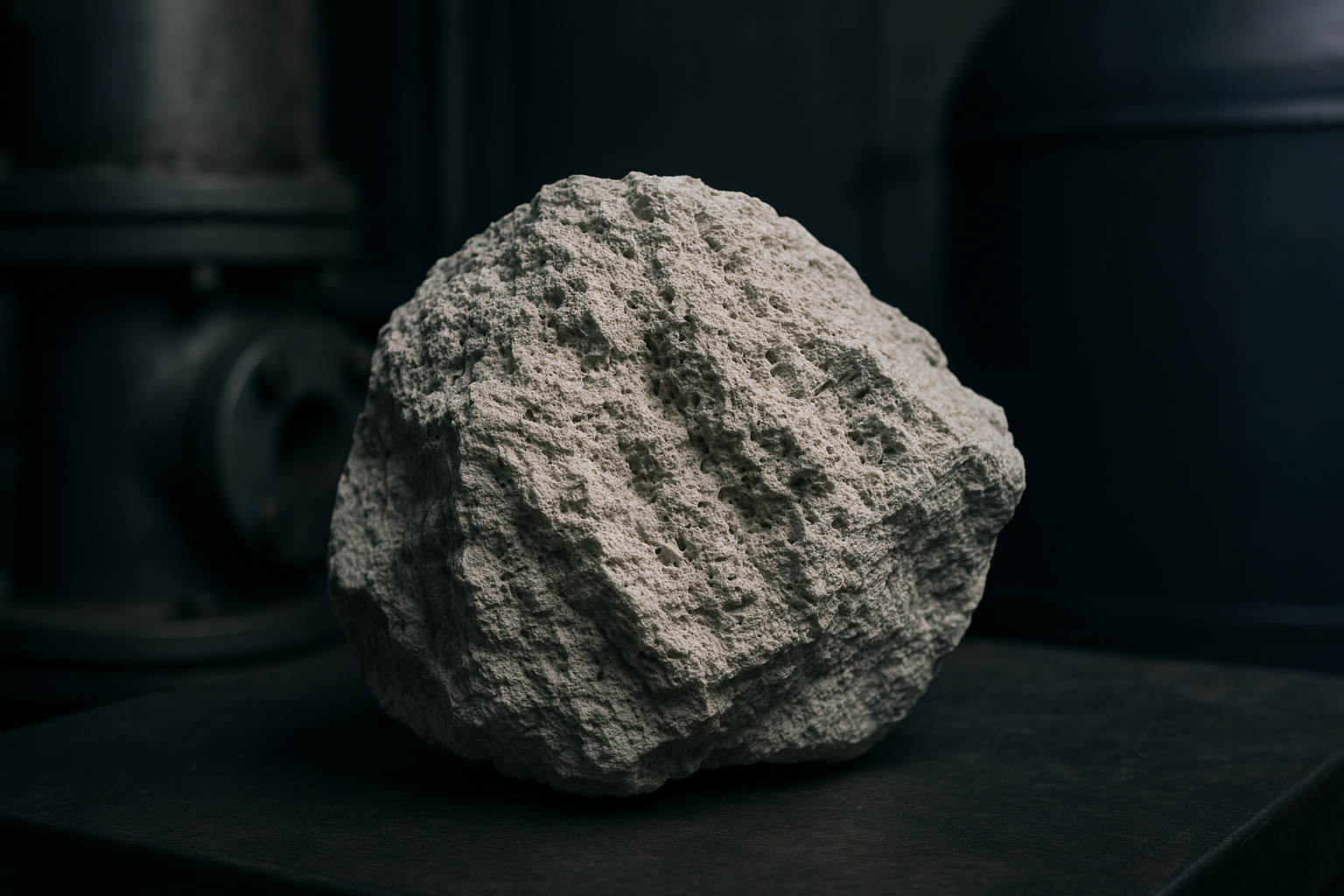
Natural Zeolite for Wastewater Treatment and Biogas Processes — A Supporting Material for Ammonium Reduction and Process Stabilization
Wastewater treatment and anaerobic digestion (biogas production) processes are complex fields where organic matter decomposition, nitrogen management, maintaining the microbial environment, and process stability are all essential. In particular, when treating substrates with high nitrogen concentrations such as livestock manure, food waste, and organic industrial wastewater, the accumulation of ammoniacal nitrogen (NH₃/NH₄⁺) has a serious impact on the entire process.
In an anaerobic digester, when the total ammonia nitrogen (TAN) concentration exceeds a certain level (generally above 1,500–3,000 mg/L), the activity of methane-producing archaea (methanogens) is inhibited, gas production decreases, and organic acids accumulate, which can destabilize the entire process.
Natural clinoptilolite zeolite is a practical material being evaluated in such environments for selective adsorption of ammonium ions, support as a microbial attachment carrier, and as a process stabilization medium. With properties of CEC 1.6–2.0 meq/g, 97.0% purity, and a pH stability range of 3.0–10.0, KMIZEOLITE can be used reliably even under the harsh conditions of wastewater and biogas applications.
Why Nitrogen Management Matters in Wastewater & Biogas Processes
Ammonia Inhibition in the Anaerobic Digestion Process
When organic matter is anaerobically decomposed, ammonia is released from proteins and urea. When this ammonia accumulates within the digester, the following problems arise.
- Inhibition of methanogen activity: severe inhibition above TAN 3,000 mg/L, and toxic effects above free ammonia (FAN) 150 mg/L
- Volatile fatty acid (VFA) accumulation: acetic acid, propionic acid, etc. accumulate without being decomposed, causing a pH drop
- Reduced biogas production: lower methane content and reduced overall gas production
- Risk of process failure (souring): in extreme cases, this can lead to a complete shutdown of the digester
Meeting Wastewater Effluent Standards
Effluent nitrogen standards (total nitrogen, T-N) for industrial and livestock wastewater are continuously being tightened, so supplementary physicochemical treatment methods are needed at sites where nitrogen management is difficult with biological treatment alone.
The Role of Zeolite: Analysis by Mechanism
1. Selective Adsorption of Ammonium Ions (Ion Exchange)
With a cation exchange capacity of CEC 1.6–2.0 meq/g, it selectively captures NH₄⁺ in the digestate. The roughly 4.0–7.0 Å channel structure of clinoptilolite has high selectivity for monovalent cations with small hydration radii (NH₄⁺ ≈ 3.3 Å, K⁺), so it preferentially exchanges ammonium even in digestate where calcium and magnesium coexist. The commonly reported selectivity order is the K⁺ > NH₄⁺ > Na⁺ > Ca²⁺ > Mg²⁺ series, so when a large amount of K⁺ coexists in the digestate, the NH₄⁺ exchange capacity is competitively eroded and the effective capacity must be evaluated separately.
Since the exchange is reversible, it is an equilibrium reaction in which Na⁺/Ca²⁺ released from the framework swap places with NH₄⁺, and the equilibrium adsorption amount is well described by Langmuir and Freundlich isotherms. Sprynskyy et al. (2005, Journal of Colloid and Interface Science) reported that ammonium adsorption on natural clinoptilolite shows clear isotherm behavior depending on the aqueous concentration and that ion exchange is the main mechanism (DOI: 10.1016/j.jcis.2004.10.058), and Mažeikienė et al. (2008, Journal of Environmental Engineering and Landscape Management) quantitatively presented the removal behavior of ammonium and nitrate nitrogen from groundwater under static and dynamic conditions using 0.315 mm natural clinoptilolite (DOI: 10.3846/1648-6897.2008.16.38-44).
Ion exchange acts only on the NH₄⁺ ion, not on free ammonia (FAN). At digester conditions of pH 7.0–8.0 and 35–55 °C, a significant portion of the TAN exists in the NH₄⁺ form, so ion-exchange capture is effective; and as NH₄⁺ is reduced by capture, the NH₃↔NH₄⁺ equilibrium shifts, lowering the concentration of the toxic FAN (inhibition above 150 mg/L) as well.
2. Support as a Microbial Attachment Carrier
The rough surface and porous structure of zeolite (specific surface area 40.0 m²/g) provide a favorable environment for microorganisms to attach and settle. Its role as a carrier that aids biofilm formation by methanogens and fermentative bacteria within the digester has been reported. Garuti et al. (2020, Materials) reported that adding clinoptilolite to anaerobic digestion affects the microbial community and gas production behavior (DOI: 10.3390/ma13184127), and Al-Mamoori et al. (2024, Cogent Engineering) summarized that natural zeolite can also be used to remove CO₂ and H₂S in the biogas/biomethane purification stage (DOI: 10.1080/23311916.2024.2398912).
3. pH Buffering Support
The ion-exchange reaction of zeolite can partially provide a pH buffering effect, which can help mitigate the sharp pH drop caused by VFA accumulation.
4. Ammonium Reduction and Regeneration in Downstream (Reject-Water) Treatment
The digestate (reject water) generated after anaerobic digestion contains high concentrations of ammonium, so returning it to the main treatment process sharply increases the nitrogen load. Applying a zeolite packed bed (column) to this reject water to reduce ammonium before returning it is being considered. Cyrus et al. (2021, Molecules) reported that natural clinoptilolite effectively removes ammonium from sewage sludge reject water (sludge water) and can be regenerated and reused with NaCl solution (DOI: 10.3390/molecules26010114).
The key variables in packed-bed design are empty bed contact time (EBCT), the flow-through linear velocity, and the particle size. Fine granules (30×50 mesh, 0.3–0.6 mm) have a large specific surface area and mass-transfer rate, so breakthrough occurs later at the same EBCT but with a high pressure loss, while coarse granules have a low pressure loss but require a longer EBCT. Typically, packed-bed operation secures an EBCT on the order of a few to a dozen-odd minutes, and switches to regeneration or replacement at the breakthrough point when the effluent ammonium exceeds the target. Regeneration is a method of passing a 5–10% NaCl solution in the reverse direction to substitute and desorb the captured NH₄⁺ with Na⁺, and the concentrated ammonium in the eluate is handled by separate recovery (stripping, struvite, etc.). Since the capacity decreases somewhat with repeated regeneration, the replacement cycle is managed on the order of tens of cycles.
KMIZEOLITE Chemical Composition Table
| Component | Chemical Formula | Content |
|---|---|---|
| Silicon Dioxide | SiO₂ | 66.7% |
| Aluminum Oxide | Al₂O₃ | 11.48% |
| Potassium Oxide | K₂O | 3.42% |
| Sodium Oxide | Na₂O | 1.8% |
| Calcium Oxide | CaO | 1.33% |
| Iron Oxide | Fe₂O₃ | 0.9% |
| Magnesium Oxide | MgO | 0.27% |
Wastewater & Biogas Process: Zeolite vs. Other Materials
| Comparison Item | Natural Zeolite | Activated Carbon | PAC (Powdered Activated Carbon Dosing) | Struvite Precipitation |
|---|---|---|---|---|
| NH₄⁺ Removal Mechanism | Ion exchange (selective) | Physical adsorption (non-selective) | Physical adsorption | MAP crystal precipitation |
| Microbial Carrier Function | Good (rough surface, porous) | Good | None (dose → discard) | None |
| pH Buffering | Partial contribution | None | None | Requires Mg/P dosing |
| Regeneration Potential | NaCl regeneration possible | Replacement | Replacement | Recoverable as fertilizer |
| Cost | Low (natural mineral) | Medium | Consumable cost | Chemical + equipment cost |
| Handling High NH₄⁺ Concentrations | Good (CEC-based) | Limited | Limited | Excellent (dedicated process) |
Key takeaway: Zeolite is a rare material that can simultaneously provide ammonium reduction and a microbial carrier function in the anaerobic digestion process. Struvite precipitation is effective for the simultaneous recovery of high-concentration ammonium and phosphorus but requires separate equipment investment. Zeolite has the practical advantage that it can be conveniently applied in a dosing form to existing digesters.
Key Application Sites
Livestock Manure Treatment — High Nitrogen Load Environment
Livestock manure has high concentrations of both organic matter and nitrogen, so ammonia inhibition frequently occurs during anaerobic digestion. Dosing zeolite into the digester can help maintain the ammonium concentration within a manageable range, contributing to greater process stability.
Food Waste Digestion
When the high protein content of food waste leads to large nitrogen generation, zeolite dosing is considered as a measure to mitigate ammonia inhibition.
High-Strength Industrial Wastewater Treatment
It is being considered as a supplementary material for managing the nitrogen load of high-nitrogen industrial wastewater generated in food processing, chemical processes, and the like. A design that adds a zeolite packed bed as pretreatment or post-treatment for biological treatment processes (A2O, SBR, MBR, etc.) is possible.
Reject-Water Nitrogen Reduction
If the ammonium concentration of digestate reject water is reduced with a zeolite column before returning it to the main treatment process, the nitrogen load on the main treatment process can be reduced considerably. Recommended product: KMI 30×50 mesh (0.3–0.6 mm) — for packed-bed filtration applications.
Considerations for Application
| Item | Notes |
|---|---|
| Ammonium concentration | Dosage must be designed according to the initial TAN concentration |
| pH | Zeolite can be used reliably in the digester pH range of 6.5–8.5 |
| Particle size | Digester-dosing type: coarse granules (4×8, 8×14); packed bed: fine granules (30×50) |
| Dosage | Excessive dosing increases sludge volume and mixing load → designing an appropriate amount is essential |
| Retention time | Secure contact time in conjunction with the HRT of the digestion process |
| Recovery/replacement | The dosing type is discharged together with sludge; the packed bed is periodically regenerated/replaced |
Information Helpful to Prepare When Inquiring
- Target process: wastewater treatment / anaerobic digestion / biogas plant
- Main problem: ammonia inhibition / reduced gas production / effluent T-N exceedance / odor
- Daily throughput and digester scale
- Influent/digestate water quality characteristics (TAN, pH, TS, etc.)
- Current process configuration
- Desired dosing method and packaging unit
Notes
Zeolite is a useful supporting material in wastewater treatment and biogas processes. Functions such as ammonium management, microbial carrier, and process stabilization have been reported, but the actual effect may vary depending on water quality characteristics, ammonium concentration, pH, temperature, retention time, dosage, and process design. For industrial field application, it is advisable to confirm the optimal conditions through small-scale pilot tests or engineering review. Product technical documents are provided on the Technical Data page.
Frequently Asked Questions (FAQ)
How does natural zeolite mitigate ammonia inhibition in anaerobic digesters?
Clinoptilolite selectively captures NH₄⁺ in the digestate through its cation exchange capacity of CEC 1.6–2.0 meq/g. In the range where total ammonia nitrogen (TAN) exceeds 3,000 mg/L and methanogenic archaea are inhibited, it lowers the free ammonia (FAN) concentration to mitigate the inhibition. Garuti et al. (2020, Materials) reported that clinoptilolite addition affects the gas production behavior of anaerobic digestion.
Does adding zeolite increase biogas (methane) production?
Zeolite can contribute to process stabilization by mitigating ammonia inhibition and providing a microbial carrier, but the effect on gas increase or decrease depends on the nitrogen concentration of the substrate, the dosage, and the operating conditions. As shown by the clinoptilolite experiments of Garuti et al. (2020) and the biogas purification study of Al-Mamoori et al. (2024, Cogent Engineering), results vary widely by condition, so it is advisable to verify through pilot testing before field application.
What particle size and method should be used for ammonium reduction in digestate reject water?
A packed-bed (column) flow-through method is suitable for ammonium reduction in reject water, and KMI 30×50 mesh (0.3–0.6 mm) fine granules are recommended for filtration applications. Cyrus et al. (2021, Molecules) reported that natural clinoptilolite is effective for ammonium removal from sludge reject water. The saturated media can be regenerated with NaCl solution.
Should I choose the digester-dosing type or the packed-bed method?
The method of dosing directly into the digester uses coarse granules (4×8, 8×14 mesh) and is discharged together with the sludge. For post-treatment of reject water and effluent, a fine-granule (30×50 mesh) packed bed is installed and periodically regenerated or replaced. Because excessive dosing increases the volume of sludge and the mixing load, the dosage must be designed considering the initial TAN concentration and HRT.
Does ammonium removal efficiency decrease when there is a lot of potassium (K⁺) in the digestate?
Yes. The cation selectivity order of clinoptilolite is generally K⁺ > NH₄⁺ > Na⁺ > Ca²⁺ > Mg²⁺, so when a large amount of K⁺ coexists, it competitively occupies NH₄⁺ exchange sites and the effective adsorption capacity decreases. For substrates with high K⁺ concentrations, such as food-waste and livestock digestate, do not assume that the entire CEC (1.6–2.0 meq/g) can be used for NH₄⁺ removal; it is advisable to determine the effective capacity and EBCT through isotherm and breakthrough tests using the actual digestate.
science Related Papers
Academic papers covering zeolite applications in this field. Refer to them when evaluating adoption.
- Effect of Clinoptilolite and Halloysite on Biogas Production during Anaerobic Digestion
Garuti, M. et al. — Materials, 2020 - Natural zeolites for optimized biogas, syngas, and hydrogen production and purification
Al-Mamoori, A. et al. — Cogent Engineering, 2024 - Application of Natural Clinoptilolite for Ammonium Removal from Sludge Water
Cyrus et al. — Molecules, 2021 - Ammonium sorption from aqueous solutions by natural zeolite Transcarpathian clinoptilolite
Sprynskyy, M. et al. — Journal of Colloid and Interface Science, 2005 - Natural zeolites as effective adsorbents in water and wastewater treatment
Wang, S. and Peng, Y. — Chemical Engineering Journal, 2010 - Removal of nitrates and ammonium ions from water using natural sorbent zeolite (clinoptilolite)
Mažeikienė, A. et al. — Journal of Environmental Engineering and Landscape Management, 2008
The papers above are reference materials, and separate review suited to site-specific conditions is required for actual application.