Ammonium Removal Zeolite
An overview of how ammonium removal zeolite is applied, the review points, recommended particle sizes, and an FAQ. This information page connects you to technical data, samples, and bulk inquiries related to ammonium removal.
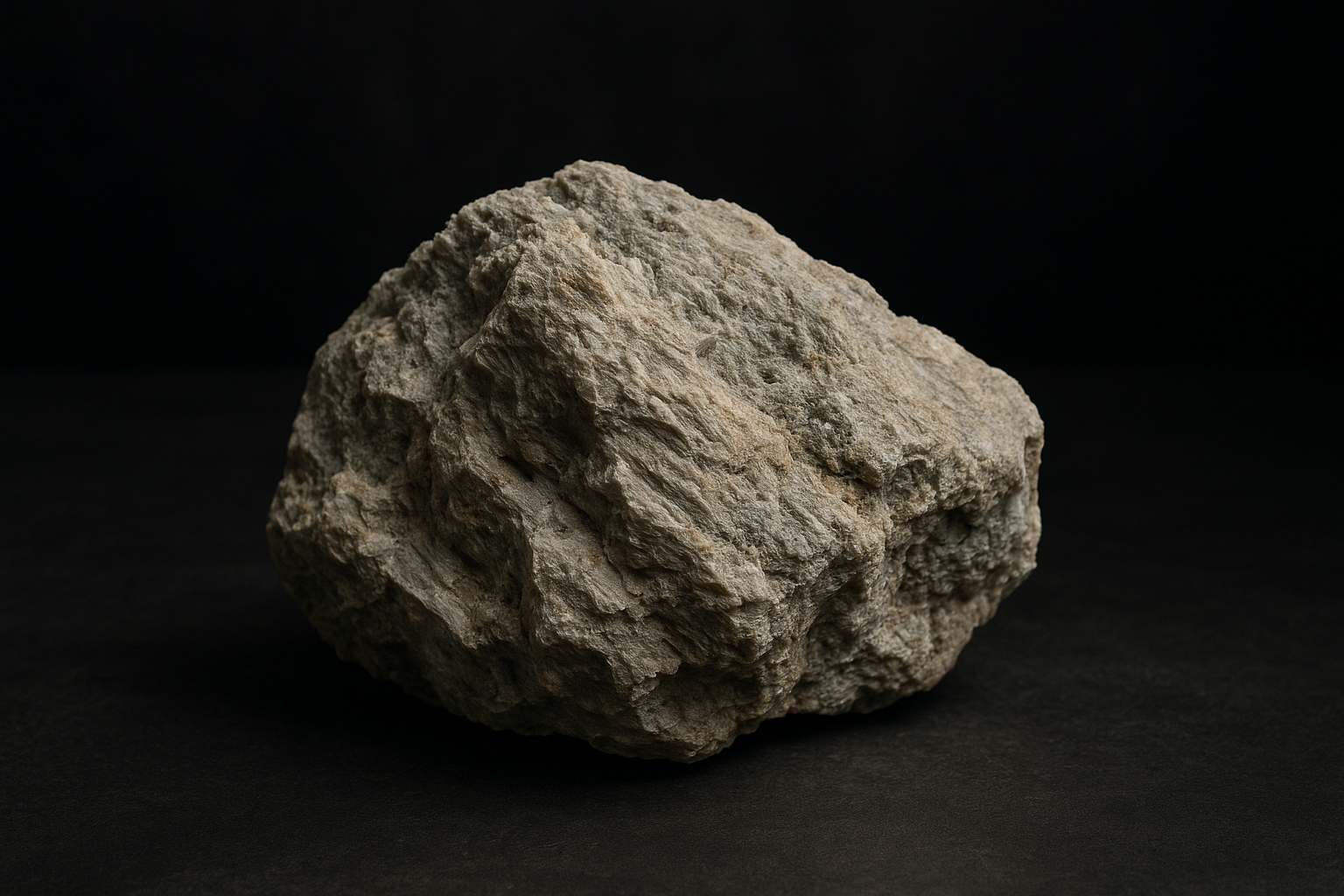
Why Ammonium Nitrogen (NH₄⁺) Is Difficult to Treat
Sewage treatment plant effluent, manure and livestock wastewater, landfill leachate, and aquaculture recirculation water contain high concentrations of ammonium nitrogen (NH₄⁺-N). Ammonium causes eutrophication and dissolved-oxygen depletion in water bodies, and as pH rises the chemical equilibrium (NH₄⁺ ⇌ NH₃ + H⁺, pKa ≈ 9.25) shifts, sharply increasing the fraction of strongly fish-toxic non-ionic ammonia (NH₃). For example, at pH 7 less than about 0.5% of total ammoniacal nitrogen is NH₃, but around pH 9 this rises to 30–40%, causing acute toxicity in aquaculture and natural waters. This is why it is an item that must be reduced before discharge.
The problem is that biological nitrification/denitrification processes are sensitive to environmental fluctuations. Nitrifying bacteria (Nitrosomonas, Nitrobacter) lose activity rapidly below a water temperature of 15°C, their efficiency wavers under shock loads, low-concentration ranges, and low alkalinity (about 7.1 g CaCO₃ consumed per 1 g of nitrification), and once they collapse, community recovery takes days to weeks. For this reason, physicochemical auxiliary stages based on ion exchange and adsorption are reviewed alongside the process at NH₄⁺ removal sites. Treatment efficiency depends heavily on the ammonium concentration of the raw water, pH, the ratio of competing cations (Ca²⁺, Mg²⁺, K⁺, Na⁺), the empty bed contact time (EBCT), and the space velocity (BV/h), so quantitative evaluation tailored to the on-site water quality is important from the media-selection stage onward.
Why Clinoptilolite Is Considered for Ammonium Ion Exchange
Natural clinoptilolite retains exchangeable cations (Na⁺, K⁺, Ca²⁺, Mg²⁺, etc.) to offset the negative charge created when Al³⁺ substitutes for Si⁴⁺ sites in the framework. When NH₄⁺ enters the water, ammonium is captured in the framework by a cation-exchange (ion-exchange) mechanism that swaps places with these exchangeable cations. The reaction is expressed as the equilibrium Z–Na + NH₄⁺ ⇌ Z–NH₄ + Na⁺, and the fact that it is reversible is the key that makes regeneration possible.
Among the various natural minerals, clinoptilolite has a particularly high ion selectivity for NH₄⁺. The commonly reported cation affinity sequence of clinoptilolite tends to follow K⁺ > NH₄⁺ > Na⁺ > Ca²⁺ > Mg²⁺, so NH₄⁺ is exchanged preferentially over Na⁺, Ca²⁺, and Mg²⁺. However, since potassium (K⁺) is preferred even over NH₄⁺, note that adsorption sites can be taken when the raw water contains a lot of K⁺.
In terms of physical properties, a pore diameter of 4.0–7.0 Å is suitable for hydrated ammonium ions to access the framework channels, and the cation-exchange capacity (CEC) of 1.6–2.0 meq/g determines the theoretical maximum amount of NH₄⁺ that can be captured per unit mass (1.6 meq/g ≈ 22 mg/g NH₄⁺-N, equivalent to 28 mg/g NH₄⁺). In actual operation, however, the effective adsorption capacity is generally lower than this theoretical value due to competing ions, contact time, and breakthrough criteria. KMIZEOLITE clinoptilolite has 97% purity (Amargosa Valley mine, Nevada, USA), a specific surface area of 40.0 m²/g, and a pH stability range of 3.0–10.0, keeping its framework stable even under weakly acidic to weakly alkaline wastewater and leachate conditions.
Quantitative Data Supporting the Adsorption Behavior
Actual adsorption studies consistently demonstrate the mechanism and quantitative behavior above.
- Isotherm & kinetics: Sprynskyy et al. (2005, Journal of Colloid and Interface Science) reported that NH₄⁺ adsorption of Transcarpathian natural clinoptilolite in aqueous solution follows a Langmuir-type isotherm, that adsorption/desorption is controlled by particle-diffusion, and that NH₄⁺ is exchanged competitively with co-existing ions (DOI: 10.1016/j.jcis.2004.10.058).
- Fixed-bed adsorption capacity & regeneration: Mažeikiene et al. (2008, Journal of Environmental Engineering and Landscape Management) calculated an NH₄⁺ adsorption capacity of about 0.5 mg NH₄⁺/g (0.4–0.6 mg removed per 1 g of media) in a 0.315–0.63 mm clinoptilolite packed bed, and reported that NaCl solution treatment is the most effective for clinoptilolite pretreatment/regeneration and that smaller particle sizes give higher removal efficiency. They also concluded that the adsorption equilibrium is favorable at a solution pH of 7 or below (DOI: 10.3846/1648-6897.2008.16.38-44).
- Real wastewater application: Cyrus et al. (2021, Molecules) reported that natural clinoptilolite effectively reduced NH₄⁺-N in sludge water and that particle size and contact conditions governed the removal rate (DOI: 10.3390/molecules26010114).
KMIZEOLITE Key Properties
| Item | Value |
|---|---|
| Clinoptilolite purity | 97% |
| Cation-exchange capacity (CEC) | 1.6–2.0 meq/g |
| Specific surface area | 40.0 m²/g |
| Pore diameter | 4.0–7.0 Å |
| pH stability range | 3.0–10.0 |
| Hardness | 4.0–5.0 Mohs |
| Thermal stability | 700°C |
| Specific gravity | 1.89 |
| Bulk density | 45–54 lbs/ft³ |
| Certifications | OMRI KMI-10365, FDA GRAS, TSCA, EN-71-3 |
Application Examples of Ammonium Removal Zeolite
Below are representative application methods and operating criteria under which clinoptilolite is considered at ammonium nitrogen (NH₄⁺-N) reduction sites.
- Fixed-bed adsorption column (ion-exchange tower): Pack 14×40 mesh or 8×14 mesh into a column and run upflow/downflow. Empty bed contact time (EBCT) of 10–30 minutes and space velocity (BV) management are the keys to the removal rate, and after saturation the bed is regenerated with NaCl solution. For reference, Mažeikiene et al. (2008) reported a removal rate of 95–99.9% when an initial 15 mg/L NH₄⁺ was lowered to 0.11–0.17 mg/L after stabilization, using a 0.315–0.63 mm clinoptilolite packed bed (height 400 mm, column diameter 34 mm) at a filtration velocity of 5 m/h.
- Partial replacement of a sand filter bed: A method that partially replaces the sand of an existing rapid filter with Fine to Coarse Granule (30×50 to 8×14 mesh) to achieve particle removal and NH₄⁺ adsorption at the same time.
- Side-stream treatment: Adding it to high-concentration ammonium side streams such as sludge dewatering return water and digestate to disperse the nitrogen load of the main process. The sludge water addressed by Cyrus et al. (2021) is a representative high-concentration side-stream case.
- Mixing / pretreatment support: Blending it ahead of biological treatment as a shock-load buffer, or polishing residual NH₄⁺ in a downstream finishing stage.
- Pilot column test: A method of flowing actual raw water through a 1 kg sample to confirm the breakthrough curve and treatment capacity in advance. In dynamic operation, as throughput accumulates the adsorption sites saturate and the removal rate gradually declines (breakthrough), so the time of reaching the breakthrough point is used as the basis for designing the regeneration/replacement cycle.
Removal Performance by Operating Condition (Reported Literature Values)
The table below summarizes the quantitative results reported in NH₄⁺ removal studies using natural clinoptilolite. Even with the same media, the removal rate is higher under fixed-bed flow (dynamic) conditions than under static batch conditions, and the tendency that smaller particle size and longer contact time are more favorable is consistently confirmed.
| Operating condition | Particle size / packing condition | Initial NH₄⁺ | Removal rate / adsorption capacity | Source |
|---|---|---|---|---|
| Static (batch) mixing | 0.315–0.63 mm, 5 g / 0.5 L | 1–10 mg/L | 65–86% removal | Mažeikiene 2008 |
| Fixed-bed flow (dynamic) | 0.315–0.63 mm, packed bed 400 mm, 5 m/h | 15 mg/L | 95–99.9% removal | Mažeikiene 2008 |
| Specific adsorption capacity | 0.315–0.63 mm packed bed | — | about 0.5 mg NH₄⁺/g (0.4–0.6 mg/g) | Mažeikiene 2008 |
| Isotherm & kinetics | Natural clinoptilolite | Aqueous solution | Langmuir-type, particle-diffusion controlled | Sprynskyy 2005 |
The figures above were obtained under the specific experimental conditions of the cited papers. The actual on-site NH₄⁺ removal rate and adsorption capacity vary with the competing cations, pH, water temperature, SS, and contact time of the raw water, so the design values must always be confirmed through a pilot column test with the actual raw water.
Recommended Particle Size and Product Specifications
For ammonium adsorption columns, Medium Granule (14×40 mesh) or Coarse Granule (8×14 mesh) — which balances flow resistance (pressure loss) and contact area — is common, and Fine Granule (30×50 mesh) is considered when fine filtration is also required. The finer the particle, the larger the adsorption surface per unit volume, but pressure loss and the risk of clogging (channeling) also increase, so the choice must match the design flow rate and backwash conditions. Refer to the table below to select the product group suited to your use.
| Product group | Mesh | Particle size | Typical uses |
|---|---|---|---|
| Powder | 100 mesh or finer | <150μm | Pozzolan, feed, powder adsorption |
| Fine Granule | 30×50 mesh | 0.3–0.6mm | Water treatment, filtration, soil |
| Medium Granule | 14×40 mesh | 0.4–1.4mm | Filter beds, bedding, litter |
| Coarse Granule | 8×14 mesh | 1.4–2.4mm | Swimming pools, de-icing, large-scale filtration |
| Extra Coarse | 4×8 mesh | 2.4–4.8mm | Packed beds, air scrubbers |
→ View products by mesh size · Product selection guide by application
Pilot Test and On-Site Review Points
When applying clinoptilolite for ammonium removal, the following items must always be checked together.
- Raw water quality: Measure the initial concentration of ammonium nitrogen (NH₄⁺-N), pH, water temperature, and SS (suspended solids). If there are many suspended solids, pretreatment filtration must precede in order to reduce column clogging.
- Competing cations: Check the concentrations of K⁺, Ca²⁺, Mg²⁺, and Na⁺. In clinoptilolite's affinity sequence (K⁺ > NH₄⁺ > Na⁺ > Ca²⁺ > Mg²⁺), K⁺ in particular is preferred even over NH₄⁺, so in K⁺-rich raw water the adsorption sites are taken and the effective treatment capacity is greatly reduced. Sprynskyy et al. (2005) also confirmed that NH₄⁺ adsorption occurs competitively with co-existing ions.
- Contact conditions: Design the empty bed contact time (EBCT) and space velocity (BV/h). If the contact time is too short, the ion-exchange equilibrium — whose rate-limiting step is particle-diffusion — cannot be reached, causing early breakthrough. The Mažeikiene (2008) result, where the removal rate was higher in packed-bed flow (95–99.9%) than in batch (65–86%) with the same media, demonstrates the importance of the contact method.
- Regeneration plan: Monitor the breakthrough point and design the cycle and concentration for regeneration with NaCl (table salt) solution together with the method for treating the regeneration wastewater. NaCl treatment is reported as the most effective method for clinoptilolite pretreatment/regeneration (Mažeikiene 2008). During regeneration, the previously adsorbed NH₄⁺ is exchanged back to Na⁺, producing highly concentrated wastewater, so treatment of this wastewater (nitrogen recovery / separate treatment) must always be planned together.
- Discharge standards: Check the permissible discharge limits for total nitrogen (T-N) and ammoniacal nitrogen of the treated water.
- Field-specific notes: Clinoptilolite is often considered as an auxiliary medium for shock-load buffering and finishing stages of biological nitrification/denitrification processes. It is generally used in parallel with existing processes rather than as a stand-alone treatment.
→ View TDS (product data sheet) · View MSDS (safety data sheet)
Ammonium Removal FAQ
By what mechanism does clinoptilolite remove ammonium?
It works by a cation-exchange mechanism in which the exchangeable cations held in the framework (Na⁺, K⁺, Ca²⁺, etc.) swap places with ammonium ions (NH₄⁺) in the water (Z–Na + NH₄⁺ ⇌ Z–NH₄ + Na⁺). Among natural minerals, clinoptilolite has a high selectivity for NH₄⁺, so it is widely used as an ammonium removal medium, with a cation-exchange capacity (CEC) on the order of 1.6–2.0 meq/g. The adsorption behavior follows a Langmuir-type isotherm, and intraparticle diffusion has been reported as the rate-limiting step (Sprynskyy et al., 2005).
What removal rate can be expected for ammonium?
It depends on the operating mode. Mažeikiene et al. (2008) removed NH₄⁺ by 65–86% in batch mixing with natural clinoptilolite (0.315–0.63 mm), and 95–99.9% in packed-bed flow (height 400 mm, 5 m/h, initial 15 mg/L), reporting a specific adsorption capacity of about 0.5 mg NH₄⁺/g. However, these values were obtained under specific experimental conditions; in actual field settings the result varies with competing ions, pH, and contact time, so the design values must be confirmed by a pilot column test.
Do competing ions affect ammonium removal efficiency?
Yes. When the raw water contains many competing cations such as K⁺, Ca²⁺, Mg²⁺, and Na⁺, they compete with NH₄⁺ for adsorption sites and reduce the effective treatment capacity. In clinoptilolite's affinity sequence (K⁺ > NH₄⁺ > Na⁺ > Ca²⁺ > Mg²⁺), potassium (K⁺) in particular is preferred even over NH₄⁺ and therefore has a large effect. It is therefore important to measure the cation composition and pH of the raw water before introduction.
How does pH affect ammonium adsorption?
Adsorption is favored in the neutral to weakly acidic range (roughly pH 7 or below), where the NH₄⁺ ionic form predominates. When pH rises above 9, the equilibrium (NH₄⁺ ⇌ NH₃) shifts, increasing the fraction of non-ionic NH₃ that is difficult to ion-exchange and, while competition with H⁺ also decreases, the adsorbable NH₄⁺ itself decreases. Several studies report that clinoptilolite's NH₄⁺ adsorption equilibrium is favorable below pH 7 (Mažeikiene et al., 2008). KMIZEOLITE clinoptilolite keeps its framework stable over a pH range of 3.0–10.0.
Which particle size (mesh) is suitable?
For adsorption columns and filter beds, Medium Granule (14×40 mesh) or Coarse Granule (8×14 mesh) is common, and Fine Granule (30×50 mesh) can be considered when fine filtration is also required. Finer particles offer a larger adsorption surface but cause greater pressure loss, so the choice should match the design flow rate. Please refer to the product selection guide by application.
Can saturated zeolite be regenerated?
Yes. It is possible because ion exchange is a reversible reaction. Clinoptilolite saturated with ammonium can be considered for regeneration by passing a NaCl (table salt) solution through it to exchange NH₄⁺ back to Na⁺, and NaCl treatment is reported to be the most effective method for clinoptilolite pretreatment and regeneration (Mažeikiene et al., 2008). Because the regeneration wastewater contains concentrated ammonium, a separate treatment plan (nitrogen recovery / post-treatment) is essential. Capacity decline with the number of regeneration cycles is best verified by a pilot test.
Can I receive a test sample?
Yes, KMIZEOLITE supports the provision of samples in 1 kg and 22 kg units for actual column tests. Please specify your application purpose (the raw water to be treated) and desired particle size on the sample request page.
Inquiries and Sample Requests
If you are considering applying zeolite in the ammonium removal field, please contact us through the channels below.
Notice
Applicability may vary depending on site conditions, regulations, and test results. Before actual application, a test review tailored to the site conditions must always be carried out first. Zeolite should be understood not as an all-purpose solution for this field, but as a material that supports existing processes.
Related Pages
science Related Papers
Academic papers addressing zeolite application in this field. Please use them as a reference when reviewing adoption.
- Ammonium sorption from aqueous solutions by natural zeolite Transcarpathian clinoptilolite
Sprynskyy, M. et al. — Journal of Colloid and Interface Science, 2005 - Removal of nitrates and ammonium ions from water using natural sorbent zeolite (clinoptilolite)
Mažeikiene, A. et al. — Journal of Environmental Engineering and Landscape Management, 2008 - Application of Natural Clinoptilolite for Ammonium Removal from Sludge Water
Cyrus et al. — Molecules, 2021 - Removal of ammonium from municipal landfill leachate using natural zeolites
Environmental Technology, 2015 - Natural zeolites as effective adsorbents in water and wastewater treatment
Wang, S. and Peng, Y. — Chemical Engineering Journal, 2010
The papers above are reference material; actual application requires a separate review tailored to site conditions.