Odor & VOC Reduction
Natural clinoptilolite is a hydrophilic adsorption and moisture-management medium that captures ammonia-based odors (NH₃/NH₄⁺) directly through CEC 1.6–2.0 meq/g cation exchange and raises NH₄⁺/NH₃ retention by up to 50% in composting applications. For non-polar VOCs, it is deployed as an upstream protective medium ahead of activated carbon.
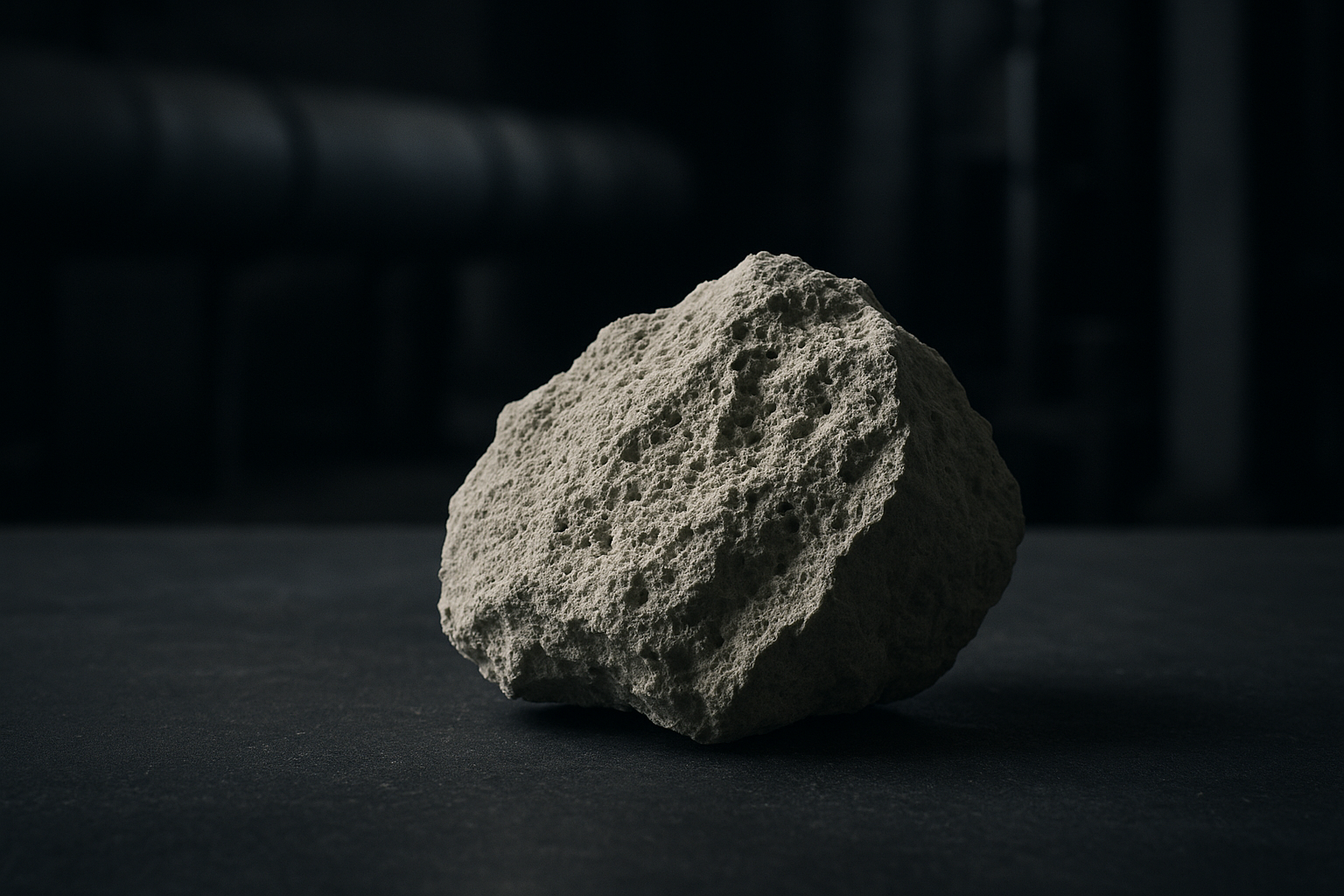
Natural Zeolite for Odor and VOC Management — An Adsorption and Moisture-Management Auxiliary Material
Unpleasant odors and volatile organic compounds (VOCs) are recurring environmental concerns at livestock facilities, waste-treatment sites, workplaces, indoor spaces, and storage facilities. Yet behind the single word "odor" lies a wide variety of causative substances, including ammonia (NH₃), hydrogen sulfide (H₂S), methyl mercaptan, trimethylamine, and various organic acids.
VOCs, too, are a broad concept encompassing hundreds of compounds such as formaldehyde, toluene, xylene, and acetone, and the optimal management method differs completely depending on the generating process and substance.
For this reason, odor and VOC management is more fundamentally addressed by adsorbing the causative components or reducing their concentration than by masking with fragrance or relying on simple ventilation. Natural clinoptilolite zeolite is examined in this field as an adsorption auxiliary material, a moisture-management medium, and an air-quality improvement aid.
KMIZEOLITE has properties of 97.0% purity, a pore diameter of 4.0–7.0 Å, and a specific surface area of 40.0 m²/g, giving it structural characteristics favorable for adsorbing moisture and certain gaseous substances. However, the strength of natural clinoptilolite lies not in "broad-surface physical adsorption" like activated carbon, whose specific surface area reaches several hundred to 1,000 m²/g, but in ion exchange, in which the exchangeable cations (Na⁺·K⁺·Ca²⁺) that compensate for the negative charge of the aluminosilicate framework swap places with NH₄⁺ and lower-amine cations. Accordingly, the quantitative values and application recommendations on this page focus on its strength area: "ammonia-type polar odors + moisture."
| Target Odor/Gas | Primary Mechanism | Suitability of Unmodified Natural Zeolite |
|---|---|---|
| Ammonia (NH₃) / Ammonium (NH₄⁺) | Cation exchange + hydrophilic adsorption | Excellent — core application |
| Lower amines (trimethylamine, etc.) | Cation exchange + polar adsorption | Good |
| Formaldehyde (HCHO) | Polar physical adsorption (hydrophilic sites) | Moderate — auxiliary |
| Hydrogen sulfide (H₂S) · mercaptans | Weak physical adsorption (modification needed) | Limited — impregnated activated carbon recommended |
| Non-polar VOCs (benzene·toluene·xylene) | Hydrophobic adsorption (modified/hydrophobic zeolite needed) | Low — activated carbon recommended |
Why Zeolite Draws Attention in Odor and VOC Management
1. Adsorption of NH₃ and Ammonium-Type Odors — The Ion Exchange Mechanism
Zeolite's most powerful advantage is its selectivity for ammonium (NH₄⁺) ion exchange. The clinoptilolite framework carries a negative charge created when Al³⁺ substitutes for Si⁴⁺ sites, and the exchangeable cations (Na⁺·K⁺·Ca²⁺) that compensate for it reside within the channels. When NH₃ generated at the odor source meets moisture and shifts in equilibrium to NH₄⁺, the exchange sites in the CEC 1.6–2.0 meq/g range capture this NH₄⁺ directly onto the framework, suppressing its volatilization into the gas phase. Unlike activated carbon, which relies on simple surface physical adsorption, the key differentiator of ion exchange is that the bond is maintained even in humid environments.
Quantitatively, the review of odor reduction in aerobic manure composting by Zhu et al. (2021, RSC Advances) summarizes that adding natural zeolite to compost can raise the NH₄⁺/NH₃ retention rate by up to about 50%, and specifies that the mechanism is a combined effect of gas adsorption, ion exchange, and improvement of the microbial community. At field scale as well, the farm trial by Sheppard et al. (1997, Bioresource Technology) reported that mixing clinoptilolite into litter and manure reduced both odor and ammonia emissions. As comparative studies of odor adsorption, Cataldo et al. (2024, Materials) and Cataldo et al. (2021, Materials) evaluated the odor- and hazardous-component-capture behavior of natural clinoptilolite.
2. Moisture Adsorption and Humidity Control — Indirect Odor Reduction
Zeolite has a desiccant property that can adsorb up to about 30–40% of its own weight in moisture. Since humidity is a major cause of mold growth, accelerated anaerobic decomposition of organic matter, and odor amplification, moisture management alone can be expected to provide an indirect odor-reduction effect. This hydrophilicity is a double-edged sword — it is advantageous for NH₄⁺ ion exchange and polar gas adsorption, but if moisture competitively adsorbs onto the same hydrophilic sites, the adsorption capacity for non-polar VOCs decreases. Therefore, in a composite packed bed it is process-wise reasonable to divide roles, with zeolite handling upstream dehumidification and ammonia capture and activated carbon handling downstream VOC adsorption. The indoor-air-quality application review by Liu et al. (2020, Building and Environment) also summarizes zeolite's humidity-buffering and adsorption functions as an indoor-environment medium.
3. Auxiliary Adsorption of Some Polar VOCs — The Formaldehyde Case
The structure with a pore diameter in the 4.0–7.0 Å range can contribute to the adsorption of certain small-molecule polar VOCs (ammonia, lower amines, some aldehydes, etc.). In fact, Kalantarifard et al. (2016, Terrestrial, Atmospheric and Oceanic Sciences) reported that clinoptilolite zeolite adsorbs formaldehyde and that the adsorption amount varies with temperature and contact conditions (desorption occurs upon heating, so the adsorption–desorption equilibrium is sensitive to operating temperature). In addition, Mobasser et al. (2022, Industrial & Engineering Chemistry Research) showed that zeolite can be used as an auxiliary adsorption medium alongside activated carbon and organosilica in indoor VOC purification. However, activated carbon is more suitable for removing non-polar VOCs (benzene, toluene, xylene, etc.).
4. Non-polar VOCs and H₂S Require "Modification as a Premise" — Limits of Unmodified Natural Mineral
Unmodified natural clinoptilolite has a hydrophilic framework, so its adsorption capacity for non-polar VOCs (such as BTEX) and the acidic gas H₂S is inherently weak. To compensate for this, surface modification is a prerequisite — hydrophobizing the external surface with quaternary ammonium surfactants (e.g., HDTMA) improves non-polar organic adsorption, and exchanging or impregnating with transition-metal ions (Cu²⁺·Fe³⁺, etc.) can provide H₂S chemisorption sites. Al-Jubouri et al. (2025, MethodsX) summarized a procedure in which clinoptilolite modified with a cationic surfactant improves at adsorbing VOCs from kerosene. In short, if the field target is non-polar VOCs or sulfur compounds, do not assume unmodified natural zeolite as a standalone adsorbent; instead, plan for a combination with modified media or impregnated activated carbon from the design stage.
5. Structural Stability and Long-Term Use
With a Mohs hardness of 4.0–5.0, the particle structure is hard, producing little dust, and it can be used stably across a pH range of 3.0–10.0. This is an important advantage in long-term-use environments such as livestock barn bedding and air-scrubber packing.
Odor and VOC Management: Zeolite vs. Other Materials
| Comparison Item | Natural Zeolite | Activated Carbon | Biofilter (organic media) | Chemical Scrubber |
|---|---|---|---|---|
| NH₃ adsorption | Excellent (ion exchange) | Moderate (physical adsorption) | Good (biodegradation) | Removed by acid scrubbing |
| H₂S removal | Limited | Good (impregnated activated carbon) | Good | Alkaline scrubbing |
| Non-polar VOCs | Limited | Excellent | Moderate | Moderate |
| Moisture management | Excellent (desiccant function) | Performance degrades with moisture | Requires moisture | Not applicable |
| Maintenance | Replaceable (simple) | Replacement/regeneration | Requires microbial management | Requires chemical replenishment |
| Cost | Low | Medium | High initial investment | High operating cost |
| Environmental friendliness | Natural mineral | Requires manufacturing energy | Eco-friendly | Uses chemicals |
Key takeaway: For managing ammonia-type odors, zeolite's ion exchange mechanism is more direct and efficient than activated carbon. Conversely, activated carbon is superior for removing non-polar VOCs such as toluene and xylene. At complex-odor sites, a zeolite + activated carbon composite packed bed may be the most effective design.
KMIZEOLITE Key Properties
| Item | Value |
|---|---|
| Clinoptilolite content | 97.0% |
| CEC (cation exchange capacity) | 1.6–2.0 meq/g |
| Pore diameter | 4.0–7.0 Å |
| Specific surface area | 40.0 m²/g |
| Hardness | 4.0–5.0 Mohs |
| pH stability range | 3.0–10.0 |
| Specific gravity | 1.89 |
Application-by-Application Review
Odor Management in Residential and Commercial Spaces
It is used as an auxiliary material to simultaneously manage odor and moisture in spaces such as pet toilet areas, shoe cabinets, storage rooms, vehicle interiors, and offices. It is deployed by placing granular zeolite in breathable containers or fabric pouches, or by mixing it into cat litter to reduce ammonia-based odors. Bernardi et al. (2019, Applied Clay Science) quantitatively evaluated how zeolite for cat litter controls odor through ammonia adsorption, where the key variables are the zeolite mixing ratio in the litter and the contact time after defecation. For indoor placement, KMI 30×50 mesh (0.3–0.6mm), which produces little dust and has high surface-area exposure, is suitable.
Ammonia and Odor Management at Livestock Facilities
Mixing zeolite into the bedding of pig, poultry, and cattle barns can be expected to provide a dual effect: adsorbing manure-generated ammonia through ion exchange while simultaneously managing floor moisture. This contributes to livestock respiratory health, the working environment of caretakers, and the reduction of surrounding odor complaints. There are two application routes: ① the surface spreading and mixing into litter/bedding method, which captures generated NH₃ on site, and ② the feed-additive method, which reduces the generation of ammonia in feces themselves after passing through the gut. The feed-additive use corresponds to 21 CFR 582.2729 (clinoptilolite), the animal-feed-additive standard under the US FDA GRAS classification, while other general uses such as floor spreading and industrial adsorption fall under 21 CFR 182.2729. A related study (2024, Poultry Science) evaluated the effect on litter ammonia and rearing performance when zeolite was added to broiler feed and litter. Recommended products: KMI 14×40 mesh (0.4–1.4mm) or KMI 8×14 mesh (1.4–2.4mm). For compost and manure mixing/spreading, KMI 100 mesh powder, with its high specific-surface exposure, is suitable.
Waste Treatment and Storage Spaces
At food-waste collection sites, temporary organic-waste storage areas, and around manure storage facilities, zeolite can be spread as an auxiliary material to suppress odor diffusion, or mixed into a deodorizing matrix.
Air Scrubbers and Air-Purification System Support
In some industrial air scrubbers, zeolite is used as an auxiliary adsorbent in the packed bed. In particular, in environments where ammonia and moisture are simultaneously problematic, placing zeolite upstream of the activated-carbon packed bed enables a design that proactively manages moisture and thereby protects the activated carbon's VOC adsorption performance. The key process parameters to control in packed-bed design are as follows.
- Contact time (EBCT): A gas-phase adsorption bed must secure an empty bed contact time on the order of several seconds; if the EBCT is short, NH₃ breakthrough occurs sooner. Determine the bed height by back-calculating from treated air volume ÷ packing volume.
- Particle size and pressure drop: The smaller the particle size, the more favorable the external surface area and mass transfer, but the greater the pressure drop. For large packed beds, KMI 4×8 mesh (2.4–4.8mm) with low pressure drop is suitable.
- Relative humidity: When capturing non-polar VOCs with downstream activated carbon, having the upstream zeolite adsorb some moisture to lower the downstream RH can mitigate the performance degradation of the activated carbon.
- Replacement/regeneration cycle: Include in the operating premise either replacement upon NH₄⁺ saturation or recovery/regeneration of NH₃ through alkaline treatment.
Recommended product: KMI 4×8 mesh (2.4–4.8mm) — for large packed beds and air scrubbers.
Odor and VOC Management Uses by Product Specification
| Product | Particle Size | Recommended Application |
|---|---|---|
| KMI 100 mesh (Powder) | <150μm | Compost and manure mixing/spreading |
| KMI 30×50 mesh | 0.3–0.6mm | Small deodorizing filters, indoor placement |
| KMI 14×40 mesh | 0.4–1.4mm | Livestock barn bedding, medium deodorizing layer |
| KMI 8×14 mesh | 1.4–2.4mm | Large-area floor spreading, litter mixing |
| KMI 4×8 mesh | 2.4–4.8mm | Air-scrubber packed bed |
Precautions for VOC Management
VOCs are a broad category encompassing hundreds of compounds. Natural zeolite does not effectively remove all VOCs. Before applying it in the field, please be sure to verify the following.
- Molecular size and polarity of the target VOC substance
- Concentration level and legal emission standards
- Space size, ventilation rate, and humidity conditions
- Whether used alone or in a composite system with activated carbon, etc.
- Replacement cycle and post-use disposal plan
When legal VOC management of industrial exhaust gas is required, separate engineering design and performance testing must be carried out.
Pre-Inquiry Checklist
- Odor cause: ammonia / sulfur compounds / organic acids / complex odor / unknown
- Application environment: livestock barn / composting site / indoor / storage space / industrial emission
- Deodorization method currently in use
- Space scale and ventilation conditions
- Desired product form: powder / fine granule / granule / packing material
Guidance
In the field of odor and VOC management, zeolite can be considered a useful auxiliary material, but its actual performance varies depending on the type and concentration of the target substance, space size, ventilation conditions, humidity, and contact time. In particular, industrial VOC emission management requires specialized engineering to meet legal standards, and it is appropriate to use zeolite as a component or auxiliary material within such systems. Detailed product properties and safety information are available on the technical data page.
Frequently Asked Questions (FAQ)
Can zeolite remove all odors and VOCs?
No. Natural clinoptilolite excels at adsorbing polar, small-molecule compounds such as ammonia (NH₃), lower amines, and formaldehyde. Because its pore diameter is limited to 4.0–7.0 Å and its surface is hydrophilic, removal efficiency is low for non-polar VOCs such as benzene, toluene, and xylene. If non-polar VOCs are the main target, activated carbon is more suitable, and for complex-odor sites a composite packed-bed design using both zeolite and activated carbon is recommended.
Why is zeolite better than activated carbon for managing ammonia-based odors?
Zeolite directly exchanges and fixes ammonium (NH₄⁺) ions onto its framework with a cation exchange capacity of CEC 1.6–2.0 meq/g. Unlike the physical adsorption that activated carbon relies on, ion exchange remains relatively stable even in humid environments, distinguishing it from activated carbon whose performance degrades with moisture. In addition, its desiccant property of adsorbing about 30–40% of its own weight in moisture indirectly suppresses odor amplification caused by mold and organic-matter decomposition.
Is it effective against indoor sick-house-syndrome VOCs (formaldehyde)?
Kalantarifard et al. (2016, TAO) reported that clinoptilolite adsorbs formaldehyde and that the adsorption amount varies with temperature and contact conditions. Mobasser et al. (2022, I&EC Res.) showed that zeolite can be used as an auxiliary medium alongside activated carbon and organosilica in indoor VOC purification. However, since it is difficult to remove all indoor VOCs on its own, it is realistic to use it together with ventilation or in combination with activated carbon.
What particle size and dosing method are used for livestock barns and air scrubbers?
For livestock barn bedding and litter mixing, use KMI 14×40 mesh (0.4–1.4mm) or KMI 8×14 mesh (1.4–2.4mm), while KMI 4×8 mesh (2.4–4.8mm) with low pressure drop is suitable for industrial air-scrubber packed beds. In air scrubbers, placing zeolite upstream of the activated-carbon packed bed to proactively manage moisture can protect the downstream activated carbon's VOC adsorption performance. Determine the bed height by back-calculating from the treated air volume and the target EBCT (empty bed contact time), and include replacement or alkaline regeneration upon NH₄⁺ saturation as an operating premise.
Can natural zeolite also capture non-polar VOCs such as H₂S (hydrogen sulfide) or toluene?
Unmodified natural clinoptilolite has a hydrophilic, negatively charged framework, so its adsorption capacity for the acidic gas H₂S and non-polar VOCs (benzene, toluene, xylene) is inherently weak. Surface modification is a prerequisite for these targets — hydrophobizing the external surface with quaternary ammonium surfactants (such as HDTMA) improves non-polar organic adsorption, and exchanging or impregnating with transition metals (Cu²⁺·Fe³⁺) can provide H₂S chemisorption sites. Therefore, if H₂S and non-polar VOCs are the main targets, do not assume unmodified natural zeolite as a standalone adsorbent; instead, plan for a combination with modified media or impregnated activated carbon from the design stage.
science Related Papers
These are academic papers dealing with zeolite applications in this field. Refer to them when reviewing adoption.
- Odors Adsorption in Zeolites Including Natural Clinoptilolite
Cataldo, E. et al. — Materials, 2024 - Evaluation of Natural Zeolite Treatments for Eliminating Odors and Toxic Compounds
Cataldo, E. et al. — Materials, 2021 - Formaldehyde Adsorption into Clinoptilolite Zeolite
Kalantarifard, A. et al. — Terrestrial, Atmospheric and Oceanic Sciences, 2016 - Indoor Air Purification of VOCs Using Activated Carbon, Zeolite, and Organosilica
Mobasser, S. et al. — Industrial & Engineering Chemistry Research, 2022 - Use of zeolites for cat litter: Ammonia adsorption and odor control
Bernardi, F. et al. — Applied Clay Science, 2019 - Reducing odor emissions from feces aerobic composting: additives
Zhu, P. et al. — RSC Advances, 2021 - Farm-scale study on clinoptilolite zeolite for reducing odour and ammonia
Sheppard, S.C. et al. — Bioresource Technology, 1997 - Zeolite for indoor air quality: A review of environmental applications
Liu, B. et al. — Building and Environment, 2020
The papers above are reference materials; actual application requires separate review tailored to site conditions.