Zeolite for Humidity-Control Gypsum Board & Interior Finishes
An inorganic humidity-control filler that adsorbs and desorbs water vapor through reversible physical adsorption in its 4.0–7.0 Å micropores and 40 m²/g specific surface area, giving gypsum board and interior finishing materials an indoor humidity buffering (moisture sorption) function and lowering condensation and mold risk.
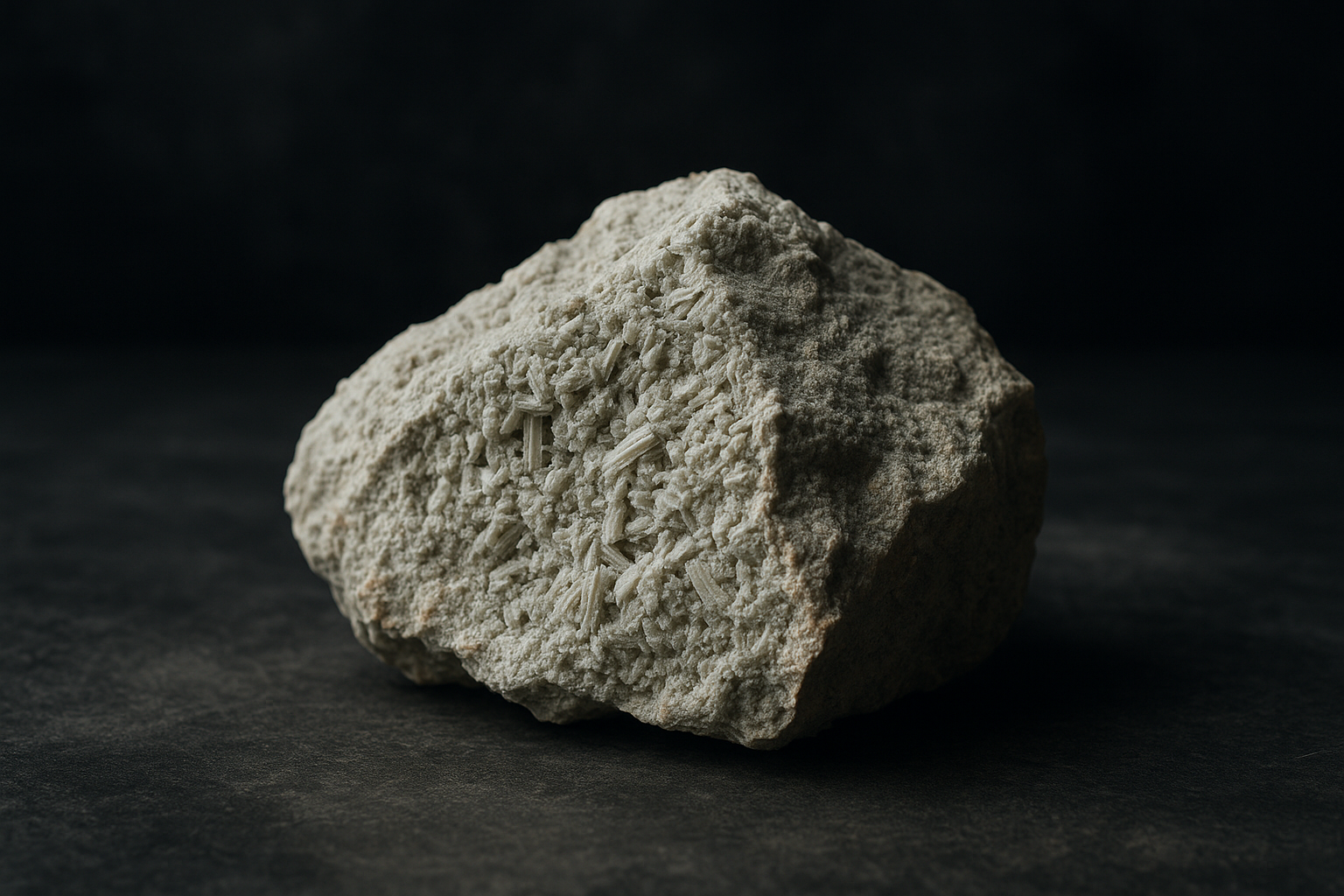
Zeolite for Humidity-Control Functional Gypsum Board & Interior Finishes — Suppressing Condensation and Mold via Moisture Sorption Equilibrium
Indoor humidity is a key management factor directly tied not only to occupant comfort but also to condensation, mold, and material deformation. A humidity-control functional interior finish is an active finishing material that absorbs moisture when humidity is high and returns it when conditions are dry, buffering (humidity buffering) indoor relative humidity within a certain range. The natural clinoptilolite supplied by KMIZEOLITE is a porous crystalline inorganic material, and it is evaluated as a filler that imparts this moisture-sorption function to gypsum board and diatomite-replacing interior finishing materials.
There is an important distinction here. Unlike a vapor-barrier/moisture-blocking material (barrier) that blocks moisture transport, a humidity-control interior finish is a buffering concept that balances equilibrium by absorbing and releasing moisture. This page covers zeolite not as a vapor-barrier membrane but as a sorption-equilibrium material that shaves off humidity peaks at the indoor-side surface. KMIZEOLITE clinoptilolite is mined at the Amargosa Valley deposit in Nevada, USA, and offers high purity with a clinoptilolite content of 97.0%.
Key Moisture-Sorption Property Data
Humidity-control performance derives from the micropore structure and specific surface area that can capture and release water vapor. The physical properties of KMIZEOLITE clinoptilolite present favorable conditions for reversible moisture adsorption/desorption.
| Property | Value | Meaning for Humidity-Control Application |
|---|---|---|
| Specific surface area | 40.0 m²/g | Water-vapor physical adsorption area — primary factor for moisture sorption capacity |
| Pore diameter | 4.0–7.0 Å | Crystalline uniform micropores — capillary condensation and reversible adsorption/desorption behavior |
| Cation exchange capacity (CEC) | 1.6–2.0 meq/g | May accompany adsorption of some gases such as ammonia (auxiliary air quality) |
| Specific gravity | 1.89 | Lightweight inorganic filler minimizing impact on board weight |
| Bulk density | 720–865 kg/m³ | Reference for calculating filler weight ratio in mix design |
| pH stability range | 3.0–10.0 | Chemical compatibility with the gypsum (mildly alkaline) matrix |
| Hardness | 4.0–5.0 Mohs | Easy to secure fine particle size through grinding and classification |
Zeolite's moisture adsorption is reversible physical adsorption, not a chemical reaction. When relative humidity rises, the micropores capture water vapor, and when humidity falls, they release it again, so it operates repeatedly. This reversibility is the key advantage as a humidity-control finishing material.
How Does Moisture Sorption Work?
Humidity control is explained by adsorption/desorption equilibrium. At any given relative humidity (RH), a porous material holds an equilibrium moisture content corresponding to that humidity, and this relationship is called the sorption isotherm. When indoor RH rises above the equilibrium value, the material absorbs moisture to suppress the RH rise (adsorption); when RH falls, it releases stored moisture to ease the drying (desorption).
Because clinoptilolite has uniform crystalline micropores of 4.0–7.0 Å, it effectively captures water vapor in the mid-humidity range and responds quickly to humidity fluctuations. The 40 m²/g specific surface area secures adsorption sites per unit mass, acting to contribute to humidity buffering even within short humidity fluctuation cycles (e.g., sleeping, cooking, or showering time periods).
Zeolite Humidity-Control Performance Seen Through Research
Studies treating zeolite as a building humidity-control material consistently report adsorption/desorption equilibrium and indoor humidity buffering effects. A study on the hygrothermal behavior of zeolite-based humidity-control building materials (Hygrothermal Performance of Zeolite-Based Humidity Control Building Materials, International Journal of Heat and Technology, 2016) summarizes the behavior in which zeolite-containing finishes absorb and release moisture in response to relative humidity changes, easing indoor humidity amplitude. This product's 40 m²/g specific surface area and 4.0–7.0 Å pores connect directly to such adsorption/desorption equilibrium behavior.
A study experimenting on the moisture migration of zeolite-composite humidity-control materials (Experimental Study on Moisture Migration of Zeolite-based Composite Humidity Control Material, Applied Thermal Engineering, 2017) addresses the moisture migration rate and reversibility during adsorption/desorption cycles, reporting that a composite dispersing fine zeolite powder is stable under repeated adsorption/desorption. In addition, a study evaluating natural zeolite from the perspective of building humidity control and energy saving (Natural zeolite for humidity control and energy saving in buildings, Energy and Buildings, 2023) also discusses the potential effect of humidity-control finishes in reducing HVAC load.
A review on indoor air quality (Zeolite for indoor air quality: A review, Building and Environment, 2020) summarizes that, in addition to humidity control, zeolite is also treated in the adsorption of some indoor pollutants such as VOCs and ammonia. However, even though humidity control and gas adsorption share the same porous structure, their evaluation criteria differ, so it is advisable to limit this page's primary application purpose to moisture sorption (humidity control). As the studies above commonly emphasize, the moisture sorption amount per unit area varies with the formulation, particle size, and application thickness, so quantitative performance must be finalized through actual testing.
Connection to Condensation and Mold Suppression
Condensation occurs when the surface temperature falls below the dew point and the adjacent air humidity is high. Mold generally proliferates more easily when relative humidity stays above 80%. Humidity-control finishes absorb moisture in high-humidity ranges, acting to shave off the humidity peak near the surface, so they serve as an auxiliary means of mitigating the risk of condensation and mold.
However, humidity-control materials do not replace insulation, ventilation, or vapor-barrier design. Structural condensation caused by a thermal bridge or insufficient ventilation cannot be solved by a humidity-control finish alone, and humidity control should be viewed strictly as an auxiliary layer within the overall moisture design.
Difference Between Vapor-Barrier (Moisture-Blocking) Materials and Humidity-Control Interior Finishes
| Comparison Item | Humidity-Control Interior Finish (Zeolite) | Vapor-Barrier / Moisture-Blocking Material |
|---|---|---|
| Operating concept | Adsorption/desorption equilibrium (buffering) | Blocking moisture transport (barrier) |
| Moisture behavior | Reversible absorption and release | Permeation suppression (one-directional management) |
| Location | Indoor-side finish / interior material | Vapor-barrier layer inside the wall |
| Main purpose | Indoor humidity buffering / auxiliary mold suppression | Blocking moisture ingress into the structure |
| Relationship | Complementary (combined-use design) | Complementary (combined-use design) |
The two approaches are not opposed but a division of roles. It is common to combine managing moisture ingress with a vapor-barrier layer inside the wall while buffering everyday humidity fluctuations with a humidity-control material on the indoor-side finish. Moisture-blocking and vapor-barrier materials are covered on a separate page (Zeolite for Moisture-Proofing / Vapor Barrier).
Its Position as an Inorganic Humidity-Control Material Replacing Diatomite
Diatomite is a representative porous inorganic humidity-control material, but zeolite has the distinction of possessing both uniform crystalline micropores (4.0–7.0 Å) and cation exchange capacity (1.6–2.0 meq/g). The cation exchange capacity contributes to the adsorption of some odors and gases such as ammonia, so in addition to the humidity-control function, an auxiliary indoor air quality function can be considered at the same time.
In addition, clinoptilolite is a chemically stable natural inorganic material with no organic volatile components and is non-combustible. As an inorganic filler, it has good compatibility with gypsum and inorganic binder matrices, fitting an eco-friendly interior finish concept.
Recommended Product Specifications
| Product Name | Mesh | Particle Size | Suitability for Humidity-Control Application |
|---|---|---|---|
| KMI 100- US MESH (Powder) | 100 mesh or finer | <150μm, median 50μm | Optimal for humidity-control fillers — maximizes moisture sorption area and dispersibility |
In humidity-control finishes, particle size governs the moisture sorption area and film uniformity. Fine powder of 100 mesh or finer is most suitable in terms of dispersibility and reaction area, and since gypsum curing, strength, and workability may change as the incorporation ratio increases, trial mixing is essential.
Application Examples
Humidity-Control Gypsum Board Manufacturing
At the gypsum slurry mixing stage, part of the inorganic filler is replaced with zeolite fine powder of 100 mesh or finer, and this is considered as a form that imparts a moisture-sorption function to the board itself.
Humidity-Control Plaster / Coating Finishes
Plaster- and coating-type interior finishes incorporating zeolite as a replacement for, or in combination with, diatomite are formulated and applied in a direction that buffers indoor humidity through surface moisture sorption.
Interior Panels for Mold-Prone Areas
Humidity-control fillers are applied to interior panels in high-humidity vulnerable zones such as areas adjacent to bathrooms, north-facing walls, and basements, and are considered as an auxiliary layer that mitigates mold risk together with ventilation and insulation design.
Evaluation Points
- Humidity control is reversible physical adsorption, and the moisture sorption amount per unit area varies with the formulation, particle size, and application thickness.
- A humidity-control material is an auxiliary layer that does not replace insulation, ventilation, or vapor-barrier design.
- As the incorporation ratio increases, the gypsum curing behavior, strength, workability, and water demand may change.
- The moisture sorption grade (e.g., a moisture sorption capacity test) must be finally confirmed with actual test results.
- It is important to view zeolite by its role within the overall finish and moisture design rather than by its standalone performance.
Frequently Asked Questions (FAQ)
By what principle does zeolite automatically regulate indoor humidity?
Clinoptilolite's 4.0–7.0 Å micropores and 40 m²/g specific surface area physically adsorb water vapor molecules. When relative humidity rises, it draws in moisture (adsorption), and when conditions become dry, it releases it again (desorption). Because this adsorption/desorption equilibrium occurs reversibly with changes in relative humidity, indoor humidity is buffered within a certain range without any external power. Since this is reversible physical adsorption rather than a chemical reaction, it can be used repeatedly.
Does using zeolite in humidity-control gypsum board suppress condensation and mold?
Condensation occurs when a surface temperature falls below the dew point while the surrounding humidity is high, and mold typically proliferates more easily when relative humidity stays above 80%. Humidity-control finishes absorb moisture in high-humidity ranges, acting to lower the humidity peak near the surface, so they serve as an auxiliary means of mitigating condensation and mold risk. However, they do not replace insulation, ventilation, or vapor-barrier design, and should be evaluated as a supplementary material within the overall building moisture design.
What is the difference between vapor-barrier/moisture-blocking products and humidity-control interior finishes?
A vapor barrier is a blocking (barrier) concept that prevents moisture transport, whereas a humidity-control interior finish is a buffering concept that actively balances equilibrium by absorbing and releasing moisture. Because a zeolite humidity-control finish does not trap moisture but returns it when humidity drops, its role is distinct from a vapor barrier, which by blocking can induce condensation on one side. The two approaches are generally designed as complementary rather than conflicting.
Is zeolite suitable as an inorganic humidity-control material to replace diatomite?
Like diatomite, zeolite is a porous inorganic material with moisture adsorption/desorption capability, featuring uniform crystalline micropores of 4.0–7.0 Å, a 40 m²/g specific surface area, and a cation exchange capacity of 1.6–2.0 meq/g. Its cation exchange capacity also contributes to the adsorption of some gases such as ammonia, so an auxiliary indoor air quality function can be considered alongside humidity control. However, the moisture sorption rate per unit area, color, and workability vary with the formulation and particle size, so they must be confirmed through trial mixes.
How much zeolite is incorporated into a gypsum board formulation?
In humidity-control finishes, fine powder of 100 mesh or finer (median 50 μm) is used to secure moisture sorption surface area, and it is considered as a partial replacement of the inorganic filler with zeolite. As the incorporation ratio increases, the moisture sorption capacity rises, but the gypsum curing behavior, strength, workability, and water demand may change, so the mix ratio that simultaneously satisfies the target moisture sorption grade and finish properties must be determined by testing.
Related Pages
- Zeolite for Moisture-Proofing / Vapor Barrier — moisture-blocking material with a barrier concept
- Deodorizing Functional Building Materials — auxiliary ammonia and odor adsorption
- Fireproof Board / Thermal Insulation Filler — non-combustible inorganic filler
- View All Construction & Industrial Materials — category hub
- Powder-Type Zeolite Products — product specifications for humidity-control fillers
Notice
The moisture-sorption performance of a humidity-control finish may vary with raw material purity, fineness, incorporation ratio, mixing conditions, application thickness, and the indoor temperature and humidity environment. Before actual application, please confirm suitability through trial mixing and verification of moisture sorption capacity and properties. The property data on this page is based on KMI's published technical materials; please confirm the latest TDS at the time of actual delivery.
[Inquire about particle size, powder specifications, and bulk supply of zeolite for humidity-control gypsum board & interior finishes →]
science Related Papers
Academic papers covering zeolite applications in this field. Please refer to them when evaluating adoption.
- Hygrothermal Performance of Zeolite-Based Humidity Control Building Materials
International Journal of Heat and Technology, 2016 - Experimental Study on Moisture Migration of Zeolite-based Composite Humidity Control Material
Applied Thermal Engineering, 2017 - Natural zeolite for humidity control and energy saving in buildings
Serhiienko, A. et al. — Energy and Buildings, 2023 - Zeolite for indoor air quality: A review of environmental applications
Sahin, O. et al. — Building and Environment, 2020
The papers above are reference materials, and separate review tailored to on-site conditions is required for actual application.