Zeolite OEM & Bulk Supply Guide
In OEM and bulk sourcing, success or failure is determined not by performance but by lot-to-lot reproducibility. This guide sets out criteria for the 97% purity, CEC 1.6–2.0 meq/g natural clinoptilolite mined from a single deposit in Amargosa Valley, Nevada: managing exchange-capacity and fines-ratio deviations between pilot and production lots via COA, and specifying down to mesh, packaging, and use-specific GRAS provisions (feed 582.2729, general 182.2729).
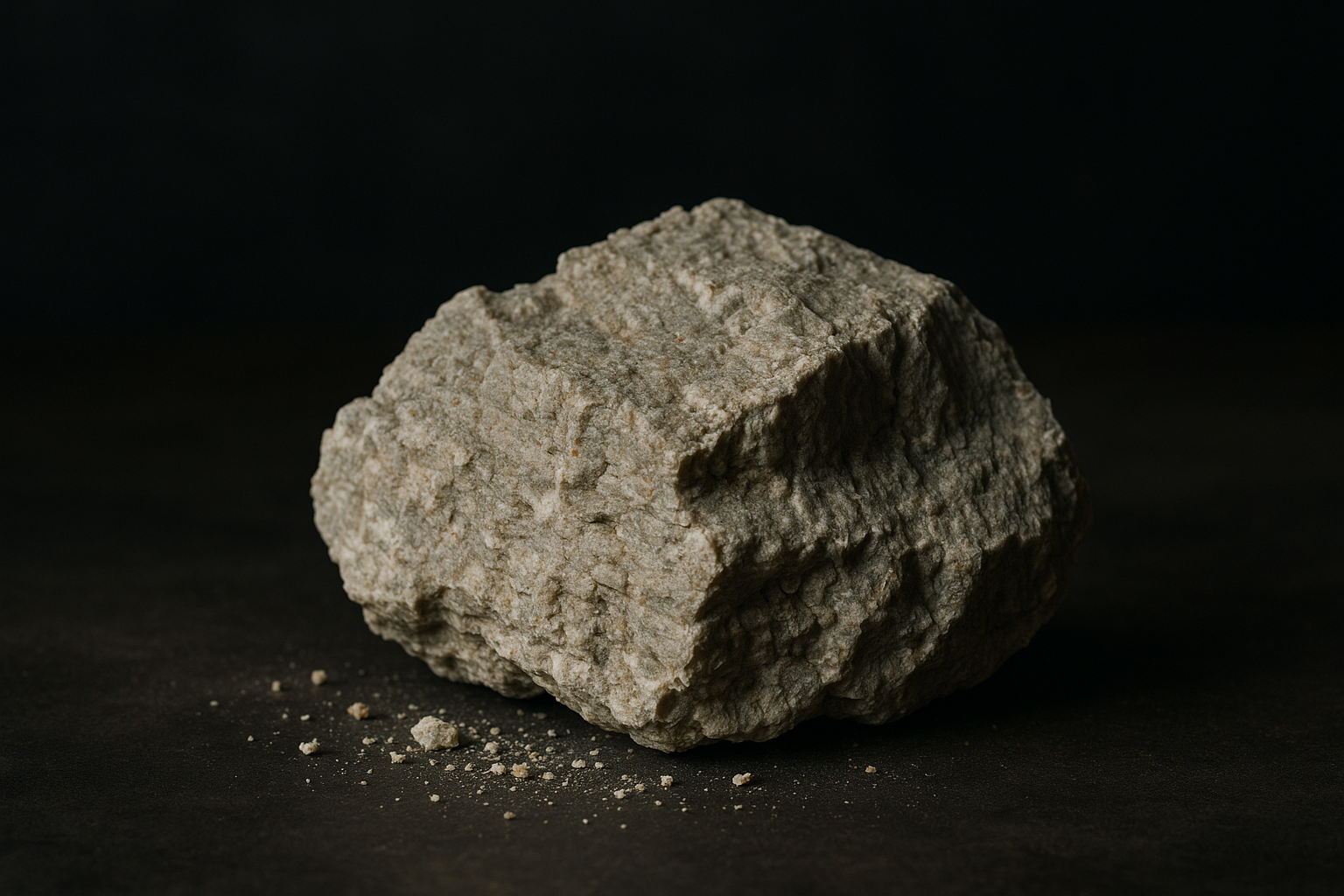
What Becomes a Problem in OEM and Bulk Sourcing
The first problem that procurement, R&D, and purchasing managers encounter when introducing zeolite as a raw material (OEM) for their own products or as a bulk process material is not "performance" but supply consistency. Whatever the final use—feed anti-caking agent, cosmetic and cleaning raw material, water-treatment media, pozzolanic cement replacement, fertilizer carrier, pet and household-goods filler—an OEM specification carries the requirement that items such as purity, particle-size distribution, heavy-metal limits, and residual moisture be reproduced lot by lot.
The friction that frequently arises in practice is as follows: (1) cases where final-product performance fluctuates due to cation exchange capacity (CEC) and purity deviation between pilot and production lots; (2) cases where, although the mesh specification is the same, the particle-size distribution and fines ratio differ, changing packed-bed pressure drop or powder flowability; and (3) cases where regulatory documents such as certifications (OMRI, FDA GRAS, TSCA, EN-71-3) or TDS/MSDS are missing at the time of customs clearance, registration, or delivery inspection. OEM and bulk review ultimately comes down to confirming whether "a reproducible specification is continuously supplied from the same deposit in this mine, with the same processing."
All three of these frictions stem from the inherent variability of a natural mineral. Unlike synthetic zeolite, natural clinoptilolite differs from deposit to deposit in Si/Al ratio, exchangeable cation composition, and accompanying mineral (quartz, feldspar, clay) content. Grifasi et al. (2024, Environmental Science and Pollution Research) note that the properties and adsorption/exchange behavior of clinoptilolite are tunable according to the type and content of framework cations—meaning that even the same "clinoptilolite" can perform differently when the source or lot changes (DOI:10.1007/s11356-024-33656-5). Therefore, the starting point of an OEM specification should not be "which mesh" but "which deposit, and which purity and exchange-capacity band."
Why KMI Natural Clinoptilolite Is Suitable as an OEM Raw Material
Natural clinoptilolite is a mineral with uniform 4.0–7.0 Å micropores in its crystal framework and cation-exchange characteristics (CEC 1.6–2.0 meq/g) arising from the framework's negative charge, and these two properties simultaneously underpin a wide range of OEM uses such as feed anti-caking, adsorption, ion exchange, and pozzolanic reaction. De Gennaro et al. (2024, Environmental Science and Pollution Research) summarize the basic properties and industrial applications of clinoptilolite, explaining that the basis for a single natural mineral being used broadly as an adsorbent, ion-exchange material, slow-release carrier, and pozzolan lies in this framework structure and exchange capacity (DOI:10.1007/s11356-024-33656-5).
What matters from an OEM and bulk perspective is that this exchange capacity varies by source and lot. A global research-trend analysis dealing with the CEC of natural zeolite (Sustainability, 2021) summarizes that the exchange capacity of clinoptilolite is directly governed by the mineral purity of the deposit and the composition of exchangeable cations (K⁺, Na⁺, Ca²⁺) (DOI:10.3390/su13147751). Therefore, the starting point for stable OEM supply is a high-purity raw material mined from a single mine and single deposit.
KMIZEOLITE's natural clinoptilolite, at 97% purity, is mined and processed at a single mine in Amargosa Valley, Nevada, USA. It provides quantitative properties that can be entered in a specification—specific surface area 40.0 m²/g, pore diameter 4.0–7.0 Å, pH stability range 3.0–10.0, thermal stability 700°C, specific gravity 1.89, bulk density 45–54 lbs/ft³ (720–865 kg/m³)—and, with confirmed reserves of 53.7 million tons and estimated reserves of about 100 million tons, it supports the supply continuity needed for long-term OEM contracts.
One Mineral, Four Property Channels
For OEM specification, it is useful to distinguish which property channel the same mineral operates through. The core property differs by use, and so do the quantitative items that must be managed in the specification.
- Ion exchange (feed nutrition, ammonium, heavy-metal carrier): K⁺, Na⁺, Ca²⁺, and Mg²⁺ offset the framework's negative charge, and these exchangeable cations swap places with external cations. The key management indicator is CEC 1.6–2.0 meq/g. The exchange selectivity of natural clinoptilolite is typically high for K⁺, NH₄⁺, Pb²⁺, etc. (Sustainability, 2021, DOI:10.3390/su13147751).
- Physical adsorption / molecular sieving (moisture absorption, deodorization, VOC): the uniform 4.0–7.0 Å micropores and 40.0 m²/g specific surface area selectively trap small polar molecules (H₂O, NH₃, some VOCs). The management indicators are specific surface area, pore size, and residual moisture.
- Pozzolanic reaction (partial cement replacement): the amorphous, reactive SiO₂ and Al₂O₃ of finely ground clinoptilolite react with Ca(OH)₂ generated by cement hydration to form additional C-S-H. Ahmadi and Shekarchi (2010, Cement and Concrete Composites) summarize that natural zeolite contributes to late-age strength and durability as an active pozzolan (DOI:10.1016/j.cemconcomp.2009.10.006). The management indicators are fineness (100 mesh or finer) and SiO₂ + Al₂O₃ content.
- Water / nutrient retention (soil amendment, slow-release carrier): high water-holding capacity and exchange capacity capture cationic nutrients in the soil (especially K⁺, NH₄⁺) and slow leaching. Ramesh and Reddy (2017, Water, Air, & Soil Pollution) review the water- and nutrient-retention effects of zeolite and the improvement of fertilizer efficiency (DOI:10.1007/s11270-017-3649-1).
KMIZEOLITE Core Properties
| Item | Value |
|---|---|
| Clinoptilolite purity | 97% |
| Cation exchange capacity (CEC) | 1.6–2.0 meq/g |
| Specific surface area | 40.0 m²/g |
| Pore diameter | 4.0–7.0 Å |
| pH stability range | 3.0–10.0 |
| Hardness | 4.0–5.0 Mohs |
| Thermal stability | 700°C |
| Specific gravity | 1.89 |
| Bulk density | 45–54 lbs/ft³ |
| Certifications | OMRI KMI-10365, FDA GRAS, TSCA, EN-71-3 |
OEM and Bulk Supply Application Examples
Below are representative scenarios in which KMI clinoptilolite is supplied as an OEM raw material or bulk material. Although it is the same mineral, the required specification (purity, particle size, certification) differs by use, so it is good practice to first clarify the final use when writing the specification.
- Feed and functional OEM: formulated as a feed anti-caking agent, moisture absorber, or ammonia-reduction material. As an animal-ingestion use, the GRAS basis is 21 CFR 582.2729, typically managed at 2% or less of total formulation, permitted as an OMRI organic-livestock raw material. Usually supplied as 100 mesh Powder. The ammonium exchange capacity of clinoptilolite provides the basis for temporarily fixing NH₄⁺ in manure and digestive-tract environments (Sustainability, 2021, DOI:10.3390/su13147751).
- Water-treatment media OEM: packed into water-purifier, swimming-pool, and aquaculture-system modules. Select Fine to Coarse Granule (30×50 to 8×14 mesh) to match pressure-drop and backwash conditions. When designing the packed bed, specify the uniformity coefficient and fines ratio in addition to the mesh grade to manage initial pressure drop and fines carry-over.
- Construction-material pozzolan bulk: partial cement replacement (typically reviewed within a 10–30% substitution range) and warm-mix asphalt additive. The contribution to late-age strength and durability is based on active pozzolanic behavior (Cement and Concrete Composites, 2010, DOI:10.1016/j.cemconcomp.2009.10.006). 100 mesh Powder is supplied in bulk by super sack or 1-ton bulk.
- Fertilizer and soil-amendment carrier OEM: slow-release fertilizer coating and nutrient-retention material. Behavior that slows leaching through cationic-nutrient retention has been reported (Water, Air, & Soil Pollution, 2017, DOI:10.1007/s11270-017-3649-1). Fine Granule is blended in.
- Pet and household-goods filler OEM: consumer goods such as cat litter and deodorizing pouches. Moisture absorption and deodorization are based on micropore physical adsorption, and EN-71-3 PASS documentation is required for customs clearance and registration.
- Pilot to mass production stage: after verifying the specification with 1 kg or 22 kg B2B samples, transition to mass production by pallet (44×50 lb = 1 metric ton), super sack, or bulk.
For non-feed uses such as general food-contact and processing-aid applications, the GRAS basis provision changes to 21 CFR 182.2729. Even with the same raw material, the applicable legal provision and limit change according to the final use, so it is safest to record "use + applicable provision + limit" as a single set in the specification.
OEM Supply Specifications and Packaging / MOQ
OEM and bulk delivery hinges not only on the mesh specification but also on negotiating the packaging unit and minimum order quantity (MOQ). Refer to the table below for mesh, particle size, and representative use by product group, and for packaging choose among printed/plain poly bags (5 lb, 20 lb, 50 lb), pallets (1 metric ton), super sacks (IBC, 1 metric ton), and bulk (1 standard ton) to match your logistics and line conditions.
| Product group | Mesh | Particle size | Representative use |
|---|---|---|---|
| Powder | 100 mesh or finer | <150μm | Pozzolan, feed, powder adsorption |
| Fine Granule | 30×50 mesh | 0.3–0.6mm | Water treatment, filtration, soil |
| Medium Granule | 14×40 mesh | 0.4–1.4mm | Filter beds, bedding, flooring |
| Coarse Granule | 8×14 mesh | 1.4–2.4mm | Swimming pools, deicing, large filtration |
| Extra Coarse | 4×8 mesh | 2.4–4.8mm | Packed beds, air scrubbers |
OEM recommendation: even for the same use, separately specify powder and granular forms according to line conditions, and recording the allowable fines (<150μm) ratio and residual moisture (max 10%) in the specification along with the particle-size table can reduce lot-to-lot flowability and pressure-drop deviation. Because granular media is not sufficiently constrained by the mesh code alone, we recommend attaching a uniformity coefficient based on D10/D60 or a sieve-analysis curve where possible. For powder pozzolan, fineness (Blaine or passing rate) directly affects reactivity and strength, so keep it as a separate management item.
Packaging selection criteria: for consumer goods requiring small quantities and label printing, use printed poly bags (5/20/50 lb); for automated feeding lines, the pallet (44×50 lb = 1 metric ton) unit; for direct silo/hopper feeding, super sacks (IBC) or 1-ton bulk are advantageous for dust and handling efficiency. Since this is a hygroscopic mineral, include moisture-barrier liners and storage humidity conditions in the packaging specification for long-term storage and ocean transport.
→ View products by mesh size · Application-based product selection guide
Review Points Before an OEM or Bulk Contract
These are items that procurement and quality departments should confirm together when adopting zeolite as an OEM raw material or bulk material. Even for a single-mine, high-purity raw material, it is safest to specify the regulatory suitability of the final use and the lot-consistency verification procedure in the contract.
- Specification definition: quantitatively record purity (clinoptilolite %), CEC (meq/g), particle-size distribution, residual moisture (max 10%), and heavy-metal limits in the specification.
- Lot consistency: agree on the allowable CEC and purity deviation range between pilot and production lots and the COA (certificate of analysis) issuance conditions.
- Regulatory documents: secure copies of the TDS, MSDS, and certificates (OMRI/FDA GRAS/TSCA/EN-71-3) appropriate to the final use before delivery. Because GRAS provisions differ by use (feed 21 CFR 582.2729 / general 182.2729), record the applicable provision in the documents as well.
- Packaging and logistics: determine the packaging, MOQ, lead time, and moisture-barrier conditions that match the line feeding method among poly bag, pallet, super sack, and bulk.
- Suitability verification: first test your own process and finished-product suitability (flowability, pressure drop, strength, moisture absorption, etc.) with 1 kg or 22 kg samples, then transition to mass-production volumes.
- Use-specific limits: comply with use-specific legal limits such as 2% or less of total formulation for feed use; since the final product's approval and labeling responsibility lies with the OEM purchaser, confirm the governing regulations separately.
→ Check the TDS (product data sheet) · Check the MSDS (safety data sheet)
OEM and Bulk Supply FAQ
When used as an OEM raw material, is CEC and purity kept consistent across lots?
KMI clinoptilolite is mined and processed from a single mine and single deposit in Amargosa Valley, Nevada, USA, reproducing core properties such as 97% purity and CEC 1.6–2.0 meq/g across lots. Because the exchange capacity of natural zeolite is directly governed by the mineral purity of the deposit and the composition of exchangeable cations (K⁺, Na⁺, Ca²⁺, Mg²⁺) (Sustainability, 2021, DOI:10.3390/su13147751), a single-deposit raw material has an advantage in lot consistency over materials that blend multiple sources. Before mass production, we recommend specifying CEC, purity, residual moisture, and fines-ratio items along with allowable tolerances in the per-lot COA (certificate of analysis), and agreeing on issuance conditions at the contracting stage.
Which mesh and packaging should I choose for each OEM application?
For mixing and powder applications such as feed anti-caking and pozzolan, 100 mesh Powder (<150μm) is common, while for water-treatment media and packed beds, Fine to Coarse Granule (30×50 to 8×14 mesh, 0.3–2.4mm) is typical. Because the smaller the uniformity coefficient of granular media, the more stable the packed-bed pressure drop and backwash behavior, it is good practice to include the particle-size distribution curve in the specification, not just the mesh code. For packaging, choose among poly bags (5/20/50 lb), pallets (44×50 lb = 1 metric ton), super sacks (IBC, 1 metric ton), and bulk (1 standard ton) to match your line feeding method. Please refer to the application-based product selection guide.
Do GRAS provisions differ by application such as feed or food?
Yes. In US federal regulations, the GRAS basis provision for natural clinoptilolite differs by application. Feed-additive uses ingested by animals (anti-caking agent, carrier) are listed under 21 CFR 582.2729, while other general food-contact and processing-aid uses are listed under 21 CFR 182.2729. Feed uses are typically managed at 2% or less of total formulation, and because the final product's approval and labeling responsibility lies with the OEM purchaser, we recommend specifying the applicable provision and limit for the intended use in the specification and reviewing it in line with the governing regulations.
How are minimum order quantity (MOQ) and lead time determined?
MOQ and lead time vary depending on mesh specification, packaging unit, whether certification documents are prepared, and whether additional processing such as classification and drying is required. In the pilot stage, we recommend verifying your own process and finished-product suitability with 1 kg or 22 kg B2B samples, then negotiating mass-production quotes by pallet, super sack, or bulk unit. Long-term OEM supply comes from a single deposit with confirmed reserves of 53.7 million tons, so specification and volume continuity can be contracted under multi-year agreements. For exact terms, please inquire via a bulk quotation request.
Can I receive samples for OEM evaluation along with certification and test documents?
Yes. KMIZEOLITE supports sample provision to verify your own process and finished-product suitability. If you leave the application and desired mesh on the sample request page, we will provide certification documents such as OMRI Listed (KMI-10365), FDA GRAS (feed 21 CFR 582.2729, general 182.2729), TSCA compliant, and EN-71-3 PASS, together with the TDS/MSDS and a lot COA sample.
Inquiries and Sample Requests
If you are reviewing zeolite application in the area of the Zeolite OEM and Bulk Supply Guide, please get in touch through the channels below.
Notice
Applicability may vary depending on site conditions, regulations, and test results. Before actual application, a test review suited to the site conditions must always come first. Zeolite should be understood not as a universal solution for the relevant field, but as a material that supplements existing processes.
Related Pages
science Related Research Papers
These are academic papers addressing zeolite application in this field. Please refer to them when reviewing adoption.
- Fundamental properties and sustainable applications of natural zeolite clinoptilolite
De Gennaro, B. et al. — Environmental Science and Pollution Research, 2024 - Cation Exchange of Natural Zeolites: Worldwide Research
Various — Sustainability, 2021 - Ion Exchange in Natural Clinoptilolite: Structure and Applications
Various — Minerals, 2022 - La roca magica: Uses of natural zeolites in agriculture and industry
Mumpton, F.A. — PNAS, 1999 - Natural zeolite as pozzolanic material: A review
Ahmadi, B. & Shekarchi, M. — Cement and Concrete Composites, 2010 - Application of Zeolite for Sustainable Agriculture: Water and Nutrient Retention
Ramesh, K. & Reddy, D.D. — Water, Air, & Soil Pollution, 2017
The papers above are reference material, and actual application requires a separate review suited to the site conditions.