Manure Odor Management Zeolite
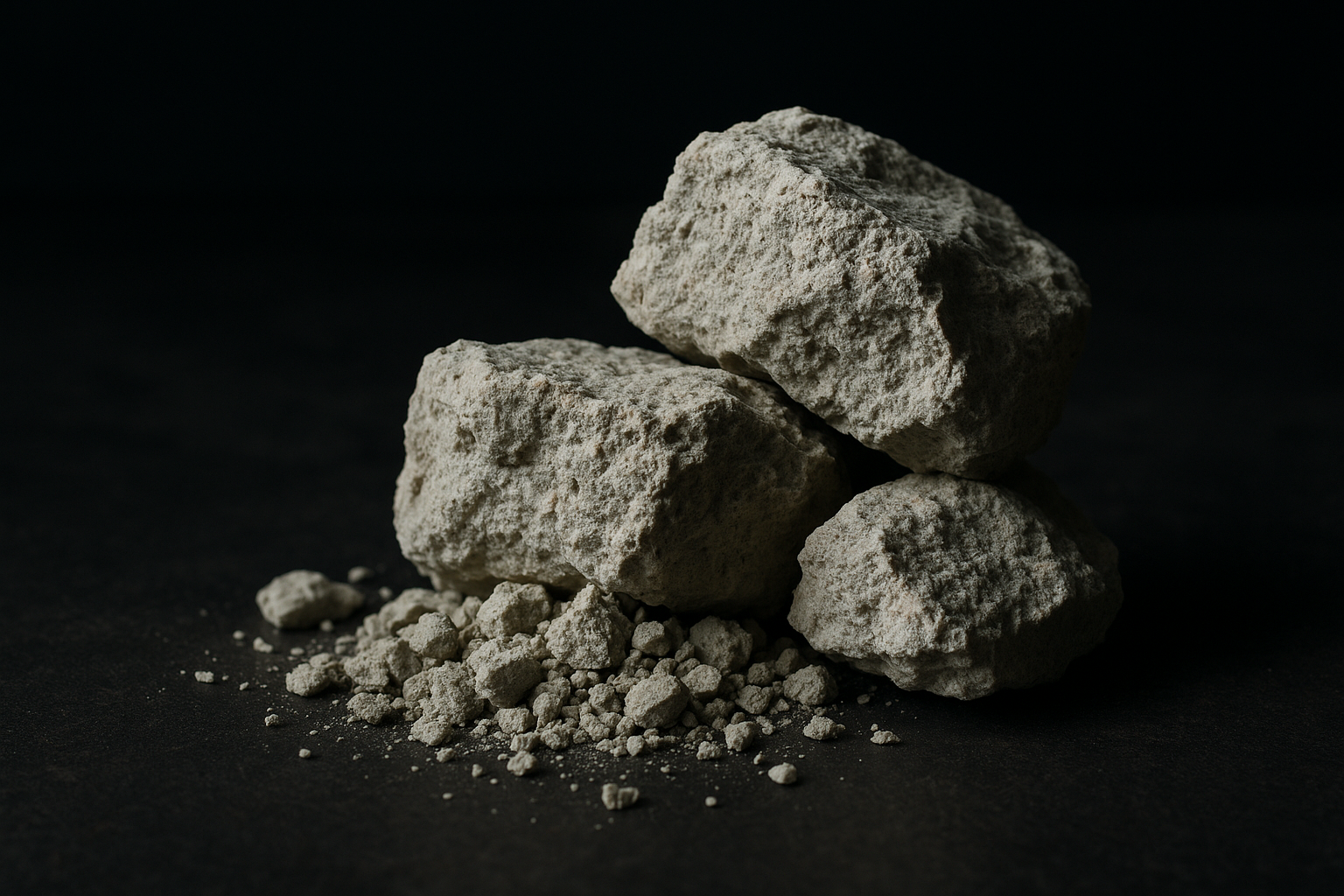
Natural clinoptilolite has a negatively charged framework with a CEC of 1.6–2.0 meq/g that selectively captures the cationic ammonium (NH₄⁺), acting as a fixed-phase material that reduces volatilization itself before gaseous ammonia (NH₃) escapes from litter, slurry, and compost surfaces. We have organized the particle size and dosage (1–5 kg/m²) by process position—litter blending, surface spreading, composting, and air scrubbers—together with quantitative evidence.
Why barn and manure odor is fundamentally an ammonia problem
The core cause of the pungent smell from poultry-house droppings, swine slurry, and cattle-barn manure is ammonia (NH₃), generated as proteins and uric acid (urea) are broken down by urease and microorganisms, to which hydrogen sulfide (H₂S) and volatile fatty acids (VFAs) are added. Nitrogen in manure exists in an equilibrium between water-soluble ammonium ion (NH₄⁺) and gaseous ammonia (NH₃), and this equilibrium is highly sensitive to pH and temperature. As pH rises from 7 to 9, the NH₃ fraction increases by tens of times, and the higher the temperature, the more volatilization accelerates. When litter becomes wet or a manure storage pit tilts toward alkaline, NH₄⁺ converts to NH₃ and volatilizes, sharply worsening odor, and at the same time leading to respiratory disease in livestock, reduced weight gain and egg laying, deteriorated rearing environments, and the burden of responding to nearby complaints and environmental regulations.
Therefore, barn odor management is effective not by simply masking it with a deodorant (fragrance), but by an approach that captures the NH₄⁺ side of the equilibrium onto a solid phase to reduce the very amount converting to and volatilizing as gaseous NH₃. By Le Chatelier's principle, removing NH₄⁺ from the liquid and solid phases shifts the equilibrium toward NH₄⁺ formation, lowering the gaseous NH₃ partial pressure. Because volatilization behavior varies greatly with manure moisture content, pH, in-barn temperature and ventilation rate, and litter replacement cycle, it is important at the material-selection stage to evaluate options suited to the animal type and manure form (poultry droppings, swine slurry, cattle manure).
Why clinoptilolite is considered for ammonia odor
In natural clinoptilolite (HEU-type zeolite), Al³⁺ substitutes for Si⁴⁺ sites in the crystal framework, so the entire framework carries a permanent negative charge, and the exchangeable cations (Na⁺, K⁺, Ca²⁺) that offset it reside within micropore (pore diameter 4.0–7.0 Å) channels. The ammonium ion (NH₄⁺, with a small hydration radius and monovalent) has high selectivity for these exchange sites and ranks high in clinoptilolite's ion-exchange selectivity sequence. As a result, within the cation exchange capacity (CEC 1.6–2.0 meq/g) range it selectively captures NH₄⁺, and in the literature the NH₄⁺ exchange/adsorption capacity of natural clinoptilolite is reported at roughly 10–20 mg NH₄⁺/g (varying with ore grade, pretreatment, and equilibrium concentration). When NH₄⁺ is fixed at the in-pore exchange sites, the amount of NH₃ escaping into the gas phase decreases, suppressing odor generation itself, and the 40.0 m²/g specific surface area also contributes to some VFA and moisture buffering.
In fact, Mumpton & Fishman (1977, Clays and Clay Minerals) reported early on that natural clinoptilolite effectively reduces ammonia in livestock environments (DOI: 10.1346/CCMN.1977.0250509), Li et al. (2008, J. Applied Poultry Research) quantitatively confirmed that applying zeolite to stored laying-hen manure significantly reduces ammonia emissions (DOI: 10.3382/japr.2007-00076), and Subova et al. (2021) reported that adding clinoptilolite during livestock-manure composting contributes to nitrogen retention and maturation stability (DOI: 10.3390/agriculture11100980). KMIZEOLITE's natural clinoptilolite is 97% pure, mined and processed at the Amargosa Valley mine in Nevada, USA, and with a pH stability range of 3.0–10.0 its framework remains stable even in environments that tilt alkaline, such as manure. Since efficacy saturates once adsorption reaches equilibrium, replenishment aligned with litter, manure replacement, and removal cycles is a prerequisite.
KMIZEOLITE key properties
| Property | Value |
|---|---|
| Clinoptilolite purity | 97% |
| Cation exchange capacity (CEC) | 1.6–2.0 meq/g |
| Specific surface area | 40.0 m²/g |
| Pore diameter | 4.0–7.0 Å |
| pH stability range | 3.0–10.0 |
| Hardness | 4.0–5.0 Mohs |
| Thermal stability | 700°C |
| Specific gravity | 1.89 |
| Bulk density | 45–54 lbs/ft³ |
| Certifications | OMRI KMI-10365, FDA GRAS, TSCA, EN-71-3 |
Manure odor management application examples
The particle size and dosage of zeolite differ depending on whether it is placed at the source (litter, liquid surface, compost pile) where NH₄⁺ volatilizes as NH₃, or in the exhaust path (scrubber). It is considered by animal type and manure form as follows.
- Litter-blend type (poultry, broilers): A method of mixing granular zeolite into poultry-house litter (rice hulls, sawdust) to buffer litter moisture and ammonium. Nakaue et al. (1981, Poultry Science) and Li et al. (2008) reported that applying zeolite to litter and stored manure improves the poultry-house ammonia environment. Mixing at about 5–10% of litter dry weight is commonly considered.
- Manure storage pit / slurry surface spreading: A method of spreading it on the surface of swine-slurry and cattle-manure storage pits to capture NH₄⁺ at the liquid–gas interface and reduce NH₃ volatilization. In pits whose surface is continually disturbed, re-spreading frequency is important.
- Composting aid: A method of mixing it into manure compost piles to reduce nitrogen loss (NH₃ volatilization) during fermentation and to ease the odor of decomposition. Subova et al. (2021) reported that clinoptilolite addition contributes to compost nitrogen retention and maturity, and Bernal et al. (1993, Bioresource Technology) reported that natural zeolite reduces ammonia emissions during composting. It is typically considered in the range of 5–15% relative to compost feedstock.
- Air-scrubber packed bed: A method of packing Extra Coarse (4×8 mesh) into the exhaust of windowless poultry and swine houses to adsorb ammonia from the exhaust air. The packed bed is designed for both pressure loss and contact time (EBCT), and a regeneration/replacement plan is needed after saturation.
- Pilot application: A method of first applying a small amount to some rearing buildings or storage pits and comparatively measuring NH₃ concentration (ppm) and odor changes against a control group.
Recommended particle size and product specifications
For manure odor management, Medium Granule (14×40 mesh) is suitable for litter and bedding-material blending, Fine Granule (30×50 mesh) for slurry surface spreading, and Powder (100 mesh) for feed-blend types. Refer to the table below to select the product group suited to your use.
| Product group | Mesh | Particle size | Typical use |
|---|---|---|---|
| Powder | 100 mesh or finer | <150μm | Pozzolan, feed, powder adsorption |
| Fine Granule | 30×50 mesh | 0.3–0.6mm | Water treatment, filtration, soil |
| Medium Granule | 14×40 mesh | 0.4–1.4mm | Filter media, litter, bedding |
| Coarse Granule | 8×14 mesh | 1.4–2.4mm | Swimming pools, de-icing, large filtration |
| Extra Coarse | 4×8 mesh | 2.4–4.8mm | Packed beds, air scrubbers |
→ View products by mesh size · Product selection guide by application
Pilot test and field review points
Because zeolite is an adsorption / ion-exchange material, its effect depends on equilibrium, saturation, and regeneration cycles. When applying it to manure odor management, check the following items together.
- Baseline measurement: Before application, measure the in-barn and exhaust ammonia concentration (ppm), litter moisture content, and manure pH to establish a basis for comparison with the control group. Because NH₃ volatilization is highly sensitive to pH and temperature, comparisons must be made under identical conditions.
- Design by animal type: Set the particle size and application location differently for poultry (litter blending), swine (slurry surface spreading), and dairy (cattle-manure / compost blending). Source treatment and exhaust scrubbing have different design goals.
- Dosage: Litter and manure surface spreading for odor reduction is separate from the 2% feed-additive upper limit; adjust within 1–5 kg/m² on the litter and manure surface (about 5–10% of litter dry weight, about 5–15% of compost feedstock) through field trials.
- Saturation and regeneration management: Once adsorption reaches equilibrium, NH₄⁺ capture saturates, so include the litter replacement cycle, manure removal cycle, and additional spreading (or scrubber media replacement) timing in your operating routine.
- Regulatory check: Organic-livestock certified farms should confirm OMRI KMI-10365 suitability, and where feed ingestion is also involved, confirm with the certifying body and authorities whether FDA GRAS (ingestion use 21 CFR 582.2729) applies.
- Supporting data: Li et al. (2008, J. Applied Poultry Research) reported a significant reduction in ammonia emissions from stored laying-hen manure (DOI: 10.3382/japr.2007-00076), and a litter/diet application study (2024, Poultry Science) reported the effect on litter ammonia emissions (DOI: 10.1016/j.psj.2024.103601). Because the absolute reduction rate varies with moisture content, ventilation, and dosage, prioritize your own pilot figures.
→ View TDS (Technical Data Sheet) · View MSDS (Safety Data Sheet)
Manure Odor FAQ
Does zeolite actually reduce manure and barn odor?
The main component of manure odor is ammonia (NH₃), and clinoptilolite selectively ion-exchanges and adsorbs the cationic ammonium (NH₄⁺) (CEC 1.6–2.0 meq/g; literature NH₄⁺ capacity roughly 10–20 mg/g), capturing NH₄⁺ in the liquid and solid phases to reduce gaseous NH₃ volatilization. Li et al. (2008) reported a significant reduction in ammonia emissions from stored laying-hen manure, and Mumpton & Fishman (1977) reported ammonia reduction in livestock environments early on. However, the absolute reduction rate varies with manure moisture content, pH, temperature, and ventilation, and adsorption saturates, so a controlled pilot trial and a replenishment-cycle design are recommended before adoption.
It has a negatively charged framework—does it capture all odor components? What are the limits?
Because the clinoptilolite framework carries a negative charge, it is strong at capturing the cationic ammonium (NH₄⁺) but inherently weak toward anionic odor components or non-polar gases. Components such as hydrogen sulfide (H₂S) and volatile fatty acids (VFAs) are only partially mitigated through moisture and surface adsorption and pH buffering—a secondary effect—and are not strongly fixed by ion exchange the way NH₄⁺ is. Therefore zeolite is suited to ammonia-centered odor reduction, and where multi-component odor is the issue it is more accurate to view it as a supplementary material used alongside ventilation, biofilters, and the like.
For litter blending vs. manure-storage spreading, which particle size should I use?
For blending into litter or bedding material, Medium Granule (14×40 mesh, 0.4–1.4mm) is suitable because it produces little dust and is less irritating to hooves and footpads. For manure storage pits or slurry surface spreading, Fine Granule (30×50 mesh), whose particles do not settle quickly, is advantageous; for feed-blend types use Powder (100 mesh), and for air-scrubber packed beds use Extra Coarse (4×8 mesh), which has low pressure loss. The structure with a 4.0–7.0 Å pore diameter and 40.0 m²/g specific surface area contributes to ammonium capture; the smaller the particle size, the greater the contact surface, but dust and airflow resistance also increase.
How much should I apply to litter or manure?
Surface spreading on litter or manure for odor reduction is separate from the 2% upper-limit rule for feed additives. In the field, levels of 1–5 kg/m² on the litter or manure surface (about 5–10% of litter dry weight, about 5–15% of compost feedstock) are considered, and the optimal amount varies with stocking density, manure moisture content, ventilation conditions, and the adsorption-saturation point, so it is best determined through field trials.
Can it be used on certified organic-livestock farms?
KMIZEOLITE natural clinoptilolite is OMRI Listed (KMI-10365), a material permitted in organic livestock production, and can manage manure odor without chemical additives. If it is also used for feed ingestion, the FDA GRAS designation for ingestion use, 21 CFR 582.2729, applies. However, certification standards may differ by country and certifying body, so please confirm suitability with the relevant certifying body before application.
Can I get test samples and certification documents?
Yes. KMIZEOLITE provides 1kg/22kg unit samples for reviewing litter blending and manure spreading; just leave your animal type and desired particle size on the sample request page. Certification documents for OMRI (KMI-10365), FDA GRAS (general use 21 CFR 182.2729, feed ingestion use 21 CFR 582.2729), TSCA, and EN-71-3 can be found on the certifications page.
Inquiries and sample requests
If you are considering applying zeolite in the field of manure odor management, please contact us through the channels below.
Notice
Applicability may vary depending on field conditions, regulations, and test results. Before actual application, a test review suited to the field conditions must always be conducted first. Zeolite is best understood not as an all-purpose solution for this field, but as a material that supplements existing processes.
Related pages
science Related Papers
Academic papers addressing zeolite application in this field. Please refer to them when reviewing adoption.
- Use of natural zeolite (clinoptilolite) in the reduction of ammonia from livestock environments
Mumpton, F.A. and Fishman, P.H. — Clays and Clay Minerals, 1977 - Reduction of Ammonia Emissions from Stored Laying Hen Manure Through Zeolite
Li, H. et al. — Journal of Applied Poultry Research, 2008 - Amendment of Livestock Manure with Zeolite-Clinoptilolite and Effect on Composting
Subova, E. et al. — Agriculture, 2021 - Studies with Clinoptilolite in Poultry: Effect on Broiler Performance and House Environment
Nakaue, H.S. et al. — Poultry Science, 1981 - Impact of adding zeolite to broilers diet and litter on growth and ammonia emission
Poultry Science, 2024
The papers above are reference materials; actual application requires separate review suited to field conditions.