Zeolite for Eco-Friendly Livestock Environmental Improvement
Unmodified natural clinoptilolite (CEC 1.6–2.0 meq/g) is a material that fixes the ammonium (NH₄⁺) generated from manure into its lattice via cation exchange, reducing NH₃ volatilization; even in unmodified form, ammonia adsorption on the order of ~10.8 mg NH₃/g has been reported (De Gennaro 2024). The key is to design the placement of dosing not as a feed additive but as an inorganic adsorbent auxiliary material at the bedding, manure-pile, and composting stages.
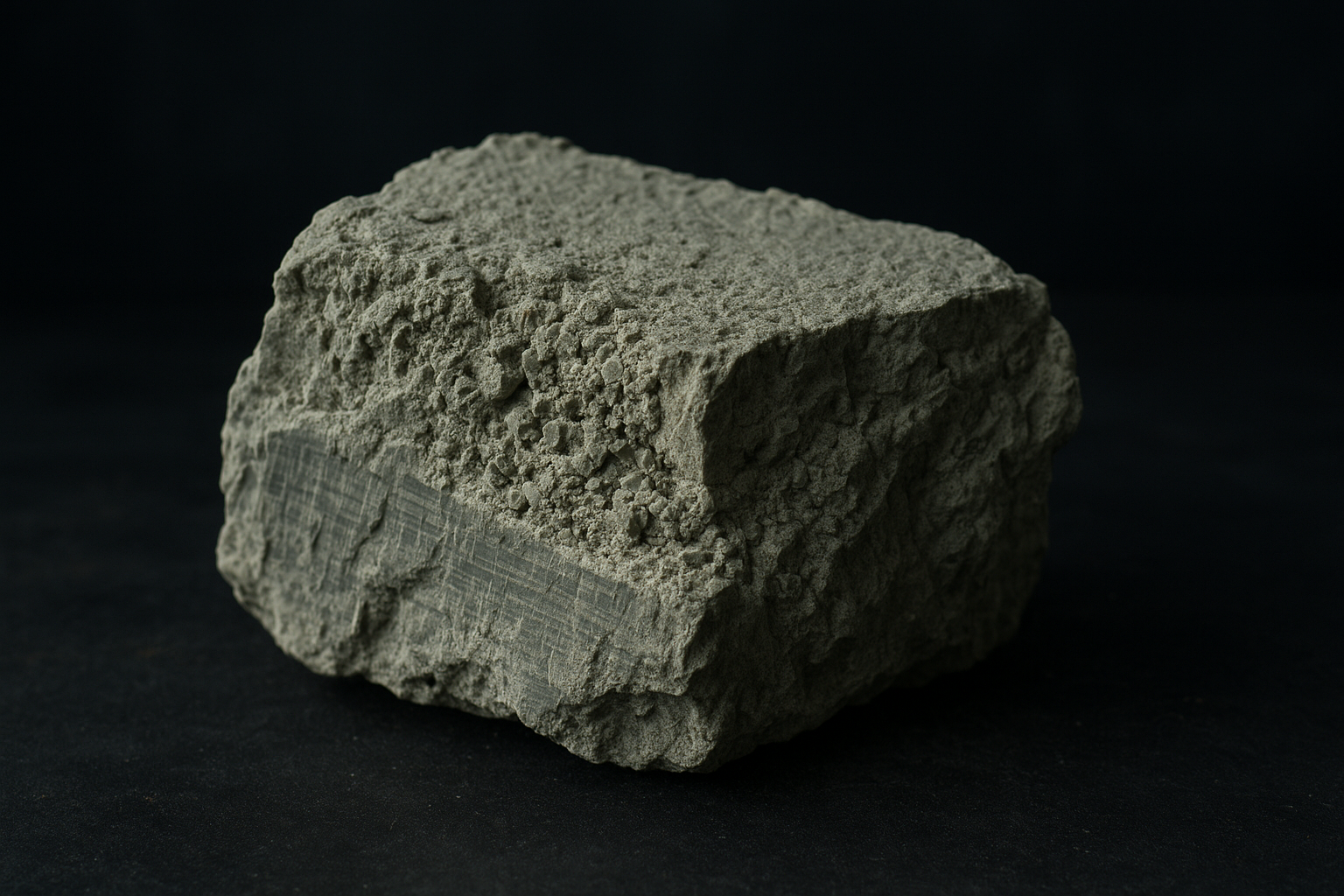
Why ammonia load in livestock housing is a problem
In intensively reared livestock housing, the most chronic problem is the ammonia (NH₃) gas generated as urea and uric acid in manure are broken down by the urease action of microorganisms. The breakdown products, ammonium (NH₄⁺) and volatile NH₃, shift in equilibrium depending on bedding pH and moisture: the more pH exceeds 7 toward alkaline, and the higher the moisture content, the more NH₃ volatilization accelerates. In poultry, pig, and cattle houses alike, when bedding becomes wet and manure accumulates, ammonia concentration rises rapidly; generally, once it exceeds 25 ppm, respiratory mucosa damage and reduced weight gain in animals and exposure risk to workers all increase simultaneously. When hydrogen sulfide (H₂S) and volatile fatty acids are added on top, this leads directly to odor complaints and the burden of complying with environmental regulations.
This page focuses not on feed addition (digestion and weight-gain support) but on environmental improvement applications that reduce ammonia and odor at the bedding, floor-material, manure-pile, and composting stages. In other words, it is a review of clinoptilolite not as a supplement that animals eat but as an inorganic adsorbent material that manages housing space and manure, and in this use the point where clinoptilolite intervenes is in blocking the "NH₄⁺ → NH₃ volatilization" pathway through lattice fixation.
Why clinoptilolite is considered for ammonia and odor reduction
In natural clinoptilolite, Al³⁺ partially substitutes for Si⁴⁺ sites in the crystal framework, creating a permanent negative charge, and to offset this, exchangeable cations such as Na⁺, K⁺, and Ca²⁺ reside outside the framework (extra-framework). The ammonium ions (NH₄⁺) generated from manure swap places with the existing cations at these exchange sites and are selectively captured. Clinoptilolite has a high affinity for NH₄⁺ (the De Gennaro 2024 review reports over 80% adsorption from a 50 ppm NH₃ solution, and 70–90% removal of NH₃-N and NO₃-N versus sand media on a specific-surface-area basis), so it works even in the complex multi-cation environment of a manure matrix.
Quantitatively, the ammonia adsorption capacity of unmodified clinoptilolite is on the order of ~10.8 mg NH₃/g (20°C) as compiled by De Gennaro et al. (2024), and rises to 21.2 mg/g with acid treatment using sulfuric or phosphoric acid. In aqueous ammonium adsorption experiments, natural zeolite of 0.3–0.6 mm particle size also showed 65–99.9% NH₄⁺ removal efficiency and static adsorption on the order of ~0.5 mg/g (Mažeikiene et al. 2008). These values are consistent with KMIZEOLITE's CEC 1.6–2.0 meq/g specification, and the captured ammonium is fixed in the lattice instead of escaping as volatile NH₃, lowering airborne concentration.
In addition, the micropores with a pore diameter of 4.0–7.0 Å are an appropriate size for physically adsorbing small odor molecules such as ammonia and sulfur compounds, and thanks to the pH stability range of 3.0–10.0, the structure does not collapse even in environments tending toward alkaline like manure. However, since clinoptilolite's NH₄⁺ fixation is not a permanent bond but a reversible ion exchange, some may be re-released upon a sudden rise in bedding pH or the influx of high-concentration competing cations (such as K⁺), so designing the re-application and replacement cycle is important. KMIZEOLITE natural clinoptilolite has a purity of 97% and is mined and processed at the Amargosa Valley mine in Nevada, USA, with a specific surface area of 40.0 m²/g and a hardness of 4.0–5.0 Mohs, so it does not break down easily even when mixed into bedding.
Summary of the working mechanism
| Pathway | Mechanism | Environmental improvement effect |
|---|---|---|
| NH₄⁺ fixation | Framework negative charge ↔ exchangeable cation swap (ion exchange) | Removes the NH₃ volatilization precursor, preserves manure nitrogen |
| NH₃ / odor physisorption | 4.0–7.0 Å micropores + specific surface area of 40 m²/g | Captures small odor molecules such as sulfur compounds |
| Moisture absorption | Moisture retention in hydrophilic pores | Eases bedding moisture and caking, suppressing the environment for urease activity |
| Slow-release nitrogen retention | Retains NH₄⁺ in the lattice, then releases it slowly | Reduces nitrogen loss during composting, preserves fertilizer value |
KMIZEOLITE key physical properties
| Item | Value |
|---|---|
| Clinoptilolite purity | 97% |
| Cation exchange capacity (CEC) | 1.6–2.0 meq/g |
| Specific surface area | 40.0 m²/g |
| Pore diameter | 4.0–7.0 Å |
| pH stability range | 3.0–10.0 |
| Hardness | 4.0–5.0 Mohs |
| Thermal stability | 700°C |
| Specific gravity | 1.89 |
| Bulk density | 45–54 lbs/ft³ |
| Certifications | OMRI KMI-10365, FDA GRAS, TSCA, EN-71-3 |
Application examples of zeolite for livestock environmental improvement
Below are representative application scenarios in which clinoptilolite is considered from the standpoint of manure and odor management. Because dosing works not as a mineral-only effect but together with bedding type, moisture content, and stocking density, treat the ratios below as a starting point and calibrate with on-site measurement.
- Bedding-mix type: Mixing granular zeolite into rice-hull or sawdust bedding at 5–10% by weight (or more during seasonal transitions with high odor load) to capture both bedding moisture and ammonia. In broiler rearing, there are reports that applying clinoptilolite to both bedding and feed reduced NH₃ concentration in the rearing house and ammonia volatilization from the bedding (Karamanlis 2008; Nakaue 1981).
- Floor-spreading type: Spreading powder to medium granules on the floor of poultry or pig houses before placement to suppress initial ammonia generation
- Manure-pile / storage-tank surface treatment: Applying zeolite to the surface of manure piles or storage tanks to capture volatile NH₃ at the surface layer. In a trial with stored laying-hen manure, ammonia emissions in the zeolite-treated group decreased compared with the control (Li 2008).
- Composting auxiliary material (maturation promotion): Mixing clinoptilolite into compost piles to retain NH₄⁺ and reduce nitrogen loss, preserving compost fertilizer value. In livestock-manure composting, the addition of clinoptilolite has been reported to have a positive effect on nitrogen retention and compost quality (Subova 2021).
- Trial / pilot application: Testing a small amount on a single-house basis to verify changes in ammonia concentration and bedding condition before deciding on full-scale application
For reference, all of the scenarios above are premised on the capture of cations (ammonium). Anions/oxyanions such as phosphate, fluoride, and nitrate nitrogen are repelled by clinoptilolite's negatively charged framework, so they are barely captured by unmodified natural zeolite. To also control nitrate and phosphate in manure wastewater, a separate material modified with metals (such as Fe) or surfactants is required.
Recommended particle size and product specifications
For environmental improvement uses, Medium Granule (14×40 mesh) mixed into bedding or floor material produces little dust and is suitable for capturing both moisture and ammonia; to rapidly capture ammonia on manure-pile surfaces or compost piles, spread Powder (100 mesh) on the surface. Refer to the table below to select the product group suited to your use.
| Product group | Mesh | Particle size | Representative use |
|---|---|---|---|
| Powder | 100 mesh or finer | <150μm | Pozzolan, feed, powder adsorption |
| Fine Granule | 30×50 mesh | 0.3–0.6mm | Water treatment, filtration, soil |
| Medium Granule | 14×40 mesh | 0.4–1.4mm | Filter media, bedding, floor material |
| Coarse Granule | 8×14 mesh | 1.4–2.4mm | Swimming pools, de-icing, large filtration |
| Extra Coarse | 4×8 mesh | 2.4–4.8mm | Packed beds, air scrubbers |
→ View products by mesh size · Product selection guide by application
On-site review points and research evidence
When applying zeolite for livestock environmental improvement, checking the following items can reduce trial and error.
- Ammonia baseline measurement: Measure NH₃ concentration (ppm) and bedding moisture content inside the housing before and after application to quantitatively compare the effect
- Particle-size selection by animal type: Medium Granule (14×40 mesh) is common for poultry and pig house bedding, and Powder (100 mesh) for manure surfaces and compost piles
- Dosing-ratio design: Start at 5–10% by weight of the bedding and increase it during seasonal transitions and high-density rearing periods
- Replacement / re-application cycle: Set the timing for additional spreading or replacement according to bedding moisture and the rate of manure accumulation
- Certification check: If you run organic livestock farming, confirm OMRI Listed (KMI-10365) compliance, and if used together with feed, confirm the FDA GRAS (ingestion use 21 CFR 582.2729) anticaking standard of 2% or less
The research evidence also supports this direction. The most classic source, Mumpton & Fishman (1977, Clays and Clay Minerals), was the first to outline that natural clinoptilolite can be used to reduce ammonia in livestock environments (DOI: 10.1346/CCMN.1977.0250509), and Karamanlis et al. (2008, British Poultry Science) reported that adding clinoptilolite to broiler bedding significantly reduced ammonia volatilization from the bedding and improved the rearing environment (DOI: 10.1080/00071660802235919). At the manure-storage stage as well, Li et al. (2008, Journal of Applied Poultry Research) confirmed that applying zeolite to stored laying-hen manure reduced ammonia emissions (DOI: 10.3382/japr.2007-00076).
Broadening to the composting stage, Subova et al. (2021, Agriculture) reported that adding clinoptilolite to livestock-manure composting improved nitrogen retention and compost characteristics (DOI: 10.3390/agriculture11100980). As the basis for the quantitative adsorption values, the De Gennaro et al. (2024, Environmental Science and Pollution Research) review synthesized NH₃ adsorption of ~10.8 mg/g for unmodified clinoptilolite (20°C; 21.2 mg/g with acid treatment) and 70–90% NH₃-N removal versus sand media, among others (DOI: 10.1007/s11356-024-33656-5). The broader application background across animal nutrition is summarized in the review by Papaioannou et al. (2005, Microporous and Mesoporous Materials) (DOI: 10.1016/j.micromeso.2005.01.013).
Meanwhile, the case of using clinoptilolite together with feed differs from the environmental improvement use in both purpose and supporting basis. For uses that animals ingest, FDA GRAS 21 CFR 582.2729 (animal feed) applies, and non-feed general use falls under 21 CFR 182.2729. The bedding, manure, and compost treatment on this page is environmental management rather than an ingestion use, but if the same material is also used as a feed anticaking agent, you must confirm the GRAS anticaking limit (no more than 2% of the total formulation).
→ Check the TDS (product data sheet) · Check the MSDS (safety data sheet)
Zeolite for livestock environmental improvement FAQ
Does zeolite actually reduce ammonia odor in livestock housing?
Yes, the effect is expected based on its mechanism. Through cation exchange of CEC 1.6–2.0 meq/g, clinoptilolite captures the ammonium (NH₄⁺) released from manure, reducing the amount that escapes as volatile NH₃ gas. Even in unmodified form, adsorption on the order of ~10.8 mg NH₃/g (20°C) has been reported (De Gennaro 2024); Karamanlis et al. (2008) reported reduced ammonia volatilization when applied to broiler bedding, and Li et al. (2008) reported reduced ammonia emissions from stored manure. However, the effect varies with bedding moisture, stocking density, and dosing ratio, and NH₄⁺ fixation is reversible, so a single-house pilot and a re-application schedule design are recommended.
Does it also capture anions such as phosphate and nitrate in manure wastewater?
No. Because its framework carries a negative charge, unmodified clinoptilolite is strong at capturing cations (NH₄⁺), but anions/oxyanions such as phosphate (PO₄³⁻), nitrate nitrogen (NO₃⁻), and fluoride share the same negative charge and are repelled, so they are barely adsorbed. The ammonia reduction on this page rests entirely on cation-exchange logic; to also control phosphorus and nitrate in manure wastewater, a separate material modified with metals such as Fe or with surfactants is a prerequisite.
Which particle size (mesh) should I use for bedding and floor material?
For mixing into bedding or spreading as floor material, Medium Granule (14×40 mesh), which produces little dust, is suitable; to rapidly capture ammonia on manure-pile surfaces or compost piles, spread Powder (100 mesh). Please refer to the product selection guide by application.
How much should I mix into the bedding?
Generally, start at 5–10% by weight of the bedding, and increase the ratio in periods of high ammonia load such as seasonal transitions or high-density rearing. The exact dosing and re-application interval are best finalized on site while measuring ammonia concentration and bedding condition.
Is this the same product as the feed additive that animals eat?
It is the same mineral, but the use differs. This page focuses on environmental (ammonia and odor) management at the bedding, manure, and composting stages. For the feed use that animals ingest, FDA GRAS 21 CFR 582.2729 applies, and when used as an anticaking agent it is limited to no more than 2% of the total formulation, while non-feed general use falls under 21 CFR 182.2729. For organic livestock farming, confirm OMRI Listed (KMI-10365) compliance.
Can I receive a sample for testing?
Yes, KMIZEOLITE supports providing samples for real-world application review. On the sample request page, please leave your animal type, application stage (bedding/manure/compost), and desired particle size.
Inquiries and sample requests
If you are considering applying zeolite in the field of eco-friendly livestock environmental improvement, please reach out through the channels below.
Notice
Applicability may vary depending on site conditions, regulations, and test results. Before actual application, a test review suited to the site conditions must always be carried out first. Zeolite is best understood not as a cure-all for this field but as a material that supports existing processes.
Related pages
science Related Papers
These are academic papers covering zeolite application in this field. Please refer to them when reviewing adoption.
- Zeolite as a natural feed additive for animal nutrition: A review
Papaioannou, D. et al. — Microporous and Mesoporous Materials, 2005 - Zeolites as feed additives in livestock: A review
Ural, D.A. — Scientific Papers: Series D, Animal Science, 2014 - Use of natural zeolite (clinoptilolite) in the reduction of ammonia from livestock environments
Mumpton, F.A. and Fishman, P.H. — Clays and Clay Minerals, 1977 - Effects of clinoptilolite on broiler performance and ammonia emission
Karamanlis, X. et al. — British Poultry Science, 2008 - Reduction of Ammonia Emissions from Stored Laying Hen Manure Through Zeolite
Li, H. et al. — Journal of Applied Poultry Research, 2008 - Amendment of Livestock Manure with Zeolite-Clinoptilolite and Effect on Composting
Subova, E. et al. — Agriculture, 2021 - Studies with Clinoptilolite in Poultry: Effect on Broiler Performance and House Environment
Nakaue, H.S. et al. — Poultry Science, 1981 - Fundamental properties and sustainable applications of natural zeolite clinoptilolite
De Gennaro, B. et al. — Environmental Science and Pollution Research, 2024 - Removal of nitrates and ammonium ions from water using natural sorbent zeolite
Mažeikiene, A. et al. — Journal of Environmental Engineering and Landscape Management, 2008 - Natural clinoptilolite as aflatoxin binder in dairy cattle feed
Katsoulos, P.D. et al. — Microporous and Mesoporous Materials, 2006
The papers above are reference material; actual application requires a separate review suited to site conditions.