Zeolite for Indoor Dehumidification & Desiccant Replacement
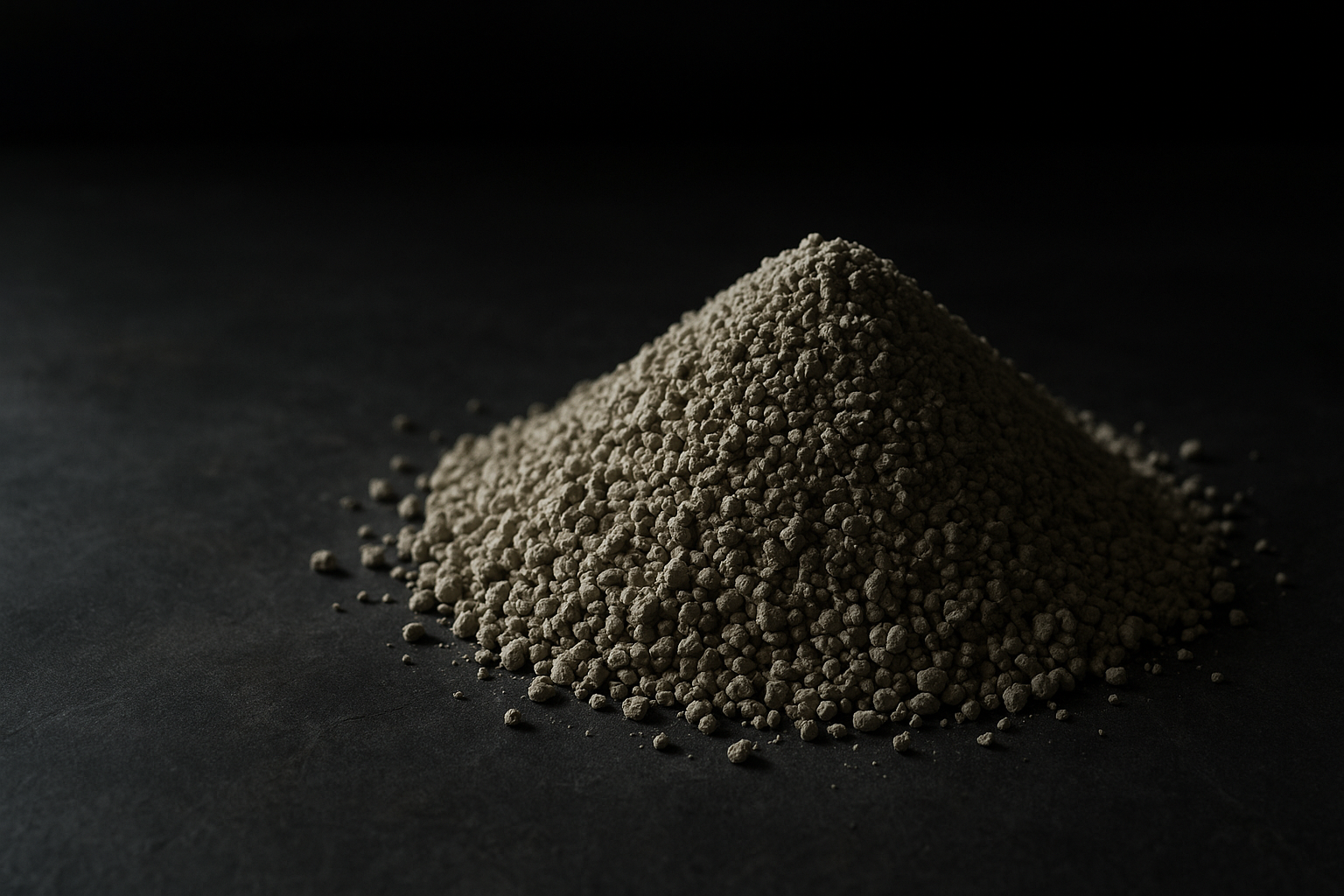
Natural clinoptilolite is an equilibrium-type adsorbent that, through capillary condensation in 4.0–7.0 Å micropores, begins adsorbing moisture from a low relative humidity of 30–50% and buffers the humidity of poorly ventilated closets, shoe cabinets, and storage rooms by simple static placement alone. Unlike dripping calcium chloride or single-use silica gel, its key differentiators are that it stays solid even after adsorbing moisture and is repeatedly regenerated by microwave or sunlight drying — and it is positioned as a humidity buffer for stagnant spaces, not a pump-type forced dehumidifier.
Why Moisture in Closets, Shoe Cabinets, and Built-in Wardrobes Keeps Coming Back
During the rainy season and in winter when ventilation is difficult, the relative humidity in narrow, poorly circulated spaces — closets, shoe cabinets, built-in wardrobes, storage rooms, and under sinks — easily exceeds 70%. Mold generally grows actively at a relative humidity of about 80% or higher and where surface water activity is high, so keeping the humidity of enclosed spaces below around 60% becomes the practical goal for suppressing condensation, mold, and odor. When high humidity persists, condensation forms, mold spores proliferate, and leather, fabric, and paper goods discolor and degrade.
Ordinary small silica gel sachets hold only about 1–5 g, too little to cover even a single narrow storage space, while calcium chloride (CaCl₂) desiccants deliquesce after adsorbing moisture, drip as liquid, and are single-use — discarded after one use. In short, three limitations recur: insufficient uptake capacity, an inability to reuse even when adsorption occurs, or dripping that contaminates clothing and furniture.
For indoor dehumidification, zeolite is examined as a reusable moisture-adsorbing material that replaces such single-use desiccants. The key evaluation criteria are that it buffers humidity through natural equilibrium adsorption when statically placed in a narrow space, maintains a non-dripping solid form, can be dried and reused repeatedly when it becomes heavy, and is safe in pet and child environments. For living spaces where odor must be controlled at the same time, see the simultaneous indoor odor & moisture control page.
How Zeolite Captures Moisture
Natural clinoptilolite has uniform 4.0–7.0 Å micropores developed as three-dimensional channels within the crystal. Water molecules (kinetic diameter about 2.8 Å) are drawn into these pores and captured by capillary condensation and surface adsorption, while a specific surface area of 40.0 m²/g and a pore volume amounting to roughly half the framework provide the internal space that takes in water vapor. To offset the negative charge created when Al substitutes for Si in the framework, exchangeable cations such as Na⁺, Ca²⁺, and K⁺ reside in the channels, and these hydrophilic cation sites (CEC 1.6–2.0 meq/g) act as polar sites that attract the dipoles of water molecules. As a result, adsorption begins from a lower relative humidity (roughly RH 30–50%) than with other desiccants — a characteristic of the clinoptilolite water-adsorption isotherm.
Comparing Adsorption Behavior with Silica Gel and Calcium Chloride
Even the same "moisture adsorption" produces different isotherm shapes and operating outcomes depending on the material. Below is a qualitative comparison from the perspective of static-placement indoor dehumidification.
| Category | Natural Clinoptilolite | Silica Gel | Calcium Chloride (CaCl₂) |
|---|---|---|---|
| Adsorption mechanism | Micropore capillary condensation + cation hydrophilic adsorption | Silanol-group surface adsorption (mesopores) | Deliquescent chemical adsorption |
| Low-humidity (RH 30–50%) uptake | Strong (starts at low RH) | Moderate | Weak (works mainly at high humidity) |
| Form after adsorption | Stays solid (no dripping) | Stays solid | Drips as liquid (generates waste liquid) |
| Regeneration / reuse | Possible (microwave/sunlight, stable to 700°C) | Possible (heat regeneration) | Not possible (single-use) |
| Safety | Natural mineral · FDA GRAS · EN-71-3 | Caution: silica dust | Skin irritation · metal corrosion |
In particular, zeolite's adsorption is physical adsorption rather than chemical bonding, making it reversible. When zeolite is saturated with moisture, applying heat releases the water held in the channels as vapor and restores its adsorption capacity. The natural mineral framework withstands up to 700°C, so it can be reused repeatedly without structural damage at regeneration temperatures on the order of a household microwave or sunlight drying (typically 100–150°C is sufficient). Silica gel can also be heat-regenerated, but zeolite begins adsorbing at a lower relative humidity, does not drip, and carries safety certifications, giving it a broader operating range for static placement in living spaces.
In fact, Serhiienko et al. (2023, Energy and Buildings) reported that applying natural zeolite to building materials can buffer indoor relative humidity fluctuations while saving heating and cooling energy (DOI 10.1016/j.enbuild.2023.113245), and a study experimenting with moisture migration in a zeolite-based composite humidity-control material showed that moisture moves reversibly along the pore channels during adsorption/desorption cycles (Applied Thermal Engineering, 2017, S1359431117336268). Studies evaluating the hygrothermal performance of zeolite-based humidity-control building materials likewise concluded that the material exhibits autonomous humidity-buffering behavior that self-regulates indoor humidity within a certain range (DOI 10.18280/ijht.340309; Alexandria Engineering Journal, 2023, S1110016823000479). Meanwhile, the indoor air quality review by Sahin et al. (2020, Building and Environment) noted that zeolite is examined as a multifunctional adsorbent that simultaneously addresses moisture, VOCs, and odor (DOI 10.1016/j.buildenv.2020.106949). That said, most of these studies were conducted under building-element, composite-material, or test-chamber conditions, so adsorption rate and buffering range may differ for small-quantity static use in the home, and small-scale trials are recommended.
KMIZEOLITE's natural clinoptilolite has a purity of 97%, is mined and processed at the Amargosa Valley mine in Nevada, USA, and — with a stable pH range of 3.0–10.0, EN-71-3 PASS, California Prop 65 compliance, and FDA GRAS (general use 21 CFR 182.2729; animal-feed ingestion use 21 CFR 582.2729) — can be considered for indoor environments with pets and children.
KMIZEOLITE Key Properties
| Item | Value |
|---|---|
| Clinoptilolite purity | 97% |
| Cation exchange capacity (CEC) | 1.6–2.0 meq/g |
| Specific surface area | 40.0 m²/g |
| Pore diameter | 4.0–7.0 Å |
| pH stability range | 3.0–10.0 |
| Hardness | 4.0–5.0 Mohs |
| Thermal stability | 700°C |
| Specific gravity | 1.89 |
| Bulk density | 45–54 lbs/ft³ |
| Certifications | OMRI KMI-10365, FDA GRAS, TSCA, EN-71-3 |
Application Examples for Indoor Dehumidification Aid
Below are representative ways zeolite is examined as a dehumidification aid in homes and living spaces, along with recommended dosing. The guiding principle for dosing is to increase the fill per unit volume the more enclosed and stagnant the space is, and to spread it thinly in a breathable cotton pouch so the surface makes ample contact with the air. With a granular bulk density of about 45–54 lbs/ft³ (≈720–865 kg/m³), 200 g corresponds to a volume of roughly 230–280 mL — use this as a reference when sizing pouches and containers.
- Closet / built-in wardrobe, static placement: Place granular zeolite in a breathable cotton pouch at the bottom of the hanging rail or on a shelf. Recommend 200–500 g per standard closet section (about 0.5 m³); during the rainy season, add more per section and distribute it top and bottom to increase the air-contact area
- Shoe cabinet / storage cabinet: Place 100–200 g pouches per compartment on the floor to adsorb trapped moisture and prevent mold on leather shoes. Do not put wet shoes straight in; storing them after wiping off surface moisture reduces the desiccant load
- Storeroom / laundry room / under sink: Place 300–500 g in a breathable container in poorly ventilated corners, positioning it near walls or piping prone to condensation to buffer localized condensation
- Storage boxes / seasonal clothing bins: For sealed storage, add 100–300 g per box to suppress moisture and mold during storage. Because additional adsorption stops once equilibrium is reached the more sealed the space is, fully dry and regenerate the zeolite before long-term storage to secure adsorption headroom
- Small-scale pilot: Split two spaces of identical conditions into treated/untreated and compare adsorption weight gain and changes in condensation, mold, and odor weekly to biweekly. Where possible, also recording RH changes with a small thermo-hygrometer provides a basis for adjusting the dose
Recommended Particle Size and Product Specifications
For indoor dehumidification aid, Medium Granule (14×40 mesh) and Coarse Granule (8×14 mesh) grains — which have little dripping or dust and pack well into breathable pouches — are suitable for static placement in closets, shoe cabinets, and bathrooms. For fine crevices or storage-box adsorption, Fine Granule (30×50 mesh) can be considered while watching for dust.
| Product Group | Mesh | Particle Size | Typical Use |
|---|---|---|---|
| Powder | 100 mesh or finer | <150μm | Pozzolan, feed, powder adsorption |
| Fine Granule | 30×50 mesh | 0.3–0.6mm | Water treatment, filtration, soil |
| Medium Granule | 14×40 mesh | 0.4–1.4mm | Filter media, bedding, flooring |
| Coarse Granule | 8×14 mesh | 1.4–2.4mm | Pools, de-icing, large-scale filtration |
| Extra Coarse | 4×8 mesh | 2.4–4.8mm | Packed beds, air scrubbers |
→ View products by mesh size · Product selection guide by application
Points to Review for Installation and Maintenance
When using zeolite as an indoor dehumidification aid, checking the items below helps maintain stable performance.
- Space conditions: Determine the dose by assessing the target space's volume (m³) and ventilation frequency. The more stagnant and enclosed the space, the higher the dose per unit volume
- Understanding adsorption equilibrium: Zeolite reaches equilibrium with the surrounding relative humidity, so it serves a humidity-buffering role rather than pump-type forced dehumidification. Leaks or structural defects severe enough to pool condensation require separate measures
- Operating as a desiccant replacement: When switching existing silica gel or calcium chloride desiccants to reusable zeolite, match the dose by the same location and volume, and establish a cycle of drying and regenerating it when it becomes heavy
- Reactivation (reuse): When it becomes heavy with adsorbed moisture, release the moisture and reuse it. In a microwave, spread it thinly in a heat-resistant container and heat for about 2 minutes (keep it in the pouch to prevent dust scattering), or dry it in direct sunlight for several hours. The framework is stable up to 700°C, so it withstands repeated regeneration at household regeneration temperatures (around 100–150°C). A typical replacement/regeneration interval for static use is 3–6 months; use a noticeable increase in weight relative to the initial state as the signal to regenerate
- Safety: As a natural mineral with no chemical additives — EN-71-3 (toy safety) PASS, California Prop 65 compliant, FDA GRAS (general 21 CFR 182.2729; animal-feed ingestion 21 CFR 582.2729) — it can be considered even in locations reachable by pets and children. To avoid inhaling dust, however, place granular product in a breathable pouch out of reach, and take care that fines do not scatter during regeneration
→ View TDS (Technical Data Sheet) · View MSDS (Safety Data Sheet)
Indoor Dehumidification Aid FAQ
How is zeolite different from silica gel and calcium chloride dehumidifiers?
Zeolite is a natural mineral that adsorbs moisture through capillary condensation in 4.0–7.0 Å micropores and hydrophilic cation sites (CEC 1.6–2.0 meq/g). Unlike calcium chloride, it does not deliquesce and drip after adsorbing moisture but remains solid; it begins adsorbing at a lower relative humidity (roughly RH 30–50%) than silica gel; and after adsorption it can be dried in a microwave or in sunlight for repeated reuse — all of which set it apart from single-use desiccants. Note, however, that it does not forcibly draw down room humidity the way a pump-type electric dehumidifier does; rather, it is an auxiliary medium that buffers humidity in stagnant spaces.
Which particle size (mesh) is suitable for indoor dehumidification?
Granular grades with little dripping or dust are best. For static placement in closets, shoe cabinets, and bathrooms, use Medium Granule (14×40 mesh) and Coarse Granule (8×14 mesh); for fine crevices or storage boxes, consider Fine Granule (30×50 mesh) while watching for dust. Spreading it thinly in a breathable cotton pouch increases the air-contact area and speeds up adsorption. Refer to the product selection guide by application.
How much should I use, and how effective is it?
A good starting point is 200–500 g per standard closet section (about 0.5 m³), 100–200 g per shoe-cabinet or storage compartment, and 300–500 g in the corners of a storeroom or laundry room. However, because zeolite is an equilibrium-type adsorbent that reaches equilibrium with the surrounding relative humidity, it is strong at buffering and suppressing stagnant moisture in enclosed spaces but cannot forcibly lower the humidity of spaces where moisture keeps entering due to leaks or poor ventilation. Rather than replacing a pump-type electric dehumidifier, it is better viewed as an auxiliary means of switching single-use desiccants to a reusable type and preventing mold and condensation in small, stagnant spaces. Adjust the dose while observing RH changes with a small thermo-hygrometer.
Can it be reused after adsorbing moisture? What is the replacement interval?
Yes. Because it is physical adsorption, it is reversible: when it becomes heavy, heat it in a microwave for about 2 minutes or dry it in sunlight to release the moisture and reuse it. The framework is stable up to 700°C, so it withstands repeated regeneration at household regeneration temperatures (around 100–150°C). For static use, a typical replacement/regeneration interval is 3–6 months, which can be shorter in very humid environments. Use a noticeable increase in weight relative to the initial state as the signal to regenerate.
Is it safe in homes with pets or children?
It is natural clinoptilolite with no chemical additives, a mineral certified EN-71-3 (toy safety) PASS, compliant with California Prop 65, and recognized as FDA GRAS (general use 21 CFR 182.2729; animal-feed ingestion use 21 CFR 582.2729). To avoid inhaling dust, however, we recommend placing granular product in a breathable cotton pouch out of reach. Check the certifications page for details.
Inquiries and Sample Requests
If you are considering applying zeolite in the field of indoor dehumidification, please reach out through the channels below.
Notice
Applicability may vary depending on site conditions, regulations, and test results. Before actual application, a test review tailored to site conditions must always come first. Zeolite is not a universal solution for this field but is best understood as a material that supports existing processes.
Related Pages
science Related Research Papers
Academic papers covering zeolite applications in this field. Refer to them when evaluating adoption.
- Zeolite for indoor air quality: A review of environmental applications
Sahin, O. et al. — Building and Environment, 2020 - Natural zeolite for humidity control and energy saving in buildings
Serhiienko, A. et al. — Energy and Buildings, 2023 - Temperature-humidity controlling performance of zeolite-based composite for building
Various — Alexandria Engineering Journal, 2023 - Experimental Study on Moisture Migration of Zeolite-based Composite Humidity Control Material
Various — Applied Thermal Engineering, 2017 - Hygrothermal Performance of Zeolite-Based Humidity Control Building Materials
Various — International Journal of Heat and Technology, 2016
The papers above are reference material; actual application requires a separate review tailored to site conditions.