FAQ
Frequently asked technical questions.
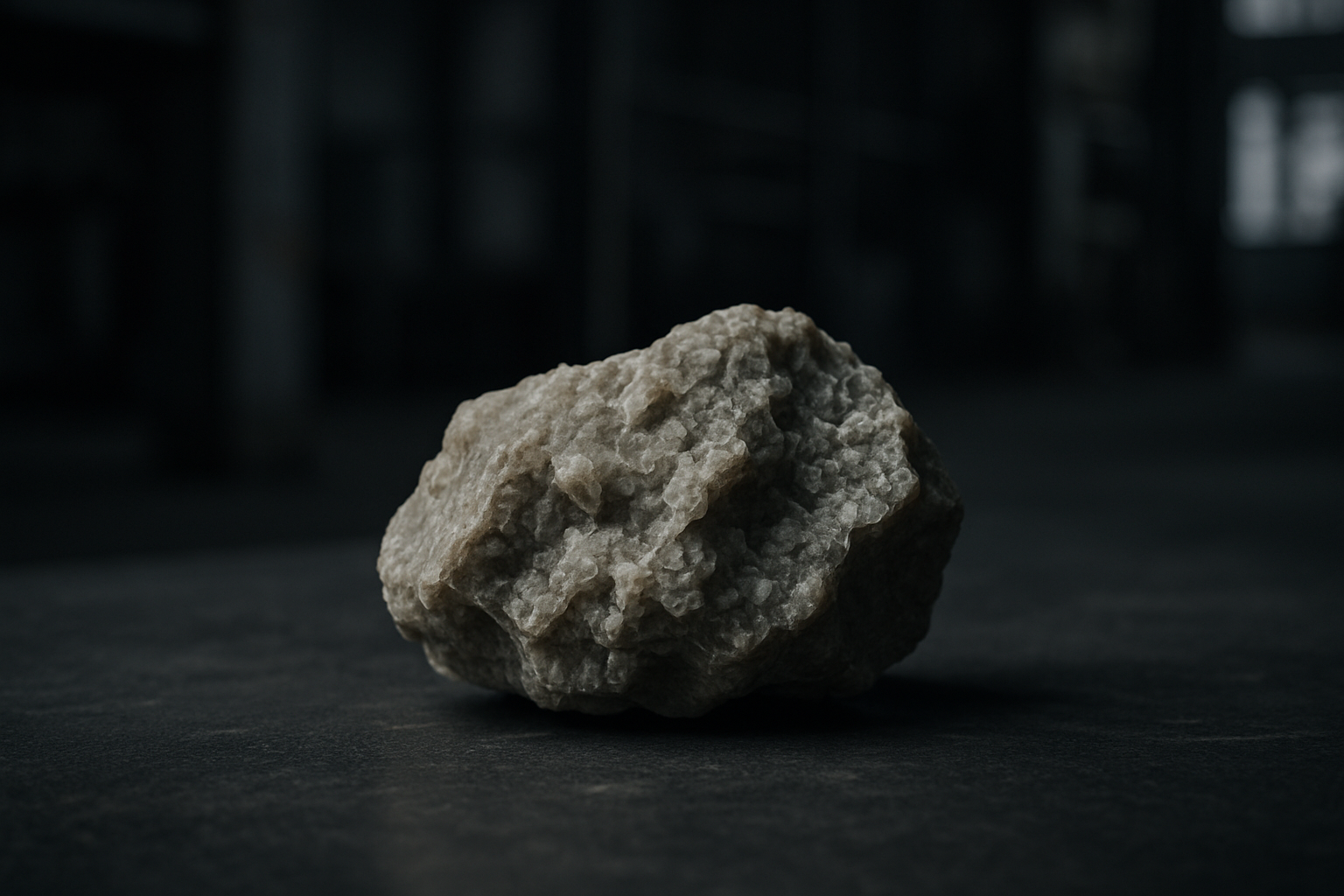
Frequently Asked Questions — Answers Backed by Specific Data
Customers evaluating zeolite for the first time often want to know, even before the product itself, "Where can it be used?", "Which specification should I choose?", and "Can it be used safely?". Based on the KMI public FAQ and technical data, this page organizes the answers together with concrete figures.
FAQ
Q1. What type of zeolite is KMIZEOLITE?
KMIZEOLITE is a natural clinoptilolite (Clinoptilolite) type zeolite.
- Molecular formula: Na₆[Al₆Si₃₀O₇₂]·24H₂O
- CAS No.: 1318-02-1
- Mine: Amargosa Valley, Nevada, USA
- Purity: 97.0% (clinoptilolite content)
Clinoptilolite is the most abundant and most industrially used of the 40-plus zeolite species found in nature.
Q2. What are the main chemical components?
| Component | Content | Component | Content | |
|---|---|---|---|---|
| SiO₂ | 66.7% | Na₂O | 1.8% | |
| Al₂O₃ | 11.48% | CaO | 1.33% | |
| K₂O | 3.42% | Fe₂O₃ | 0.9% |
The main components are a natural aluminosilicate based on silicon (Si) and aluminum (Al).
Q3. Why is CEC important, and what is the CEC of KMIZEOLITE?
CEC (Cation Exchange Capacity) is a key indicator of a zeolite's ability to exchange cations.
- KMI CEC: 1.6–2.0 meq/g
- Excellent selective exchange characteristics, particularly for ammonium (NH₄⁺)
- A core criterion in water treatment (ammonia management), deodorization (litter/livestock-housing odor), soil (nutrient retention), and environmental remediation (heavy-metal adsorption)
Q4. What certifications does it hold?
| Certification | Registration No./Standard | Details |
|---|---|---|
| OMRI Listed | KMI-10365 | Allowed for organic use, valid until 2027-03-01 |
| FDA GRAS | 21 CFR 182.2729 & 582.2729 | Recognized as a safe substance |
| EN-71-3 | — | European toy safety PASS |
| Prop 65 | — | Compliant with California carcinogen requirements |
| TSCA | CAS 1318-02-1 | Compliant with the Toxic Substances Control Act |
| CDFA | — | Registered with the California Department of Food and Agriculture |
Q5. Can it be used directly for human consumption?
No. The KMI public FAQ clearly states: KMI's own products are not handled or processed for human consumption. For human use, food use, or direct health-related applications, separate specifications and control standards are required, and it should not be treated the same as a general industrial product.
Q6. Can it be used in the animal feed sector?
Under FDA GRAS (21 CFR 582.2729), it can be used in feed, but the following conditions must be observed.
- Purpose: permitted only as an anti-caking agent
- Limit: 2% or less of the total feed formulation
- OMRI: Allowed as an organic Livestock Feed Ingredient
Actual usability may vary depending on each country's feed regulations, livestock species, and formulation method, so local regulatory review is essential.
Q7. Can it also be used in the organic farming sector?
Yes. It is registered as OMRI Listed (KMI-10365) and is Allowed under the NOP (National Organic Program).
- Can be used as an organic soil amendment
- Can be used as an organic livestock feed ingredient
- Registration expiry: March 1, 2027 (renewal status to be confirmed)
Q8. Which particle size (mesh) should I choose?
| Application | Recommended Mesh | Particle Size |
|---|---|---|
| Pozzolan / cement / feed | 100- (Powder) | <150μm |
| Water treatment / filtration / cat litter | 30×50 (Fine) | 0.3–0.6mm |
| Livestock housing / gardening / deodorizing | 14×40 (Medium) | 0.4–1.4mm |
| De-icing / pool filtration | 8×14 (Coarse) | 1.4–2.4mm |
| Large-scale packing / scrubbers | 4×8 (Extra) | 2.4–4.8mm |
Q9. Which specification should I reference for the construction sector (pozzolan)?
- Reference standard: ASTM C618 (Standard Specification for Coal Fly Ash and Raw or Calcined Natural Pozzolan)
- KMIZEOLITE composition: SiO₂(66.7%) + Al₂O₃(11.48%) + Fe₂O₃(0.9%) = approx. 79.08%
- Composition meets the Class N criterion (≥70%)
- Recommended product: Powder 100 mesh or finer (median 50μm)
Actual ASTM C618 conformity must be finally confirmed through testing.
Q10. Is it safe for pets and household use?
KMIZEOLITE holds the safety certifications below, providing a basis for safe use in household and pet environments.
- EN-71-3 PASS: passes the European toy safety standard (heavy-metal leaching)
- California Prop 65 compliant: no carcinogenic or reproductive-toxicity substances detected
- FDA GRAS: recognized as a generally safe substance
- TSCA compliant: no components on the hazardous-substances list
Q11. Are bulk supply and white-label available?
Yes. KMI provides worldwide shipping, various logistics methods, and white-label services.
- Samples: 2.2kg units
- Bulk: 22kg and 50lbs bags
- OEM / white-label: by separate agreement
- Korea price range: from ₩15,000–30,000 per sample (varies by mesh)
Q12. Which documents should I request for technical data?
| Document | Details | When needed |
|---|---|---|
| SDS/MSDS | Safety data sheet | Workplace safety review, import customs clearance |
| TDS/PDS | Material properties and specifications | Quality comparison, formulation design |
| Mesh size chart | Particle size selection guide | Product selection |
| Certification documents | OMRI, GRAS, EN-71-3, etc. | Delivery, bidding, licensing |
| Catalog | Full product summary | Initial review |
Related Pages
- TDS / Technical Data — full material property data
- MSDS / SDS — safety information summary
- Certifications, Registrations & Designations — certification details
- Mesh Size Chart — particle size guide
- Product Guide by Mesh Size — product purchasing
Important Notice
The FAQ is a summary guide for quick understanding. For actual delivery, contracts, imports, design integration, safety review, and certification submission, always confirm against the latest original documents and the applicable national standards.
Standard Footer Statement
KMIZEOLITE does not overstate the application potential of zeolite; it provides guidance based on the documents and information needed for genuine evaluation. Technical data, safety data, particle size, certifications, and supply specifications may vary by application and country, so project-by-project confirmation is required.