Pigsty Floor Management Zeolite
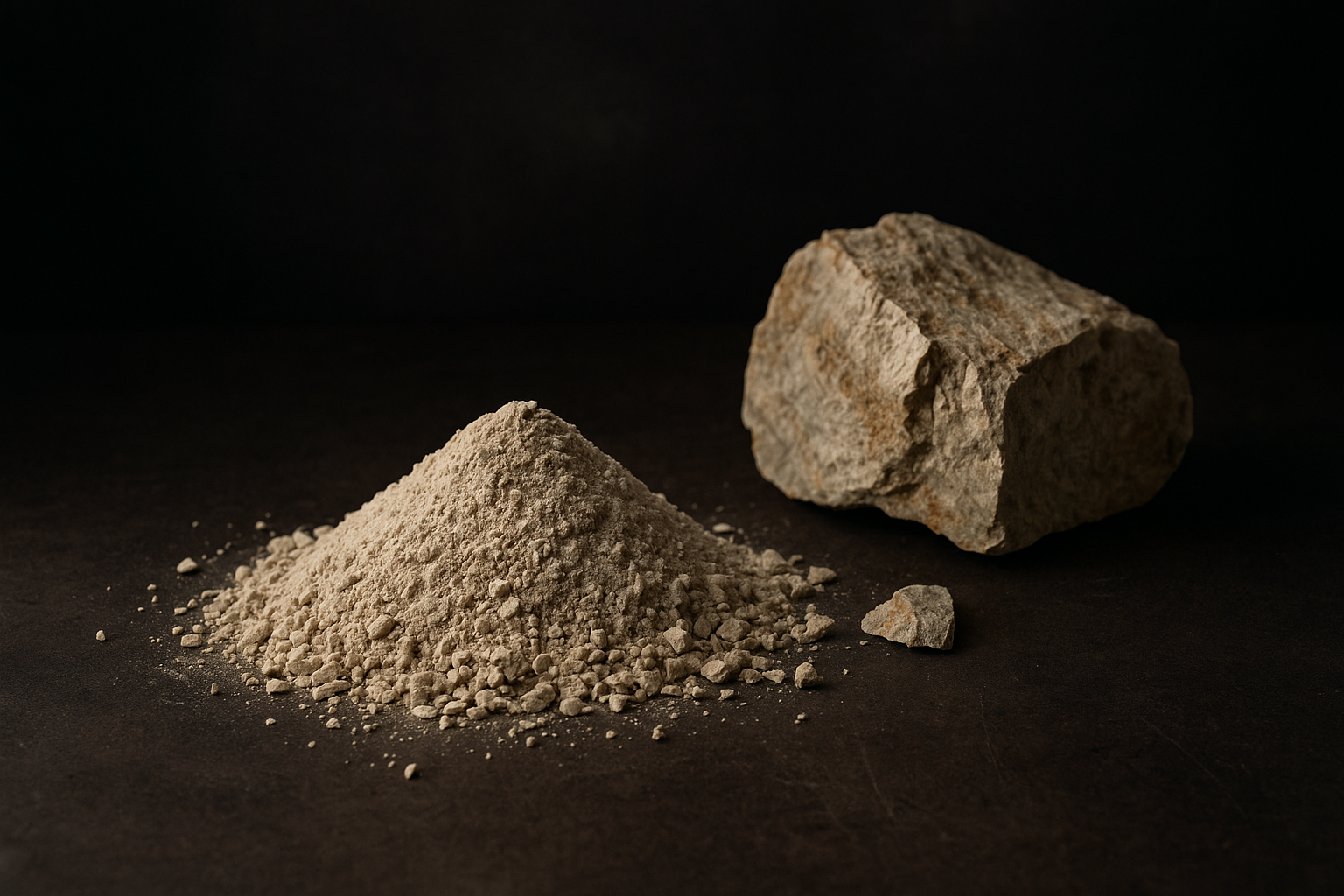
In pigsty floor management, the role of natural clinoptilolite is not to replace disinfectants or ventilation equipment, but to serve as a "moisture-absorbing + nitrogen-buffering" supplementary material that fixes NH₄⁺ in manure within its lattice through cation exchange at CEC 1.6–2.0 meq/g, slowing the re-volatilization of NH₃ from slat and pit surfaces. This page summarizes the volatilization mechanism, the 14×40 mesh application design, and stage-by-stage application and pilot review points for farrowing, weaner and finishing barns, together with quantitative evidence.
Why do ammonia and moisture problems arise on pigsty floors?
Because a pigsty has a high stocking density per unit area and manure stays for long periods in the pit beneath the slat floor, the urea in the manure is hydrolyzed by bacterial urease, continuously generating ammoniacal nitrogen (NH₄⁺ ⇌ NH₃). This equilibrium is sensitive to pH and temperature, so under finishing and farrowing barn conditions where the manure surface pH exceeds 7 and the temperature rises to 25–30℃, the fraction of volatile NH₃ increases sharply. When the NH₃ concentration near the floor exceeds the 20–40 ppm level, irritation of the pigs' respiratory mucosa and reduced weight gain are reported, and managing worker exposure limits (an 8-hour time-weighted average of 20–25 ppm in many countries) also becomes difficult.
On top of this, residual moisture on the slat surface causes hoof maceration and slipping accidents, while a wet floor raises urease activity and creates a vicious cycle that accelerates ammonia generation. Therefore a floor supplementary material cannot suffice with a mere moisture-absorbing function; it must combine two actions: ① holding moisture to slow the urease reaction rate, and ② capturing already-generated NH₄⁺ in ionic form to delay the shift to the NH₃ equilibrium. The very reason clinoptilolite is reviewed in this field is that it provides both of these actions simultaneously in a single material.
Why is clinoptilolite reviewed for pigsty floors — the ion-exchange and moisture-absorption mechanism
Natural clinoptilolite has a three-dimensional microporous structure (effective pore diameter 4.0–7.0 Å) with a negatively charged framework filled with (Na, K, Ca)-type cations. This pore-entrance size is suitable for ammonium ions (NH₄⁺), which have a small hydration radius, and water molecules to move in and out of the lattice interior, while excluding larger organic molecules, giving it a molecular-sieve selectivity. The key is the cation-exchange capacity (CEC) of 1.6–2.0 meq/g, by which the NH₄⁺ generated from manure exchanges places with the Na⁺, K⁺ and Ca²⁺ within the lattice and becomes fixed. Among the various cations, clinoptilolite has a comparatively high selectivity for NH₄⁺ and K⁺, so it works advantageously as a nitrogen-buffering material in an environment rich in NH₄⁺ such as manure.
What matters here is that what is adsorbed is not a volatilizable gas (NH₃) but an ion (NH₄⁺). The NH₄⁺ captured in the lattice is bound before it can proceed to the deprotonation and volatilization stage into NH₃ under equilibrium, so the NH₃ release perceptible to the nose at the floor surface is delayed accordingly. Converting CEC to a mass basis, 1.6–2.0 meq/g theoretically corresponds to a capacity of exchanging about 29–36 mg of NH₄⁺-N (about 22–28 mg N) per gram, and in actual fields it is realized lower than this depending on competing cations, contact time and moisture. Therefore an approach of setting this theoretical capacity as the upper bound for the application rate and correcting it by pilot is appropriate.
This mechanism in the livestock environment has been documented from early on. The classic review by Mumpton and Fishman (Clays and Clay Minerals, 1977) synthesized that when natural clinoptilolite is applied to pigsty and cattle barn bedding and manure, ammonia volatilization is suppressed and the barn environment is improved (Mumpton & Fishman, 1977, DOI:10.1346/CCMN.1977.0250509). The review by Papaioannou et al. (Microporous and Mesoporous Materials, 2005), which covered livestock broadly including swine, also summarized that clinoptilolite's NH₄⁺ adsorption and buffering characteristics contribute to manure nitrogen management and improvement of the rearing environment (DOI:10.1016/j.micromeso.2005.01.013).
KMIZEOLITE's natural clinoptilolite has a purity of 97% and is mined and processed at the Amargosa Valley mine in Nevada, USA. With a specific surface area of 40.0 m²/g, a pH stability range of 3.0–10.0 and a hardness of 4.0–5.0 Mohs, the particles do not break easily even in a pigsty floor environment where manure swings between acidic and weakly alkaline, allowing stable application review without the burden of dust or slipping. Because it maintains thermal stability up to 700℃, its framework does not collapse even when linked with composting heat and drying processes.
KMIZEOLITE key properties
| Item | Value |
|---|---|
| Clinoptilolite purity | 97% |
| Cation-exchange capacity (CEC) | 1.6–2.0 meq/g |
| Specific surface area | 40.0 m²/g |
| Pore diameter | 4.0–7.0 Å |
| pH stability range | 3.0–10.0 |
| Hardness | 4.0–5.0 Mohs |
| Thermal stability | 700°C |
| Specific gravity | 1.89 |
| Bulk density | 45–54 lbs/ft³ |
| Certifications | OMRI KMI-10365, FDA GRAS, TSCA, EN-71-3 |
Application methods and spreading design by pigsty stage
Below are the representative application methods in which clinoptilolite is reviewed for pigsty floors in swine field operations. Because the form of manure contact (bedding-type / slat-type) and the humidity conditions differ by stage, the application location and particle size must be distinguished.
- Direct floor and bedding spreading: a method of spreading granular clinoptilolite on top of farrowing and weaner barn bedding, or on the manure-contact surface of the slat floor, to adsorb both moisture and NH₄⁺. This is the primary application site for bedding-type stages.
- Pit surface spreading: a method of spreading a thin layer on the surface of the manure pit beneath the slats to fix surface NH₄⁺ and slow the diffusion of NH₃ into the air above the pit. Suitable for stages without bedding, such as windowless finishing barns.
- Dry bedding material blending: a method of blending it at a certain ratio (e.g., 5–15% by volume) into existing bedding materials such as sawdust or rice hulls to reinforce moisture absorption and deodorizing function. It also contributes to extending the bedding replacement cycle.
- Pre-treatment manure aid: a method of adding it at the stage before sending manure to composting or storage tanks to disperse nitrogen loss and odor load. Subova et al. (2021) reported that adding clinoptilolite to livestock manure has a positive effect on nitrogen retention and maturation quality during composting (DOI:10.3390/agriculture11100980).
- Trial and pilot application: a method of spreading a small amount on a single-pen basis to verify in advance the changes in ammonia concentration and floor dryness. This is the recommended first step before an adoption decision.
Basis for calculating the application rate — from theoretical capacity to field correction
Clinoptilolite's NH₄⁺ fixation capacity starts from the CEC above (1.6–2.0 meq/g). For example, if you lay about 0.3–0.6 kg per m² on top of bedding or on a slat surface, theoretically a spare capacity to buffer tens of grams of NH₄⁺-N is created. However, in an actual field the K⁺, Na⁺ and Ca²⁺ in the manure compete with NH₄⁺ for exchange sites, and only the particle surface contacts the manure (contact time is limited), so the realized capacity is lower than the theoretical value. Therefore it is reasonable to design the application rate by "setting the theoretical capacity as the upper bound and matching the re-application cycle while watching for the point at which the ammonia concentration rises again in the pilot." Using the granular form rather than the powder form to avoid dust is also an important design variable.
Recommended particle size and product specifications
For pigsty floor and bedding spreading, Medium Granule (14×40 mesh), which produces little dust and holds manure well, is the most suitable. Only when blending a trace amount into feed for an anti-caking purpose is Powder (100 mesh) used. Refer to the table below to select the product group appropriate for your use.
| Product group | Mesh | Particle size | Representative use |
|---|---|---|---|
| Powder | 100 mesh or finer | <150μm | Pozzolan, feed, powder adsorption |
| Fine Granule | 30×50 mesh | 0.3–0.6mm | Water treatment, filtration, soil |
| Medium Granule | 14×40 mesh | 0.4–1.4mm | Filter bed, bedding, floor material |
| Coarse Granule | 8×14 mesh | 1.4–2.4mm | Swimming pool, de-icing, large filtration |
| Extra Coarse | 4×8 mesh | 2.4–4.8mm | Packed bed, air scrubber |
Recommended particle size for this field: Floor and bedding spreading = Medium Granule (14×40 mesh) / Trace feed anti-caking addition = Powder (100 mesh)
→ View products by mesh size · Product selection guide by use
Pilot testing and field review points
When applying zeolite to a pigsty floor, the following items should be checked together in the swine field.
- Ammonia baseline measurement: record the NH₃ concentration (ppm) near the floor and the ventilation rate before spreading, to create a baseline for comparing changes after spreading
- Particle-size separation by stage: divide uses such that farrowing and weaner barn bedding uses the 14×40 mesh granular form and feed anti-caking addition uses the 100 mesh powder
- Application rate and re-application cycle: set the supplementary spreading cycle to match the point at which the bedding surface becomes wet or the ammonia odor becomes strong again
- Feed addition regulations: for direct feed mixing (for ingestion) rather than floor spreading, follow 21 CFR 582.2729, the US FDA GRAS animal feed anti-caking regulation, and keep the inclusion rate at or below 2% of the total formulation. Floor and bedding spreading is not for ingestion, so manage it separately from the feed mixing regulation
- Manure-treatment linkage: considering linkage with the pit beneath the slats and the composting process, design so that the adsorbed nitrogen leads to compost nutrient rather than volatilization loss
- Organic livestock certification: if antibiotic-free or organic livestock certification is required, confirm OMRI Listed (KMI-10365) conformity
For reference, clinoptilolite's ammonia-reduction effect on livestock bedding and floors has been confirmed qualitatively and quantitatively in several studies. Mumpton and Fishman (1977) reported that when applied to pigsty and cattle barn environments, ammonia volatilization decreases and barn air quality improves, and Papaioannou et al. (2005) summarized that clinoptilolite can contribute to manure nitrogen management and improvement of the rearing environment in livestock including swine. On the feed ingestion side as well, Shurson et al. (Journal of Animal Science, 1984, DOI:10.2527/jas1984.5961536x) addressed the effects of adding clinoptilolite to growing swine diets; since this is a different use from floor spreading, it is cited on this page only as a basis for distinguishing application regulations. In manure post-treatment, the composting study by Subova et al. (2021) serves as the basis for a design that carries the nitrogen adsorbed at the floor forward as compost nutrient.
→ Check the TDS (Technical Data Sheet) · Check the MSDS (Material Safety Data Sheet)
Pigsty Floor FAQ
Does spreading zeolite on the pigsty floor reduce the ammonia odor?
With its cation-exchange characteristic of CEC 1.6–2.0 meq/g, clinoptilolite captures NH₄⁺ generated from manure within its lattice, acting as a supplementary material that slows the equilibrium shift to NH₃ gas and the resulting volatilization at the floor surface. On a CEC basis, it theoretically has the capacity to exchange about 29–36 mg of NH₄⁺ per gram, but due to competition with K⁺, Na⁺ and Ca²⁺ in manure and contact-time constraints, the amount realized in the field is lower. The review by Mumpton and Fishman (1977) reported that when applied to pigsty and cattle barn bedding and manure, ammonia volatilization is suppressed and the barn environment is improved. Because the effect varies greatly with ventilation, density and application rate, a pilot test on a single pen basis is recommended before adoption.
Is it better to spread it on the slat floor or on the bedding?
In stages that use bedding, such as farrowing and weaner barns, apply it on top of the bedding; in stages that use slat floors, such as windowless finishing barns, apply it on the slat surface that contacts the manure or on the lower pit surface. For both, the granular 14×40 mesh (Medium Granule) is suitable because it generates little dust and holds manure well. When mixing into bedding, adjust by pilot within a range of about 5–15% by volume blended into existing sawdust or rice hulls.
How long does a single application stay effective? What is the criterion for re-application?
Because clinoptilolite's NH₄⁺ exchange sites are finite, the exchange capacity gradually saturates as the manure load accumulates. Rather than a fixed schedule, it is practical to take as the signal for supplementary application the point at which ① the bedding or floor surface becomes visibly wet, or ② the ammonia odor that decreased right after application becomes strong again. Saturated particles are best routed, together with the manure, into the pit and composting process, linking the flow so that the adsorbed nitrogen is recovered as compost nutrient.
Is the particle size for floor use different from that for feed additive use?
Yes, they are different. Floor and bedding spreading uses the 14×40 mesh granular form, while a trace amount blended into feed for an anti-caking purpose uses the 100 mesh powder form. Direct feed mixing (for ingestion) follows 21 CFR 582.2729, the US FDA GRAS animal feed regulation, and keeps the inclusion rate at or below 2% of the total formulation. Floor and bedding spreading is not for ingestion, so it is distinguished from the feed mixing regulation.
Can it be used on organic-livestock or antibiotic-free farms?
KMIZEOLITE natural clinoptilolite is OMRI Listed (KMI-10365), a material permitted in organic livestock farming; the animal feed ingestion use corresponds to FDA GRAS 21 CFR 582.2729, other general uses correspond to 21 CFR 182.2729, and it holds certifications such as TSCA conformity. Check the certification requirements on the certifications page.
Can I receive a sample for testing?
Yes, KMIZEOLITE supports sample provision for actual application review. On the sample request page, please leave your pigsty stage (farrowing / weaner / finishing) and desired particle size.
Inquiries and sample requests
If you are reviewing the application of zeolite in the field of pigsty floor management zeolite, please inquire through the channels below.
Notice
Whether application is suitable may vary depending on field conditions, regulations and test results. Before actual application, a test review tailored to the field conditions must always be conducted first. It is appropriate to understand zeolite not as a cure-all for this field, but as a material that supplements existing processes.
Related pages
science Related Papers
These are academic papers addressing zeolite application in this field. Please refer to them when reviewing adoption.
- Use of natural zeolite (clinoptilolite) in the reduction of ammonia from livestock environments
Mumpton, F.A. and Fishman, P.H. — Clays and Clay Minerals, 1977 - Zeolite as a natural feed additive for animal nutrition: A review
Papaioannou, D. et al. — Microporous and Mesoporous Materials, 2005 - Effects of Zeolite A or Clinoptilolite in Diets of Growing Swine
Shurson, G.C. et al. — Journal of Animal Science, 1984 - Amendment of Livestock Manure with Zeolite-Clinoptilolite and Effect on Composting
Subova, E. et al. — Agriculture, 2021
The papers above are reference material, and actual application requires a separate review tailored to the field conditions.