Wastewater Heavy Metal Removal Zeolite
By placing natural clinoptilolite (CEC 1.6–2.0 meq/g) as a polishing packed bed downstream of neutralization-precipitation, this page sets out — backed by quantitative data — the process design that uses selectivity Pb²⁺>Cu²⁺>Cd²⁺>Ni²⁺ and operation at EBCT 5–15 min / linear velocity 5–10 m/h to pull residual heavy metals down to the discharge-limit boundary (e.g., Pb 0.1 mg/L).
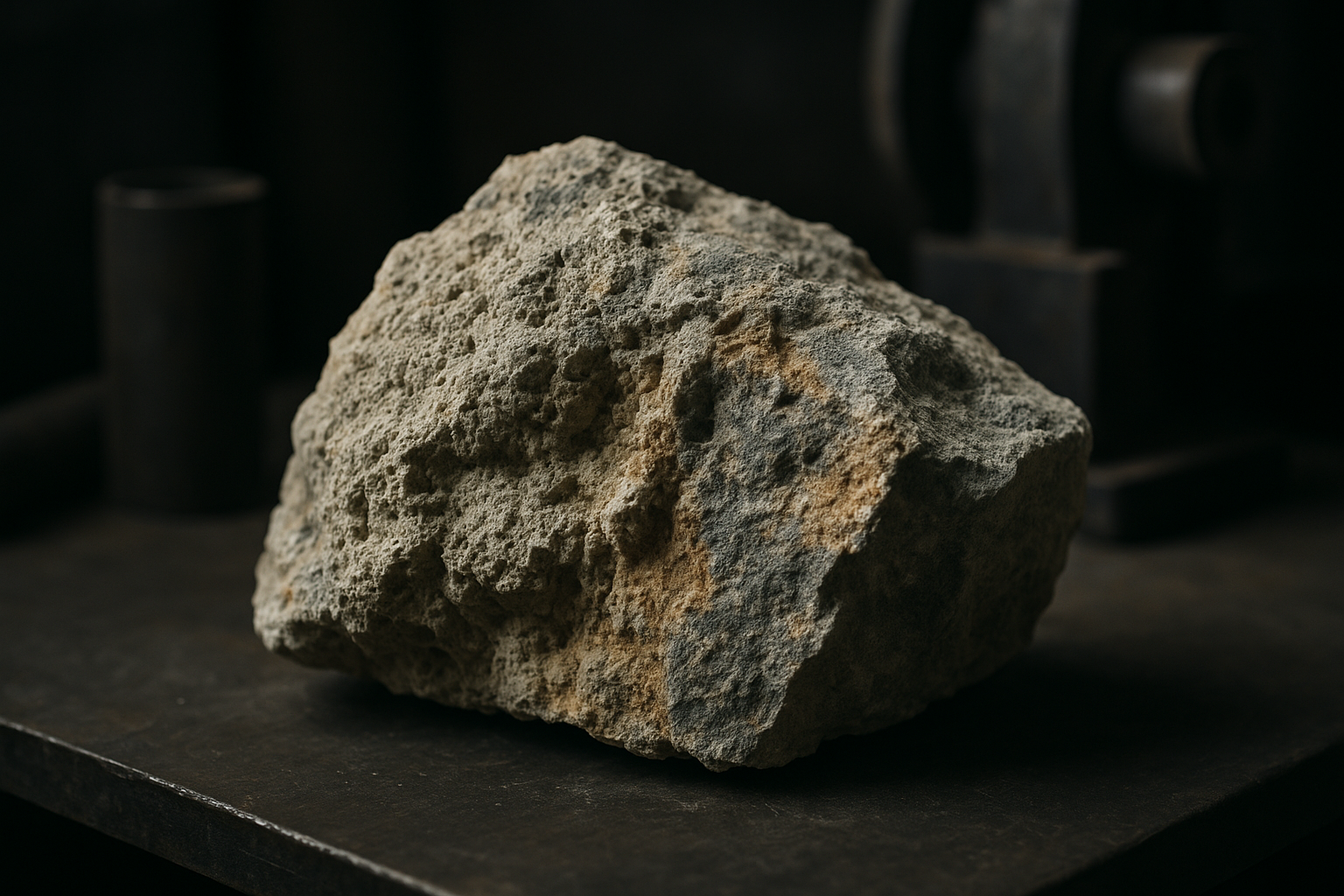
Industrial Wastewater Discharge Compliance — Why a Polishing Adsorption Step Is Needed
Wastewater discharged from electroplating and surface treatment, non-ferrous metal smelting, storage-battery and electronic-component manufacturing, and pigment and paint production contains heavy metals such as lead (Pb²⁺), cadmium (Cd²⁺), copper (Cu²⁺), zinc (Zn²⁺), and nickel (Ni²⁺) at levels of a few mg/L to tens of mg/L. This page focuses on the process-integration perspective of finishing such outbound industrial wastewater to within discharge limits. Domestic water-pollutant discharge limits regulate down to very low concentrations — lead 0.1–0.5 mg/L, cadmium 0.02–0.1 mg/L, copper 1–3 mg/L, and so on — so a separate step is needed to reliably pull the residual concentration just before discharge to within the limits.
Chemical coagulation and neutralization-precipitation alone struggle to reliably keep borderline residual heavy metals within limits batch after batch, and ion-exchange resin carries high installation and regeneration costs. For this reason, a polishing adsorption packed bed filled with natural mineral adsorbent is placed downstream of precipitation to pull the pre-discharge concentration within limits. Here the removal efficiency varies greatly with the treated-water pH, the initial concentration, the concentration of competing cations (Ca²⁺, Mg²⁺, Na⁺), and the bed's contact time (EBCT) and linear velocity, so a review matched to the wastewater composition and operating conditions is needed from the material-selection stage. (For broader heavy-metal fixation outside the wastewater process, such as soil, acid mine drainage (AMD), and contaminated-soil remediation, see the heavy metal removal page.)
How Natural Clinoptilolite Removes Heavy Metals
Natural clinoptilolite holds loosely bound exchangeable cations (Na⁺, K⁺, Ca²⁺) within its negatively charged aluminosilicate framework, and heavy-metal ions in the wastewater are fixed by cation exchange, swapping places with these cations. The cation exchange capacity (CEC) of 1.6–2.0 meq/g, the measure of exchange capability, determines the equivalents of heavy metal that can be captured per unit mass, while the 4.0–7.0 Å micropores act as channels through which hydrated metal ions selectively enter and bind.
The key point is that this exchange has ion-specific selectivity. Sprynskyy et al. (2006, Journal of Colloid and Interface Science) reported that the heavy-metal adsorption selectivity of clinoptilolite follows the order Pb²⁺ > Cu²⁺ > Cd²⁺ > Ni²⁺, and that adsorption follows a multi-stage mechanism involving not only the external surface but also internal framework channels (DOI: 10.1016/j.jcis.2006.07.068). In other words, lead and copper are removed relatively well, whereas nickel may show lower efficiency under the same conditions, so the dosing design must differ depending on the target metal.
A comprehensive review by Kubra et al. (2023, Chemosphere) likewise concluded that natural zeolite is an effective, low-cost adsorbent for a variety of heavy metals, and that exchange capacity can be further increased by surface modification (acid treatment, NaCl pretreatment) (DOI: 10.1016/j.chemosphere.2023.138508). Nakhaei et al. (2023, Water, Air, & Soil Pollution) confirmed that natural zeolite shows significant removal performance for lead, cadmium, and cobalt alike, but with an efficiency difference in the order Pb > Cd > Co under the same conditions, indicating that breakthrough times shift per metal in multi-metal wastewater (DOI: 10.1007/s11270-023-06759-x).
Adsorption Equilibrium and Kinetics — Isotherms and Model Interpretation
Heavy-metal adsorption on clinoptilolite generally fits the Langmuir monolayer model well, consistent with the assumption that the surface exchange sites are uniform and finite. Reported maximum adsorption capacities (qmax) vary widely with the mineral source, pretreatment, and metal species, but Pb²⁺ is on the order of tens of mg/g, while Cu²⁺, Cd²⁺, and Zn²⁺ fall in a lower single-digit-to-tens of mg/g range, showing the same trend as the selectivity order (Pb > Cu > Cd > Ni). The kinetics fit the pseudo-second-order model well, suggesting that chemical ion exchange is the rate-limiting step, with rapid external-surface exchange within the first few tens of minutes followed by intra-channel diffusion that determines equilibrium. For this reason, in batch operation a contact time of 30–120 minutes and, in a packed bed, securing adequate EBCT govern the removal rate. However, since the actual qmax depends strongly on the wastewater composition, design values must always be measured directly with the target wastewater.
KMIZEOLITE's natural clinoptilolite is 97% pure, mined and processed at the Amargosa Valley mine in Nevada, USA, with a specific surface area of 40.0 m²/g, a pH stability range of 3.0–10.0, and a hardness of 4.0–5.0 Mohs, allowing it to be considered for stable application even under acidic wastewater and packed-bed operating conditions.
KMIZEOLITE Key Properties
| Property | Value |
|---|---|
| Clinoptilolite purity | 97% |
| Cation exchange capacity (CEC) | 1.6–2.0 meq/g |
| Specific surface area | 40.0 m²/g |
| Pore diameter | 4.0–7.0 Å |
| pH stability range | 3.0–10.0 |
| Hardness | 4.0–5.0 Mohs |
| Thermal stability | 700°C |
| Specific gravity | 1.89 |
| Bulk density | 45–54 lbs/ft³ |
| Certifications | OMRI KMI-10365, FDA GRAS, TSCA, EN-71-3 |
Clinoptilolite's FDA GRAS status is defined under 21 CFR 182.2729 for general use and 21 CFR 582.2729 for animal-feed intake use. Since wastewater treatment is not a food- or feed-contact use, the GRAS designation is merely a safety basis for the material itself and must be managed separately from the waste classification of the spent adsorbent that has captured heavy metals.
Wastewater Heavy Metal Removal Application Examples
Below are representative application scenarios in which clinoptilolite is considered in industrial-wastewater heavy-metal removal processes.
- Fixed-bed adsorption column (polishing): A column packed with 30×50 or 14×40 mesh granular zeolite is placed downstream of coagulation and neutralization-precipitation to finish-remove residual Pb, Cd, and Cu. The recommended EBCT (empty bed contact time) is 5–15 minutes and linear velocity is in the 5–10 m/h range, determined by pilot testing.
- Batch stirred adsorption: For small-scale or irregular discharge wastewater, Powder to Fine Granule is dosed at roughly 5–20 g/L and stirred, followed by settling and filtration. The higher the initial concentration, the higher the dosage.
- Permeable reactive barrier (PRB) / composite media: Layered with sand and activated carbon in leachate or stormwater runoff paths to distribute the heavy-metal load. Peric et al. (2020, Geosciences) conducted both batch and packed-bed (column) tests and quantitatively reported that natural zeolite stably fixes heavy metals as a PRB reactive medium, and that packed-bed breakthrough behavior is determined by EBCT and flow rate (DOI: 10.3390/geosciences10020059).
- Pretreatment / post-treatment aid: Used as an auxiliary medium placed ahead of ion-exchange resin to reduce resin load and regeneration frequency.
- Test / pilot application: A small column test with the actual wastewater composition (heavy-metal species, pH, competing ions) is performed to determine the breakthrough point and replacement interval.
Recommended Particle Size and Product Specifications
For fixed-bed adsorption columns, Fine Granule (30×50 mesh, 0.3–0.6 mm) or Medium Granule (14×40 mesh, 0.4–1.4 mm) is typical, to balance pressure loss and contact efficiency. If rapid equilibrium is needed in batch stirring, consider the large-surface-area Powder (100 mesh), while also accounting for the downstream solid-liquid separation burden. Refer to the table below to select the product group suited to your application.
| Product group | Mesh | Particle size | Typical use |
|---|---|---|---|
| Powder | 100 mesh or finer | <150μm | Pozzolan, feed, powder adsorption |
| Fine Granule | 30×50 mesh | 0.3–0.6mm | Water treatment, filtration, soil |
| Medium Granule | 14×40 mesh | 0.4–1.4mm | Filter media, bedding, litter |
| Coarse Granule | 8×14 mesh | 1.4–2.4mm | Swimming pools, de-icing, large-scale filtration |
| Extra Coarse | 4×8 mesh | 2.4–4.8mm | Packed beds, air scrubbers |
→ View products by mesh size · Product selection guide by application
Pilot Testing and Field Review Points
When applying clinoptilolite to wastewater heavy-metal removal, the following items must always be checked together.
- Target metal and initial concentration: Because selectivity (Pb²⁺>Cu²⁺>Cd²⁺>Ni²⁺) differs depending on whether the removal target is Pb/Cu or Ni/Cd, evaluate the adsorption efficiency for each metal individually.
- pH conditions: Under strongly acidic conditions (pH 2–3), H⁺ competes for cation-exchange sites and lowers efficiency, so applying it to treated water adjusted to the pH 5–8 range after precipitation is advantageous.
- Competing-ion load: In hard or high-salinity wastewater, high Ca²⁺, Mg²⁺, and Na⁺ concentrations erode the heavy-metal exchange capacity, so quantify the competing-ion ratio.
- Contact time and breakthrough design: Varying the column EBCT (5–15 min) and linear velocity (5–10 m/h), measure the treated bed volume (BV) up to the breakthrough point (based on C/C₀) at which the effluent concentration reaches the discharge target (e.g., Pb 0.1 mg/L) to calculate the replacement/regeneration (NaCl regeneration) interval. Lowering the linear velocity or increasing the bed height to extend EBCT delays breakthrough but enlarges column volume and pressure loss, so strike a balance.
- Spent-adsorbent disposal: Review whether the spent zeolite that has captured heavy metals qualifies as designated waste, and determine stabilization or consigned-disposal methods.
- Field-specific notes: Zeolite is generally considered in parallel with activated carbon or ion-exchange resin, or as a polishing step downstream of precipitation; designing it as an auxiliary medium rather than a standalone primary treatment is more stable.
→ View TDS (Technical Data Sheet) · View MSDS (Material Safety Data Sheet)
Wastewater Heavy Metal Removal FAQ
Can a zeolite packed bed alone meet wastewater discharge limits?
It is difficult to bring high-concentration wastewater within limits using zeolite as a standalone primary treatment. In practice, the common configuration is to first remove most metals by coagulation and neutralization-precipitation, then place packed-bed adsorption as a polishing step just before discharge to reliably pull down the residual concentrations near the limit boundary. It is advisable to design the packed bed considering metal-specific selectivity (Pb²⁺ > Cu²⁺ > Cd²⁺ > Ni²⁺), the target discharge concentration, and EBCT together, and to verify discharge-limit compliance and replacement intervals through breakthrough testing with the actual wastewater.
Does wastewater pH affect efficiency?
Yes. Under strongly acidic conditions (pH 2–3), abundant H⁺ competes with heavy metals for cation-exchange sites, lowering removal efficiency. Generally, applying it to treated water adjusted to the pH 5–8 range after neutralization and precipitation gives stable exchange efficiency. Clinoptilolite itself is structurally stable over the pH 3.0–10.0 range.
What particle size and operating conditions are suitable?
For fixed-bed adsorption columns, Fine Granule (30×50 mesh) or Medium Granule (14×40 mesh) is typical, with EBCT (empty bed contact time) of 5–15 minutes and a linear velocity of 5–10 m/h as a starting point to be tuned in pilot testing. For batch stirring, large-surface-area Powder (100 mesh) can also be considered. Please refer to the product selection guide by application.
Can saturated zeolite be regenerated or replaced?
Exchanged sites can be partially regenerated with a high-concentration NaCl solution, but in heavy-metal wastewater the burden of treating the regenerant means single-use followed by replacement is often the operating mode. Spent zeolite that has captured heavy metals must be checked for whether it qualifies as designated waste, and stabilization or consigned-disposal methods must be determined. The exact replacement interval is calculated from a column breakthrough test.
Can I get a sample for testing?
Yes, KMIZEOLITE supports sample provision for evaluating real wastewater applications. Please leave the target metals, wastewater composition, and desired particle size on the sample request page.
Inquiries and Sample Requests
If you are considering applying zeolite in the field of wastewater heavy metal removal, please get in touch through the channels below.
Notice
Applicability may vary depending on field conditions, regulations, and test results. Before actual application, a test review matched to the field conditions must always be conducted first. Zeolite should be understood not as a cure-all for this field, but as a material that supports existing processes.
Related Pages
science Related Papers
Academic papers covering zeolite application in this field. Use them as a reference when evaluating adoption.
- Study of the selection mechanism of heavy metal (Pb2+, Cu2+, Ni2+, Cd2+) adsorption on clinoptilolite
Sprynskyy, M. et al. — Journal of Colloid and Interface Science, 2006 - Adsorption of heavy metals on natural zeolites: A review
Kubra, K.T. et al. — Chemosphere, 2023 - Natural zeolites as effective adsorbents in water and wastewater treatment
Wang, S. and Peng, Y. — Chemical Engineering Journal, 2010 - Natural Zeolite Clinoptilolite: Methylene Blue, Zinc and Cadmium Abatement Tests
Ferro, S. et al. — Materials, 2022 - Investigating the Effectiveness of Natural Zeolite for Removal of Lead, Cadmium, and Cobalt
Nakhaei, M. et al. — Water, Air, & Soil Pollution, 2023 - Zeolite Application in Wastewater Treatment (comprehensive review)
Magalhaes, L.F. et al. — Advances in Materials Science and Engineering, 2022 - Evaluation of Zeolite as Reactive Medium in Permeable Reactive Barrier: Batch and Column Studies
Peric, J. et al. — Geosciences, 2020
The papers above are reference material; actual application requires a separate review matched to your field conditions.