What Is Zeolite
An overview of the definition and mineralogical characteristics of zeolite.
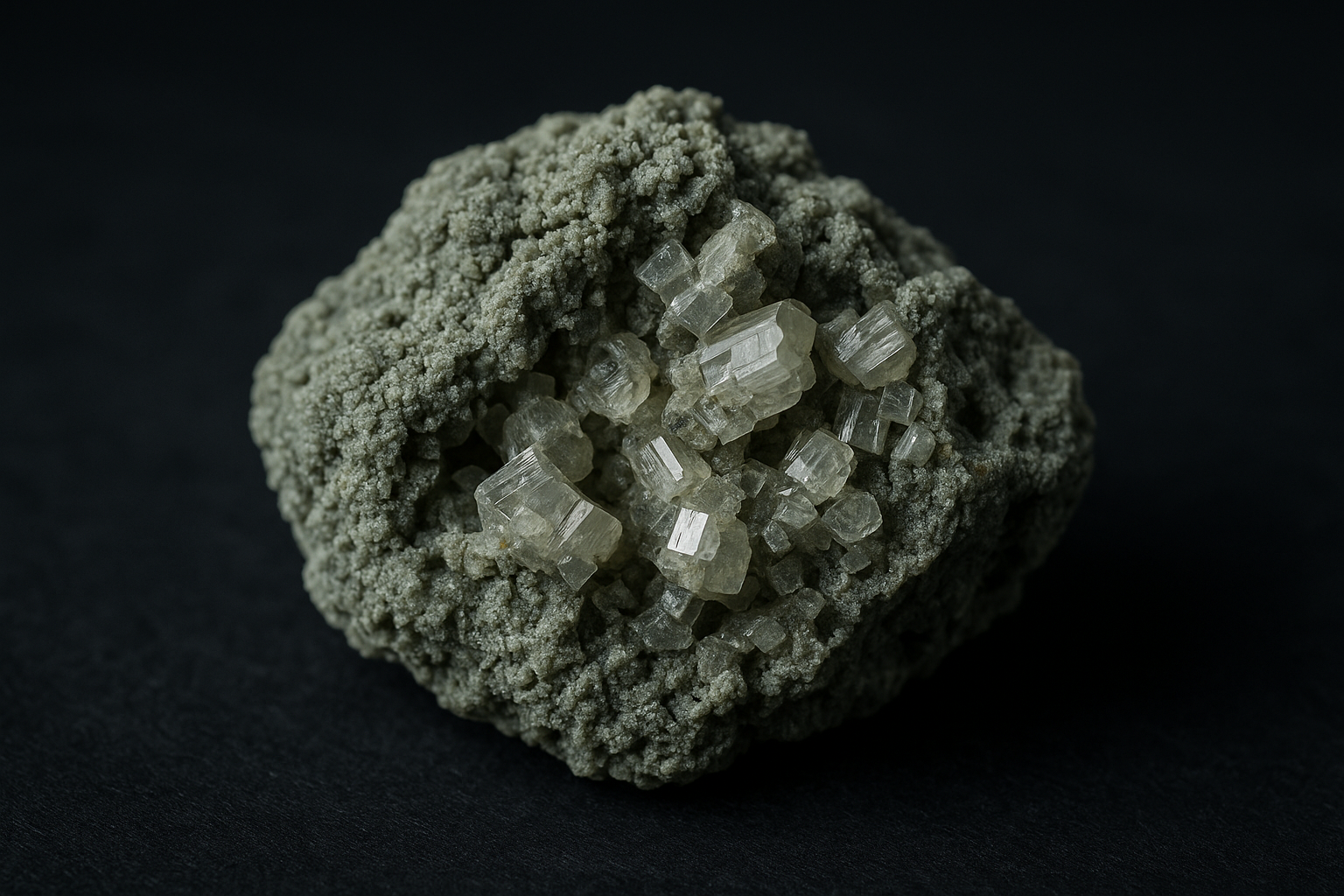
What Is Zeolite — Fundamental Concepts and Industrial Applications of a Natural Mineral Material
Zeolite is a natural mineral with a fine microporous structure, giving it favorable properties for capturing and exchanging specific components in water or air. Formed over millions of years as volcanic ash was altered within particular geological environments, this mineral is used as a supplementary material across a wide range of fields, including water treatment, odor reduction, agriculture, livestock, construction, and the improvement of living environments. This page provides a structured overview of the basic concept of zeolite, its structural characteristics, its leading mineral form clinoptilolite, and its industrial applications by sector.
Basic Concept of Zeolite and Its Formation Process
Zeolite is a group of natural minerals whose name derives from the Greek words for "boiling stone" (zeo + lithos). It is formed as volcanic ash comes into contact with alkaline groundwater and is altered over long periods of time, developing very small pores (4.0–7.0 angstroms) and channels within the mineral. Through this pore structure, water molecules and certain cationic components can move in and out or be exchanged.
Put simply, zeolite can be understood as a natural inorganic material with a fine honeycomb-like structure. Unlike ordinary stone powder, this structure allows for adsorption, ion exchange, and filtration-support functions. More than 40 types of zeolite are known to occur in nature, but deposits with industrially meaningful purity and physical properties are limited.
Three Reasons Zeolite Attracts Industrial Attention
1. Microporous Structure and High Specific Surface Area
A large number of micropores measuring 4.0–7.0 angstroms (Å) in diameter exist within zeolite. The specific surface area of KMIZEOLITE is 40.0 m²/g, and this pore structure is advantageous for selectively capturing specific components or controlling their passage. For this reason, it is widely evaluated as a filtration medium, adsorbent, and supplementary material.
2. Ion-Exchange Property (CEC)
Zeolite has the ability to exchange the cations within its structure (Na⁺, K⁺, Ca²⁺, etc.) with other cations in the surrounding environment. The metric that quantifies this ability is the cation exchange capacity (CEC), and KMIZEOLITE has a CEC of 1.6–2.0 meq/g. Its high selective exchange capability for ammonium (NH₄⁺) ions in particular makes it frequently used in water treatment and livestock environment applications.
3. A Stable Inorganic Material
Because it is a natural inorganic mineral, it operates stably across a pH range of 3.0–10.0, and with a hardness of 4.0–5.0 Mohs it can maintain its physical form over long periods within filtration beds or packed beds. It also features high in-process stability because no swelling occurs (swelling index: Nil).
What Is Clinoptilolite — The Leading Natural Zeolite for Industrial Use
There are several types of zeolite (mordenite, phillipsite, chabazite, and others), but the natural zeolite most widely used in commercial fields is clinoptilolite. The molecular formula of clinoptilolite is Na₆[Al₆Si₃₀O₇₂]·24H₂O, and its CAS registry number is 1318-02-1.
Clinoptilolite is preferred in industry for the following reasons:
- Higher thermal and chemical stability compared to other natural zeolites
- Selective adsorption capability for ammonium and certain heavy-metal ions (Pb²⁺, Cu²⁺, Cd²⁺, Zn²⁺, etc.)
- Can be processed into a wide range of particle sizes, from powder to granules
- A long track record of industrial use in the United States, Europe, Australia, and elsewhere
The KMIZEOLITE introduced by KMIZEOLITE is likewise centered on this clinoptilolite-based natural zeolite, built on a high-purity raw material with a clinoptilolite content of 97%.
Key Application Fields of Zeolite
Zeolite is not a material confined to a single use; it extends across diverse industrial fields depending on the problem to be solved. Below are the representative fields in which KMIZEOLITE is actually evaluated.
Water Treatment and Filtration
- Filtration support for drinking water and process water (replacement or supplement for sand filter media)
- Ammoniacal nitrogen management (aquaculture farms, ponds)
- Evaluation as ion-exchange filter media for swimming pools, aquaculture farms, and ponds
- Related products: KMI 30X50 mesh, 8X14 mesh → /en/products/
Environmental Remediation and Adsorption
- Remediation based on selective ammonium (NH₄⁺) ion exchange
- Evaluation for adsorption of Pb²⁺, Cu²⁺, Cd²⁺, Zn²⁺, Ni²⁺
- VOC adsorption support, moisture management, oil adsorbent
- Ammonium reduction in biogas processes
Agriculture and Horticulture
- CEC-based nutrient retention (N, K adsorption) and improved fertilizer efficiency
- Enhanced soil water retention and reduced nutrient leaching
- Compost ammonia reduction; use in horticulture and landscaping
Livestock and Feed
- Improving the barn environment: ammonia adsorption in bedding, reduction of manure odor
- Feed anti-caking agent: recognized as FDA GRAS, used at 2% or less of total feed formulation
- OMRI Allowed as an organic livestock feed ingredient
Construction and Industrial Materials
- Natural pozzolan (ASTM C618), partial cement replacement
- Moisture source for warm-mix asphalt
- Supplementary material for mortar and stucco
- Related products: KMI 100 mesh (powder) → /en/products/
Household and Pets
- Indoor deodorization and moisture management
- Cat litter additive, mixing into gardening potting soil
- Management of the environment around pets
Key Criteria for Selecting a Good Zeolite
Zeolite is not a material from which the same performance can be expected simply because it shares the same name. In real-world applications, the following items must always be checked together.
| Item to Check | Description | KMI Reference Value |
|---|---|---|
| Mineral type | Which zeolite family it belongs to | Clinoptilolite |
| Purity | Level of impurity content | 97% |
| CEC | Cation exchange capacity | 1.6–2.0 meq/g |
| Particle size | Size appropriate for the application | 100 mesh–4×8 mesh (5 grades) |
| Specific surface area | Adsorption area | 40.0 m²/g |
| pH stability | Applicable environmental range | 3.0–10.0 |
| Hardness | Durability within the filtration bed | 4.0–5.0 Mohs |
Even for the same zeolite, the appropriate particle size and physical properties can differ depending on the application, so before purchasing it is important to review the product specifications and technical data (TDS) that match your purpose.
The Zeolite Introduced by KMIZEOLITE
Based on KMI natural zeolite, KMIZEOLITE provides structured information on clinoptilolite zeolite that can be genuinely evaluated for use in industrial settings and living environments. You can continue to find more specific details on the following pages.
- The KMI Mine and Its Origin — which mine it is produced at
- Purity and CEC Properties — why physical property data matters
- Quality Control — how the production, grading, and management systems are operated
Important Notice
Zeolite is a supplementary material that can be used across a very wide range of fields, but its actual applicability may vary depending on the usage environment, target substance, contact time, particle size, replacement cycle, and process conditions. Therefore, before actual adoption it is advisable to review the technical data and application conditions that match your purpose. The figures stated on this page are based on the KMI public data sheet and do not guarantee performance for any specific use.
Inquiries and Sample Requests
If you are considering adopting zeolite, let us know your intended use and required specifications, and we will provide suitable product information and technical data. We recommend first verifying real-world applicability through sample testing.