The KMI Mine and Its Origin
An introduction to the characteristics and origin of the U.S.-sourced KMIZEOLITE mine.
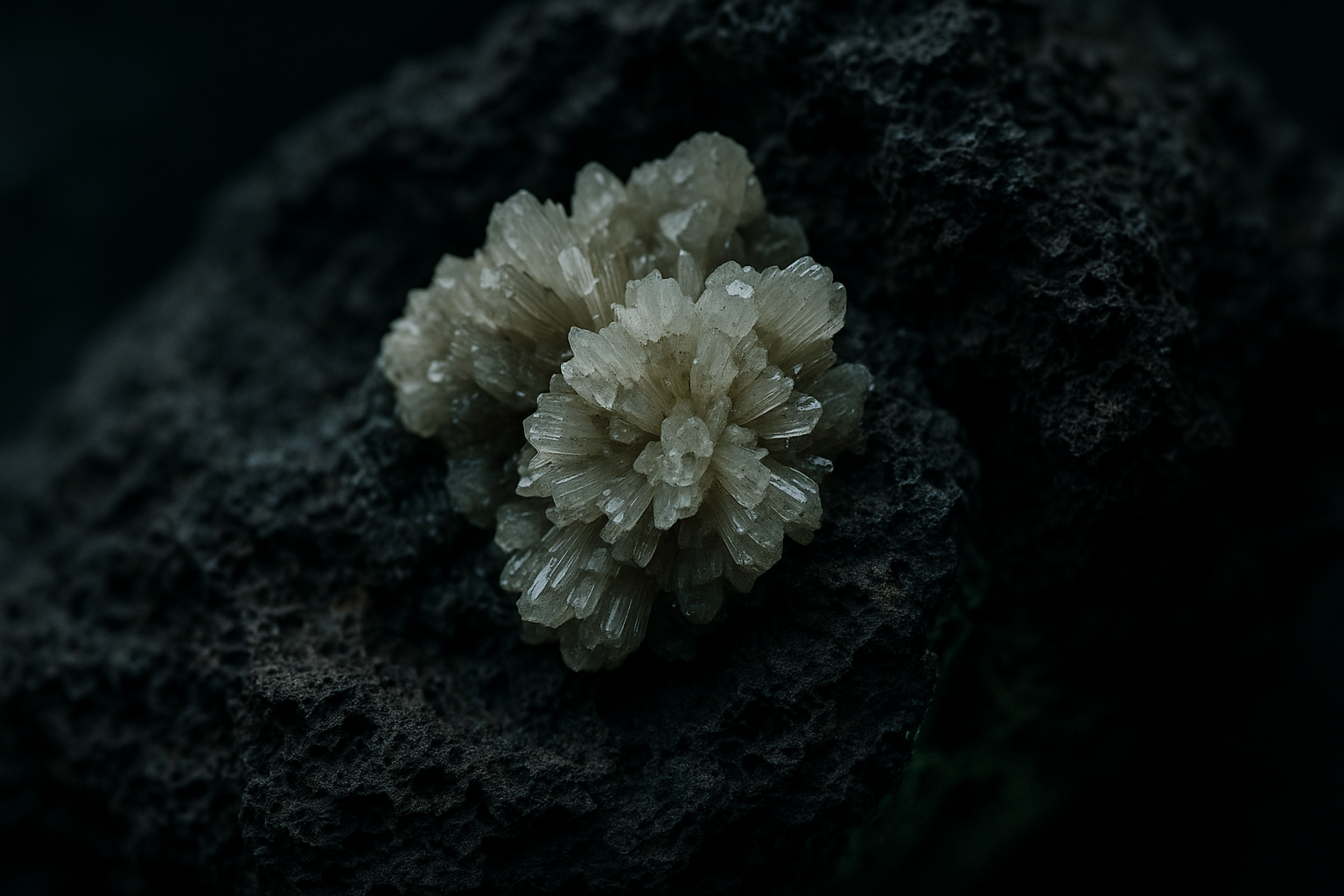
The KMI Mine and Its Origin — A Natural Clinoptilolite Deposit in Nevada, USA
KMIZEOLITE is based on natural clinoptilolite zeolite produced in Amargosa Valley, Nevada (NV 89020), USA. Operated by KMIZEOLITE (Zeolite Minerals International), this mine is recognized as one of the largest and highest-purity natural clinoptilolite deposits in North America. This page explains why the origin matters, what defines the KMI mine, and the criteria KMIZEOLITE uses to verify provenance.
Why Origin Matters
Because zeolite is a natural mineral, its physical properties and suitability for a given application can vary significantly depending on its origin. Even when marketed under the same "zeolite" name, products can differ considerably in mineral composition, purity, impurity content, particle-size stability, and ion-exchange capacity.
Worldwide, zeolite deposits are found in the United States, Turkey, China, Australia, Japan, Indonesia, and elsewhere. However, high-purity clinoptilolite deposits with meaningful industrial value are limited, and the origin can lead to the following differences.
| Origin-Related Factor | Impact |
|---|---|
| Clinoptilolite content | Purity ranging from 50% to 97%, directly affecting adsorption and ion-exchange efficiency |
| Type of impurities | Quartz, feldspar, clay and similar inclusions can degrade target performance |
| Chemical composition ratio | Ion-exchange characteristics vary with the SiO₂/Al₂O₃ ratio |
| Particle-size stability | Filtration-media lifespan differs according to crushing behavior |
| Color and hardness | Whether appearance and durability requirements are met for each application |
Therefore, for clearly defined uses such as industrial, agricultural, livestock, and filtration applications, it is important to review the mine origin and mineral data together rather than considering price alone.
Key Characteristics of the KMI Mine
1. A High-Purity Clinoptilolite-Centered Deposit
KMIZEOLITE is based on high-purity raw material with a clinoptilolite content of 97%. This is a high level even among industrial natural zeolites and is a key factor in improving the reproducibility of adsorption and ion-exchange performance.
The main chemical components of KMIZEOLITE are as follows.
| Component | Formula | Content |
|---|---|---|
| Silicon dioxide | SiO₂ | 66.7% |
| Aluminum oxide | Al₂O₃ | 11.48% |
| Potassium oxide | K₂O | 3.42% |
| Sodium oxide | Na₂O | 1.8% |
| Calcium oxide | CaO | 1.33% |
| Iron oxide | Fe₂O₃ | 0.9% |
| Magnesium oxide | MgO | 0.27% |
| Titanium dioxide | TiO₂ | 0.13% |
| Manganese oxide | MnO | 0.025% |
This chemical-composition data shows a SiO₂/Al₂O₃ ratio of approximately 5.8:1, corresponding to the typical composition of clinoptilolite. This ratio is an important indicator influencing thermal stability and ion-exchange selectivity.
2. Capacity for Large-Volume Supply
KMI states that its zeolite is based on a high-purity clinoptilolite resource on the scale of millions of tons. This is an important factor for long-term projects, repeat deliveries, and corporate and institutional supply. In practice, it offers a supply base capable of handling everything from small-scale orders of a few hundred kilograms to large-volume supply by the ton.
Domestic supply through KMIZEOLITE can likewise be scaled in stages, from samples (2.2 kg) to high-volume orders (22 kg, 50 lbs sacks).
3. A Product Range with Multiple Particle-Size Specifications
KMI mine raw material is not a single particle size; it is processed into five particle-size specifications optimized for different uses.
| Product Name | Mesh | Particle Size | Main Uses |
|---|---|---|---|
| KMI 100- US MESH | 100 mesh or finer | <150μm (median 50μm) | Pozzolan, feed blending, cement replacement |
| KMI 30X50 US MESH | 30×50 mesh | 0.3–0.6 mm | Water treatment, filtration, soil blending |
| KMI 14X40 US MESH | 14×40 mesh | 0.4–1.4 mm | Filtration beds, bedding blending, floor material |
| KMI 8X14 US MESH | 8×14 mesh | 1.4–2.4 mm | Pool filtration, large-scale filtration |
| KMI 4X8 US MESH | 4×8 mesh | 2.4–4.8 mm | Large packed beds, air scrubbers |
Detailed specifications and application areas for each particle size are available on the products page.
4. Connectivity to a Wide Range of Applications
Based on this raw material, KMI operates across a wide range of applications including adsorption, water treatment, agriculture, livestock, pozzolan, and improvement of the living environment. This means the mine's raw material is not limited to a single use but provides a foundation that can extend to multiple industrial applications depending on particle size and method of use.
In particular, KMIZEOLITE is evaluated for each field based on properties such as a cation-exchange capacity (CEC) of 1.6–2.0 meq/g, a specific surface area of 40.0 m²/g, and a stable pH range of 3.0–10.0. Because this property data is produced consistently from a single deposit, there is a structural advantage in minimizing quality variation even for repeat deliveries or long-term supply. In addition, it holds numerous international certifications such as OMRI organic certification, FDA GRAS recognition, and TSCA compliance, enabling application review across a variety of regulatory environments.
Items to Review Together When Verifying Origin
KMIZEOLITE presents origin and mine basis as one of the first items domestic customers should check when evaluating zeolite. Before purchasing, it is advisable to review the following items together.
- Actual production origin: Amargosa Valley, Nevada, USA
- Mineral type and purity: 97% clinoptilolite
- Product specifications and particle size: 5 mesh specifications
- Availability of technical data (PDS/TDS): Technical Data page →
- Certifications and registrations: OMRI, FDA GRAS, TSCA, CDFA, and more
- Sustainable supply capability: A deposit on the scale of millions of tons
Origin information is not merely a marketing phrase; it becomes the starting point for subsequent review of purity, CEC, and quality control.
Recommended Pages to Review Together
- Purity and CEC Properties — Why 97% purity and cation-exchange capacity matter
- Quality Control — Which documents and standards to check during actual review
- Products and Particle Size Guide — Which size to consider for your intended use
- Technical Data (TDS) — Detailed property data for each product
Notice
The mine and origin information on this page is based on publicly available materials from KMIZEOLITE. Actual mineral composition and physical properties may vary slightly depending on the mining location and lot, and exact specifications should be confirmed through the Product Data Sheet (PDS). KMIZEOLITE is responsible for the distribution of KMIZEOLITE in Korea, and additional origin-related materials can be provided upon inquiry.
Inquiries and Sample Requests
If you need more detailed information about the origin and mine, or wish to verify quality through actual product samples, please request below.