About Zeolite
A hub page for understanding the basics of KMIZEOLITE, including its definition, structure, types, origin, and purity.
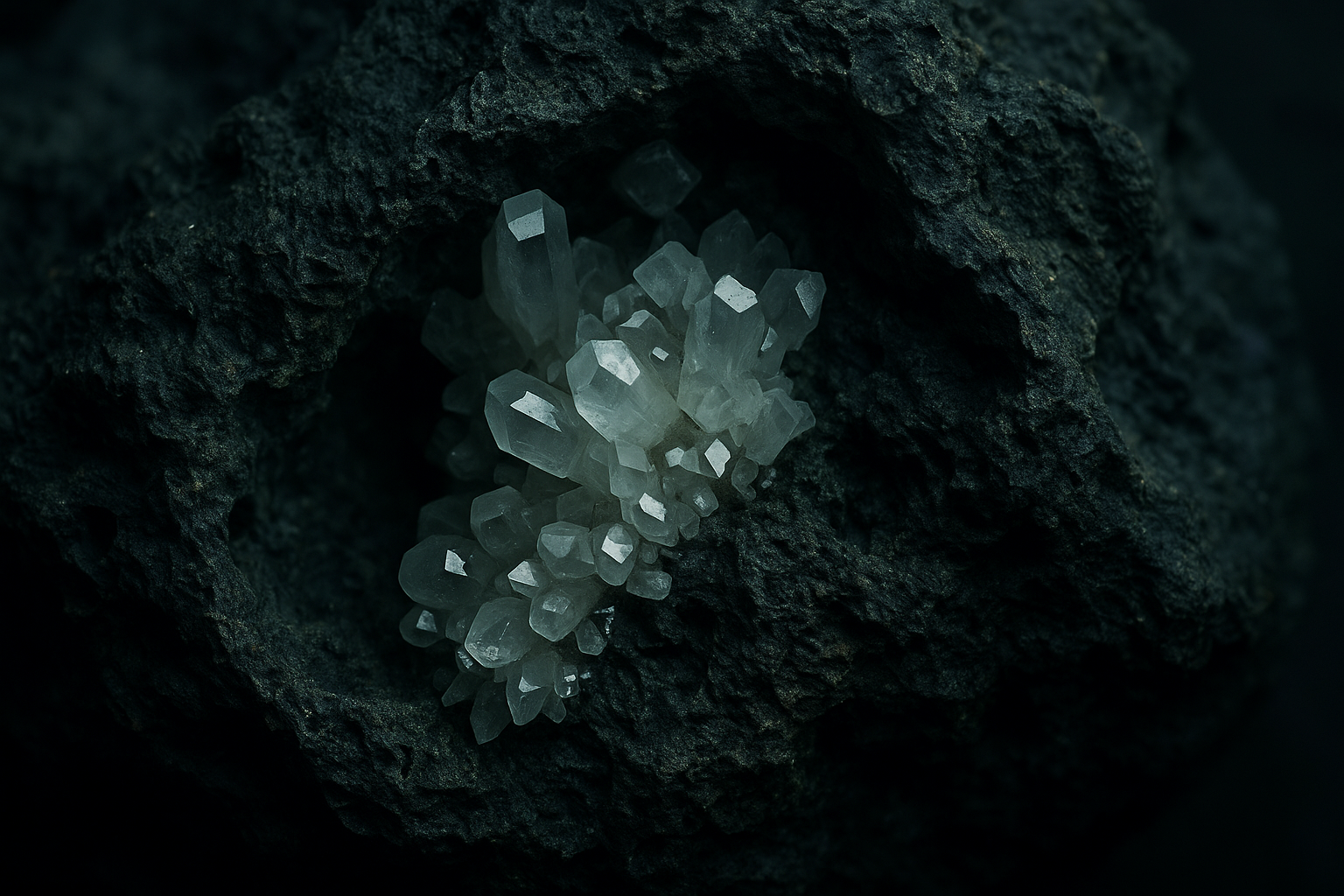
What Is KMI Natural Zeolite
KMIZEOLITE is an information platform that introduces natural clinoptilolite zeolite sourced from KMI (Zeolite Minerals International) in the United States.
Zeolite is a natural mineral formed when volcanic ash is altered over long geological periods. Thanks to its microporous structure and ion-exchange properties, it is evaluated across a wide range of fields, including water treatment, environmental remediation, agriculture, livestock, construction, and improvement of living environments.
This section provides a data-driven overview of the fundamental concepts and selection criteria for KMIZEOLITE.
What You Can Find in This Section
What Is Zeolite
Introduces the basic concept and structure of zeolite and why it draws attention as an industrial material. → What Is Zeolite
KMI Mine & Origin
Introduces the Amargosa Valley mine in Nevada, USA, where KMIZEOLITE is produced, and its origin background. → KMI Mine & Origin
Purity & CEC Properties
Explains key physical property data such as 97% clinoptilolite purity and a CEC of 1.6–2.0 meq/g. → Purity & CEC Properties
Quality Control
Guides you through the technical data, certifications, and review criteria you should confirm before actual adoption. → Quality Control
Before You Evaluate Zeolite
Even zeolites sharing the same name can differ in suitability depending on the mine, purity, particle size, and physical properties. It is just as important to confirm "which zeolite it is" as it is to know "where it is used."
What Is KMI Natural Zeolite
KMIZEOLITE is a B2B information platform that introduces natural clinoptilolite zeolite sourced from KMI (Zeolite Minerals International) in the United States. KMIZEOLITE is mined in Amargosa Valley, Nevada, USA, and offers physical properties of 97.0% clinoptilolite purity, a cation exchange capacity (CEC) of 1.6–2.0 meq/g, and a specific surface area of 40.0 m²/g. Its molecular formula is Na₆[Al₆Si₃₀O₇₂]·24H₂O, and it is an internationally registered mineral under CAS number 1318-02-1.
Zeolite is a natural mineral formed when volcanic ash is altered over long geological periods. Thanks to its microporous structure with pore sizes of 4.0–7.0 angstroms (Å) and its excellent ion-exchange properties, it is evaluated across a wide range of fields, including water treatment, environmental remediation, agriculture, livestock, construction, and improvement of living environments. In particular, KMIZEOLITE holds a broad range of certifications—including OMRI Listed (approved for organic use, KMI-10365), USFDA GRAS (21 CFR Parts 182.2729 & 582.2729), TSCA compliance, EN-71-3 European toy safety standard PASS, CDFA California Department of Food and Agriculture registration, and California Prop 65 compliance—providing reliable applicability across industries.
This section provides a data-driven overview of the fundamental concepts and selection criteria for KMIZEOLITE. If you are new to zeolite, start here.
What You Can Find in This Section
What Is Zeolite
Introduces the basic concept of zeolite, its microporous structure, the principle of ion exchange, and why it draws attention as an industrial material. You can understand it alongside chemical composition analysis data, including SiO₂ 66.7% and Al₂O₃ 11.48%. → What Is Zeolite
KMI Mine & Origin
Introduces the geological background and origin basis of the Amargosa Valley mine in Nevada, USA, where KMIZEOLITE is produced. Explains why the clinoptilolite from the Nevada mine maintains a high purity of over 97%. → KMI Mine & Origin
Purity & CEC Properties
Explains in detail key physical property data such as 97% clinoptilolite purity, a CEC of 1.6–2.0 meq/g, a specific gravity of 1.89, a bulk density of 720–865 kg/m³, and a hardness of 4.0–5.0 Mohs. It also clarifies what these figures mean in actual applications. → Purity & CEC Properties
Quality Control
Along with information on the certifications held—such as OMRI, USFDA GRAS, TSCA, EN-71-3, CDFA, and California Prop 65—it guides you through the technical data and review criteria you should confirm before actual adoption. → Quality Control
Before You Evaluate Zeolite
Even zeolites sharing the same name can differ in suitability depending on the mine, purity, particle size, and physical properties. KMIZEOLITE offers five particle-size grades, ranging from powder under 100 mesh to 4×8 mesh granules, with each grade suited to different application fields. It is just as important to confirm "which zeolite it is" as it is to know "where it is used."
If you are curious about the product lineup, check the Products page; if you need technical documents, check the Technical Data section. If you are considering immediate adoption, you can get started through a sample request or a bulk quotation inquiry.
Pages
What Is Zeolite
Explains the definition and mineralogical characteristics of zeolite.
KMI Mine & Origin
Introduces the characteristics and origin of the US-sourced KMIZEOLITE mine.
Purity & CEC Properties
Explains key physical properties such as 97% purity and cation exchange capacity (CEC).
Quality Control
Introduces the quality control process for KMIZEOLITE.
References
- USGS — Mineral Resources Program
- IZA — International Zeolite Association
- Mindat — Clinoptilolite Mineral Data
This page was prepared with reference to the official materials of the external organizations listed above. Each link opens in a new window.