Zeolite for River Pollution Response
With a cation-exchange selectivity of CEC 1.6–2.0 meq/g, natural clinoptilolite is an adsorption and ion-exchange media that captures cationic ammonium nitrogen (NH₄⁺-N) in rivers and urban stormwater runoff. Anions such as phosphate and nitrate nitrogen are barely removed by the unmodified material, so Fe·Al·surfactant (HDTMA) modification is a prerequisite. Assuming placement in a polishing stage downstream of coagulation–sedimentation (bioretention cells, fixed-bed columns), this page summarizes particle size and EBCT and breakthrough conditions.
Why river pollution is difficult to manage
Pollution in urban rivers and agricultural watersheds mostly originates from eutrophication. When ammonium nitrogen (NH₄⁺-N), nitrate nitrogen (NO₃⁻-N) and phosphorus (phosphate, PO₄³⁻) entering from domestic sewage, livestock wastewater and non-point sources accumulate, algae proliferate and dissolved oxygen is depleted, causing the aquatic ecosystem to collapse. In particular, urban stormwater runoff that pours off roads and farmland all at once during rainfall surges suspended solids, heavy metals and nitrogen loads over a short period, making treatment design difficult.
River and non-point pollution treatment operates under three constraints simultaneously. (1) Flow variability is large, so the load is concentrated in the first flush of rainfall; (2) contact time is short, leaving no room to reach equilibrium; and (3) water temperature, pH and hardness (Ca²⁺·Mg²⁺) vary by season, so adsorption performance fluctuates. For these reasons, a single process such as coagulation–sedimentation alone struggles to stably capture NH₄⁺-N and trace heavy metals, so an approach that places an ion-exchange/adsorption media—which works even under flow and buffers surface-load fluctuations—as a downstream polishing stage is worth considering.
The key distinction here is the charge of the pollutant. Cations such as NH₄⁺ and heavy-metal cations can be captured directly by natural clinoptilolite with its negatively charged framework, but anions/oxyanions such as NO₃⁻, PO₄³⁻ and boron are barely adsorbed by the unmodified material. Therefore zeolite should not be positioned as "nitrogen = removed unconditionally," but rather as a supplementary media specialized for cationic nitrogen (NH₄⁺), with anionic species handled by modified media or a separate process—this is the standard design.
Why zeolite is considered for river pollution response
Natural clinoptilolite is an ion exchanger that attracts hydrated cations to the permanent negative-charge sites created by Al³⁺ substitution within its framework (CEC 1.6–2.0 meq/g). Uniform micropores of 4.0–7.0 Å act as channels that selectively pass and fix NH₄⁺, which has a small hydration radius and is easily dehydrated, and the general cation selectivity is roughly in the order NH₄⁺ > K⁺ > Na⁺ > Ca²⁺ > Mg²⁺—placing NH₄⁺ ahead of the main competing ions in river water (Ca²⁺·Mg²⁺), which is advantageous in water treatment. De Gennaro et al. (2024) reported that the CEC of natural zeolite ranges from 2.19–3.11 meq/g depending on the deposit and noted that NH₄⁺ ranks above the Na⁺·Ca²⁺ group in the selectivity series (De Gennaro et al., 2024, DOI: 10.1007/s11356-024-33656-5).
This cation selectivity is the basis for simultaneously reducing cationic heavy metals such as Pb²⁺, Cu²⁺, Cd²⁺ and Zn²⁺ together with NH₄⁺ in water. Conversely, negatively charged species such as phosphate and nitrate nitrogen are not explained by the same mechanism. In this case, modification that converts the surface to a positive charge is a prerequisite; coating the external surface with a quaternary ammonium surfactant (HDTMA) creates anion adsorption sites. In a bioretention study applying HDTMA-modified zeolite, NO₃⁻-N removal improved by up to 38.2 times and TP removal by up to 17.5 times compared with unmodified natural zeolite (NZ), while runoff volume was attenuated by up to 32.9% and peak flow by up to 29.9% (Runoff regulation and nitrogen removal of bioretention with HDTMA-modified zeolite, 2022, DOI: 10.3389/fenvs.2022.918259). In other words, the role division of NH₄⁺ for the natural material and NO₃⁻·PO₄³⁻ for the modified material is confirmed by data.
Evidence for application to real rivers and non-point pollution has also accumulated. Khorsha & Davis (2017) characterized natural clinoptilolite and hydroaluminosilicate aggregates as ammonium-removal media for urban stormwater runoff, quantifying NH₄⁺ adsorption behavior under various particle-size and contact conditions (Khorsha & Davis, 2017, DOI: 10.1061/(ASCE)EE.1943-7870.0001167). Sweeney et al. (2022) confirmed at field scale that bioretention media amended with zeolite improves stormwater nitrogen removal (Sweeney et al., 2022, DOI: 10.1002/ael2.20060), and Stepova et al. (2023) measured the adsorption isotherms and breakthrough curves of NH₄⁺ and phosphate together on natural and modified clinoptilolite, summarizing the behavioral differences between the two species (Stepova et al., 2023, DOI: 10.3390/w15101933). For direct application to eutrophic river water, Ma et al. (2022) simultaneously reduced ammonium nitrogen, phosphorus and organic matter (CODMn) using an iron (Fe)-modified carbon/zeolite composite (Ma et al., 2022, DOI: 10.1007/s11368-022-03251-7), and a study comparing magnetite-modified zeolite with natural zeolite confirmed suspended-solids and nutrient reduction effects (Urban Runoff Treatment by Natural and Magnetite-Modified Zeolites, 2024, DOI: 10.1007/s41101-024-00326-z).
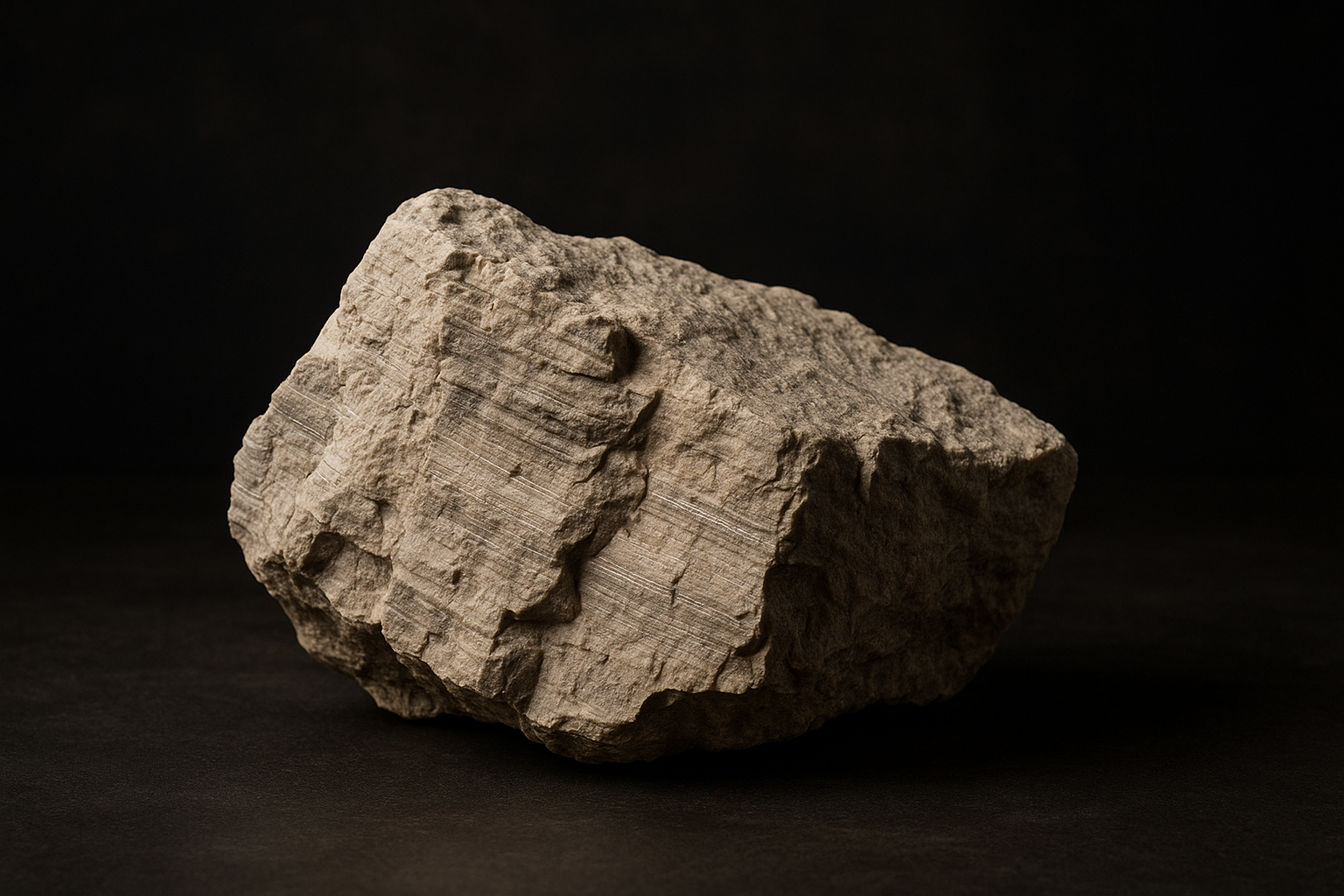
KMIZEOLITE's natural clinoptilolite has a purity of 97% and is mined and processed at the Amargosa Valley mine in Nevada, USA. With a specific surface area of 40.0 m²/g, a stable pH range of 3.0–10.0 and a hardness of 4.0–5.0 Mohs, its framework does not collapse even under river-water conditions ranging from weakly acidic to weakly alkaline, and it can be reused repeatedly after NaCl backwashing.
KMIZEOLITE Key Properties
| Property | Value |
|---|---|
| Clinoptilolite purity | 97% |
| Cation exchange capacity (CEC) | 1.6–2.0 meq/g |
| Specific surface area | 40.0 m²/g |
| Pore diameter | 4.0–7.0 Å |
| Stable pH range | 3.0–10.0 |
| Hardness | 4.0–5.0 Mohs |
| Thermal stability | 700°C |
| Specific gravity | 1.89 |
| Bulk density | 45–54 lbs/ft³ |
| Certifications | OMRI KMI-10365, FDA GRAS, TSCA, EN-71-3 |
Application examples of zeolite for river pollution response
Below are representative application methods and operating conditions in which zeolite is considered for reducing pollution in rivers and urban watersheds. For each method, we summarize the items zeolite handles (mainly NH₄⁺-N and cationic heavy metals) and the modification prerequisite when simultaneous removal of anions (NO₃⁻·PO₄³⁻) is required. The figures are general review ranges; actual values are determined by tests tailored to the on-site water quality and flow.
- Filler for swale/infiltration-type bioretention: Fine–Medium Granule (0.3–1.4 mm) is blended into the sand/soil layer at about 10–20% (by volume) to provide primary reduction of NH₄⁺-N in stormwater runoff via ion exchange. To capture NO₃⁻ and phosphorus at the same time, a design that incorporates HDTMA-modified zeolite is considered; in this case, NO₃⁻ and TP removal improves greatly compared with the natural material while runoff volume and peak flow are also attenuated.
- Fixed-bed adsorption column/filtration layer: Coarse Granule (8×14 mesh, 1.4–2.4 mm) is packed and NH₄⁺-N is treated continuously at an empty bed contact time (EBCT) of 10–30 minutes and a surface load of 5–15 m/h. The smaller the particle size, the faster external mass transfer and the later breakthrough, but pressure loss and clogging risk increase, so this is balanced against flow and SS load.
- Riverside/stormwater storage tank dosing type: Medium Granule is placed in a net pack and dosed into stagnant sections to adsorb ammonia and cationic heavy metals, then periodically recovered and replaced. The weaker the flow, the more contact time is secured, which is advantageous.
- Contaminated sediment capping aid: Powder–Fine is blended into an active cap material to suppress re-release of NH₄⁺ from the bottom sediment into the water column. If suppressing phosphorus re-release is the goal, it is combined with Fe·Al-modified media or a phosphorus-fixing material.
- Test/pilot application: With a 1 kg sample, the adsorption isotherm (Langmuir/Freundlich fit) and column breakthrough behavior of the target river water are confirmed in advance. In hard water with many competing cations, the effective NH₄⁺ adsorption per unit weight comes out lower than with clean synthetic water, so it must be measured with the actual water quality.
Recommended particle size and product specifications
In river pollution response, the particle size varies with the dosing method. For bioretention blending and capping aid, Powder–Fine is considered; for filtration columns and stormwater storage tank dosing, Fine–Coarse Granule is considered. Refer to the table below to select the product group suited to your application.
| Product group | Mesh | Particle size | Typical use |
|---|---|---|---|
| Powder | 100 mesh or finer | <150μm | Pozzolan, feed, powder adsorption |
| Fine Granule | 30×50 mesh | 0.3–0.6mm | Water treatment, filtration, soil |
| Medium Granule | 14×40 mesh | 0.4–1.4mm | Filtration layer, litter, bedding |
| Coarse Granule | 8×14 mesh | 1.4–2.4mm | Swimming pools, de-icing, large filtration |
| Extra Coarse | 4×8 mesh | 2.4–4.8mm | Packed beds, air scrubbers |
→ View products by mesh size · Product selection guide by application
Pilot test and on-site review points
When applying zeolite to river pollution response, the following items must be checked together.
- Pollutant charge/species classification: First, divide the targets into cations (NH₄⁺·heavy metals) and anions (NO₃⁻·PO₄³⁻). Because unmodified natural clinoptilolite has a negatively charged framework, its anion adsorption is weak, so if simultaneous removal of NO₃⁻ and phosphorus is the goal, design from the outset assuming Fe·Al·surfactant (HDTMA)-modified media or combined use with coagulation–sedimentation.
- Assess the water-quality load: Measure the concentrations of NH₄⁺-N, total phosphorus (T-P) and heavy metals, together with the concentrations of the competing cations Ca²⁺·Mg²⁺·K⁺ and the hardness. Although NH₄⁺ ranks ahead of Ca²⁺·Mg²⁺ in the selectivity series, the harder the water, the greater the competition for adsorption sites and the lower the effective treatment capacity per unit weight.
- Design the hydraulic conditions: Size the packing quantity based on flow variability during dry weather and rainfall and on the empty bed contact time (EBCT). Because the load is concentrated in the first flush of rainfall, provide storage/buffering sections to reduce surface-load fluctuations; for high-flow main channels, bypass treatment via swales or storage sections is more practical than direct treatment.
- Verify operating conditions: First conduct batch adsorption isotherm tests and column breakthrough tests with the target river water (actual water quality, not synthetic), and confirm the NH₄⁺ adsorption per unit weight (mg/g) and the breakthrough point (EBCT·treated BV). If a modified material is used, the anionic species are also evaluated separately by the same procedure.
- Regeneration/replacement plan: Saturated zeolite can be partially regenerated by brine (NaCl) backwashing, but a plan for handling the regeneration solution (high-concentration ammonia) must be designed at the same time. Because adsorption capacity gradually declines with repeated regeneration, set the replacement interval and the spent-media disposal route in advance based on breakthrough testing.
- Permitting/environmental standards: Confirm in advance the discharge water-quality standards under the River Act and the Water Environment Conservation Act, as well as consultation with the competent authority regarding material dosing. For drinking-water and aquatic-ecosystem protection watersheds, additional review of material leaching and ecological impact may be required.
- Field-specific notes: Phosphorus (P) and nitrate nitrogen are not cations, so removal efficiency with unmodified natural zeolite alone is low. If simultaneous removal is the goal, modified zeolite or combined use with a coagulation process must be considered, and professional engineering review must come first.
→ View TDS (Technical Data Sheet) · View MSDS (Safety Data Sheet)
River Pollution FAQ
Can zeolite reduce ammonium nitrogen (NH₄⁺-N) in rivers?
Yes. Because NH₄⁺ is a cation, it is captured directly by the ion exchange of natural clinoptilolite (CEC 1.6–2.0 meq/g). In the selectivity series, NH₄⁺ ranks ahead of Ca²⁺ and Mg²⁺, the main competing ions in river water, which is advantageous for water treatment. Khorsha & Davis (2017) characterized clinoptilolite as an ammonium-removal media for stormwater runoff, and Ma et al. (2022) simultaneously reduced ammonium nitrogen, phosphorus and organic matter in eutrophic river water using an iron-modified composite. However, performance varies with flow rate, water temperature and hardness, so a pilot test with the actual water quality is recommended.
Are nitrate nitrogen (NO₃⁻-N) and phosphorus (phosphate) also removed?
No. NO₃⁻ and phosphate are anions, and unmodified natural clinoptilolite has a negatively charged framework, so it adsorbs almost no anions. To capture these species, modification that converts the surface to a positive charge is a prerequisite. In a bioretention study using surfactant (HDTMA)-modified zeolite, NO₃⁻-N removal improved by up to 38.2 times and TP removal by up to 17.5 times compared with the unmodified material (Frontiers in Environmental Science, 2022). In other words, the design should treat the natural material as NH₄⁺-only and have Fe·Al·HDTMA-modified media or a coagulation–sedimentation process handle the anions.
Which particle size is suitable for treating urban stormwater runoff (non-point pollution)?
For bioretention and infiltration-type facilities, Fine–Medium Granule (30×50–14×40 mesh, 0.3–1.4 mm) is blended into sand or soil at 10–20%, while Coarse Granule (8×14 mesh, 1.4–2.4 mm) is considered for stormwater storage tank dosing or filtration columns. The smaller the particle size, the faster mass transfer and the later the breakthrough, but pressure loss and clogging risk increase, so this is balanced against the SS load. Please refer to the product selection guide by application.
Can saturated zeolite be regenerated and reused?
Once the adsorption sites are saturated with NH₄⁺, partial regeneration is possible by brine (NaCl) backwashing. However, a plan for handling the high-concentration ammonia solution generated during regeneration must be designed at the same time, and the adsorption capacity gradually declines with repeated regeneration. The exact replacement interval is determined by a column breakthrough test performed with the target water quality.
Are certification and safety documents available?
KMIZEOLITE holds numerous certifications, including OMRI Listed (KMI-10365), FDA GRAS (general use 21 CFR 182.2729, animal feed intake use 21 CFR 582.2729), TSCA compliance and EN-71-3 PASS. Please check the certifications page.
Inquiries and sample requests
If you are considering applying zeolite in the field of river pollution response, please get in touch through the channels below.
Notice
Applicability may vary depending on site conditions, regulations and test results. Before actual application, a test review tailored to the site conditions must always come first. Zeolite should be understood not as a cure-all for this field, but as a material that supports existing processes.
Related pages
science Related Research Papers
These are academic papers covering zeolite application in this field. Please refer to them when reviewing adoption.
- Characterizing Clinoptilolite Zeolite and Hydroaluminosilicate Aggregates for Ammonium Removal from Stormwater Runoff
Khorsha, G. & Davis, A.P. — Journal of Environmental Engineering, 2017 - Runoff regulation and nitrogen removal of bioretention with HDTMA-modified zeolite
Qiu J. et al. — Frontiers in Environmental Science, 2022 - Zeolite amended bioretention media improves nitrogen removal from stormwater
Sweeney, M. et al. — Agricultural & Environmental Letters, 2022 - Adsorption of Ammonium Ions and Phosphates on Natural and Modified Clinoptilolite: Isotherm and Breakthrough Curve Measurements
Stepova, K. et al. — Water, 2023 - Decontamination of pollutants from eutrophic river water using iron-modification carbon/zeolite
Ma H. et al. — Journal of Soils and Sediments, 2022
The papers above are reference material; actual application requires separate review tailored to the site conditions.