Composting
A maturation aid that fixes the ammoniacal nitrogen volatilizing in thermophilic composting through ion exchange, within a range of CEC 1.6-2.0 meq/g and NH₄⁺ adsorption of 16-21 mg/g, blocking the "early nitrogen loss" of 30-50% of the feedstock total nitrogen before it volatilizes. We provide quantitative guidance on a 5-10% feedstock dry-matter dosing rate combined with powder/14×40 particle sizes.
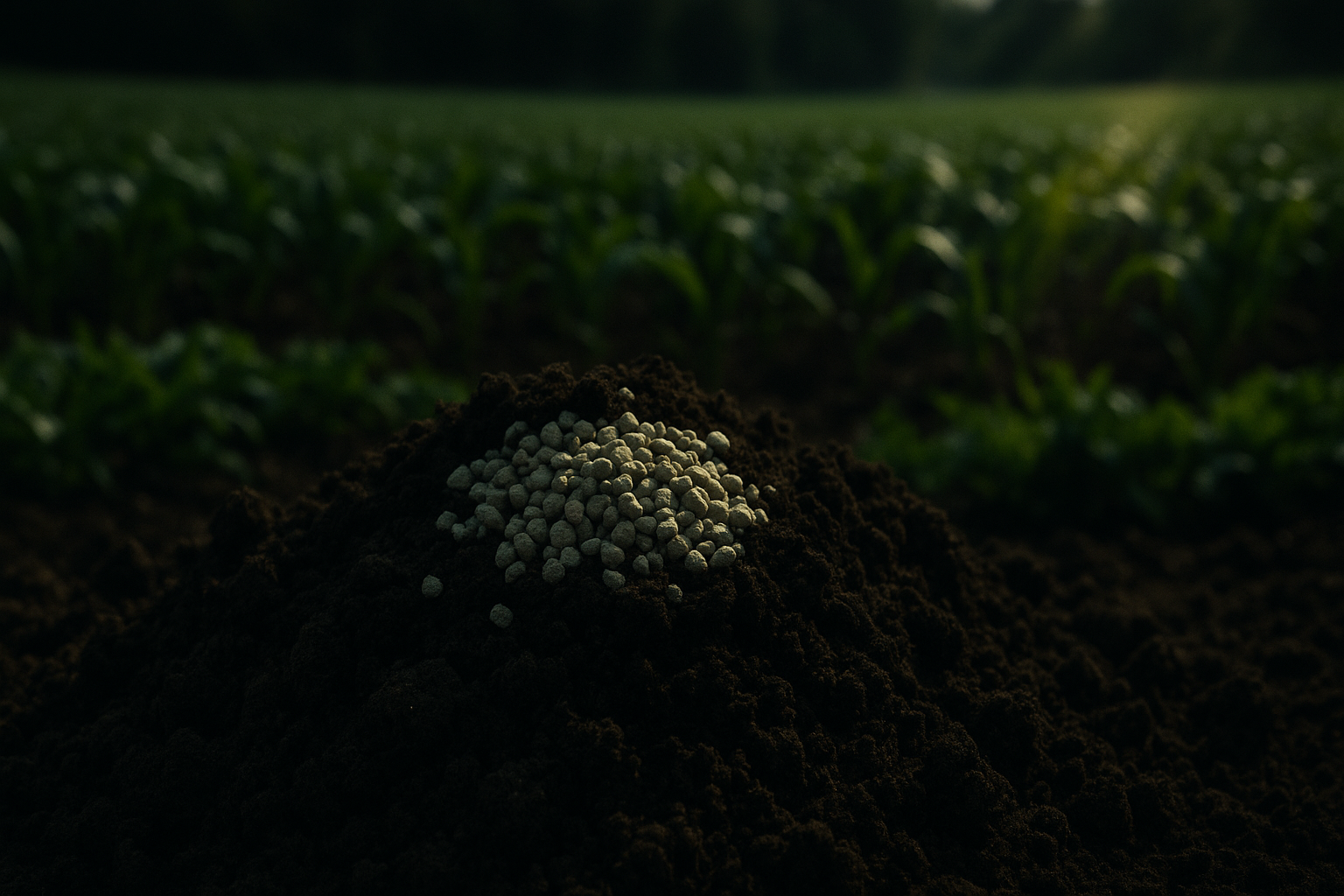
Natural Clinoptilolite Zeolite for Composting
Nitrogen Loss and Maturation Stalling in High-Temperature Fermentation
The greatest loss at composting sites occurs during the thermophilic fermentation stage, that is, the primary maturation period when the pile temperature rises to 55-70°C. In this period, microorganisms rapidly break down proteins and urea, generating large amounts of ammonium (NH₄⁺); when the internal pile pH rises to 8.5-9.0, the ammonium shifts toward volatile ammonia (NH₃) at equilibrium and escapes directly into the atmosphere. On site this is called "early nitrogen loss," and it is common for 30-50% of the feedstock total nitrogen (TN) to be lost at this stage.
As much as nitrogen escapes, the C/N ratio becomes abnormally high, maturation stalls, and the fertilizer efficacy of the finished compost drops. At the same time, the volatilized ammonia is a direct cause of odor complaints and irritant odor in the workplace. Increasing the number of turnings improves aerobic decomposition, but there is a dilemma in that ammonia emission accelerates with each agitation.
With its ammonium-selective adsorption capacity of CEC 1.6-2.0 meq/g, natural clinoptilolite zeolite is a maturation aid that captures NH₄⁺ at the pre-volatilization stage onto the cation sites within its structure, mitigating this "early nitrogen loss."
Key Properties
| Item | Value | Significance for Composting |
|---|---|---|
| Clinoptilolite purity | 97.0% | Minimizes impurities |
| CEC | 1.6-2.0 meq/g | Captures and conserves ammonium |
| Specific surface area | 40.0 m²/g | Secures contact area |
| pH stability range | 3.0-10.0 | Handles the varied pH conditions of compost |
| Moisture content | Max. 10% | Assists moisture control |
| Bulk density | 720-865 kg/m³ | Improves aeration when mixed into compost |
How Clinoptilolite Works in Maturation Promotion
Nitrogen Fixation by NH₄⁺ Ion Exchange — Blocking Before Volatilization
The crystal framework of clinoptilolite is composed of negatively charged [AlO₄]·[SiO₄] tetrahedra, and the exchangeable cations (K⁺, Ca²⁺, Na⁺, Mg²⁺) that offset that charge reside in 8-membered and 10-membered ring channels of 4.0-7.0 Å in size. The hydrated ammonium ion (about 3.3 Å) easily enters these channels, and the cation-exchange selectivity sequence of clinoptilolite is generally in the order Cs⁺ > NH₄⁺ > K⁺ > Na⁺ > Ca²⁺ > Mg²⁺, preferentially capturing NH₄⁺ over the K⁺, Ca²⁺, and Na⁺ common in compost piles. Therefore, NH₄⁺ just generated in the fermenting pile is fixed at framework sites before it volatilizes into NH₃ gas due to rising pH, physicochemically blocking the "early nitrogen loss."
Quantitatively, the ammonium ion-exchange capacity of natural clinoptilolite is reported in batch experiments at CEC 1.6-2.0 meq/g, equivalent to about 16-21 mg-NH₄⁺/g on a mass-specific NH₄⁺ adsorption basis. That is, adding one tonne of zeolite arithmetically secures the capacity to temporarily fix about 16-21 kg of ammoniacal nitrogen, which is the same order of magnitude as the amount of nitrogen that would escape via volatilization during the primary maturation of livestock manure compost. However, the actual amount fixed depends on the concentration of competing cations such as K⁺ and Ca²⁺ in the pile, contact time, particle size (contact surface area), and pH, so the above value should be interpreted as a reference for the upper-limit capacity.
Maintaining Aerobic Microbial Activity — Mitigating Ammonia Toxicity
The NH₄⁺/NH₃ equilibrium depends strongly on pH and temperature. In the thermophilic period, where the pile pH rises to 8.5-9.0 and the temperature reaches 55-70°C, the equilibrium shifts greatly toward free ammonia (NH₃), accelerating volatilization. When zeolite binds NH₄⁺ to its framework and lowers the solution-phase ammonium concentration, the NH₃ ⇌ NH₄⁺ equilibrium is pulled toward the non-volatile side according to Le Chatelier's principle, so volatilization itself decreases. At the same time, high concentrations of free ammonia are toxic to the thermophilic bacteria and actinomycetes responsible for maturation; when the ammonia concentration drops, the microbial community is stably maintained and organic-matter decomposition proceeds without interruption. In other words, zeolite serves a dual role of capturing nitrogen while also promoting the maturation itself.
Moisture and Aeration Buffering
The porous structure with a specific surface area of 40.0 m²/g and a pore volume of about 50% acts as a buffer that absorbs excess moisture and releases it on drying, in livestock manure and food-waste feedstocks that readily exceed 65% moisture and become anaerobic. Mixing in the granular product with a bulk density of 720-865 kg/m³ secures void space within the pile, reducing the occurrence of anaerobic dead zones and making aerobic decomposition more uniform.
Suitable Particle Sizes by Use
| Product Name | Mesh | Particle Size | Application Method |
|---|---|---|---|
| KMI 100- mesh (Powder) | 100 mesh or finer | <150μm | Direct mixing with compost feedstock, surface dressing |
| KMI 14×40 | 14×40 mesh | 0.4-1.4mm | Compost pile blending material, for structure improvement |
For maturation promotion, KMI 100 mesh or finer powder, which mixes immediately with the feedstock and has a wide contact surface, is the first choice for ammonium capture. For livestock manure and sludge compost that compacts easily and tends to block aeration, mix in KMI 14×40 mesh (0.4-1.4mm) granules together to secure void space.
Research Basis
In a study applying natural zeolite to pig-manure composting, Bernal and colleagues reported that zeolite addition significantly reduced nitrogen loss from ammonia volatilization during the composting process (Bernal, M.P. et al., Bioresource Technology, 1993, source). This is an early, central piece of evidence showing that NH₄⁺ ion-exchange fixation directly contributes to nitrogen conservation in the maturation stage.
In a study composting livestock manure blended with clinoptilolite, Subova and colleagues confirmed that the zeolite-amended group showed improved nitrogen conservation and quality indicators in the finished compost compared with the control (Subova, E. et al., Agriculture, 2021, source). This is the case most directly corresponding to this page's application method of blending granular zeolite into manure compost.
A review synthesizing the composting effects of zeolite and biochar concludes that zeolite is consistently reported as an additive that, through ammonium adsorption, reduces ammonia emission (odor) and nitrogen loss and stabilizes the maturation process (Journal of Cleaner Production, 2021, source). As earlier research, cases of applying natural clinoptilolite to animal manure to directly reduce ammonia emission have been reported since the 1970s (Miner et al., Clays and Clay Minerals, 1977, source), one of the oldest pieces of evidence for using zeolite in manure and compost ammonia control.
As quantitative evidence for adsorption capacity, studies addressing ammonium removal from sludge and aqueous solution with natural clinoptilolite report an adsorption capacity of about 16-21 mg-NH₄⁺/g under batch conditions (Molecules, 2021, source). The 1.6-2.0 meq/g and 16-21 mg/g criteria presented on this page are based on this measured range. At the soil and fertilization stage as well, He and colleagues reported that clinoptilolite reduced ammonia volatilization (He, Z.L. et al., Plant and Soil, 2002, source), so the same mechanism continues through to nitrogen conservation after applying finished compost.
Application Examples — Particle Size, Dosage, Operating Conditions
Livestock Manure Compost (Pig, Cattle, Poultry)
These are the feedstocks with the most severe odor and nitrogen loss. The standard is to mix in 5-10% (weight basis) of the feedstock dry matter together with moisture-control agents such as sawdust and rice hulls at the initial stage. For particle size, using powder (100 mesh or finer) and 14×40 granules together at roughly a 7:3 ratio captures both ammonium and secures aeration at the same time. Turn the pile once or twice a week so that the thermophilic period (55-65°C) is maintained for 7 days or more; with zeolite present, the ammonia emission peak during agitation is more gradual.
Food-Waste and Organic By-Product Compost
These are feedstocks that readily exceed 70% moisture and have a strong odor. Add 5-8%, mainly as powder, and top-dressing a thin layer of powder onto the pile surface additionally captures the ammonia escaping from the surface layer. The moisture-absorption buffering of zeolite helps to set the initial moisture content to around 60%.
Finished Compost Quality and Slow-Release Nitrogen
The NH₄⁺ fixed to the framework during maturation is gradually released according to the nutrient demand of plant roots and microbial activity when the finished compost is applied to the soil. As a result, zeolite serves as a bridge that "stores" nitrogen during the maturation stage and "releases" it during the fertilization stage, and since it is an OMRI Listed (KMI-10365, NOP Allowed) material, it can be used directly in the manufacture of compost for organic agriculture.
Certification Information
This material is OMRI Listed (KMI-10365, NOP Allowed) and can be used directly in the manufacture of compost for organic agriculture. The mineral itself is clinoptilolite, which the U.S. FDA generally recognizes as safe (GRAS), listed under 21 CFR 182.2729 for general use (a separate provision, 21 CFR 582.2729, applies to use as an ingestible additive in animal feed). It is a natural zeolite with low crystalline silica content and belongs to a mineral group for which there is no evidence of human carcinogenicity under the IARC classification. The composting application on this page is for soil and compost material use, not for direct food or feed ingestion.
Notes
Composting performance can vary depending on feedstock composition, moisture content, agitation frequency, aeration conditions, temperature, maturation period, and so on. Zeolite does not replace composting itself; rather, it is an auxiliary material that helps manage the composting process more stably. At sites where odor complaints are a major concern, it is advisable to scale up after a trial application.
Frequently Asked Questions (FAQ)
Q. Doesn't adding zeolite slow down the maturation (fermentation) itself?
It often works the opposite way. High concentrations of free ammonia are toxic to the thermophilic microorganisms responsible for maturation; when zeolite captures NH₄⁺ and lowers the ammonia concentration, microbial activity is maintained and decomposition does not stall. However, if you greatly exceed the recommended range (5-10%) so that the mineral fraction becomes excessive, the heat output can be diluted, so manage the dosage as a ratio relative to the feedstock.
Q. Is it better to add it all at once in the early maturation stage, or to split it in at each turning?
Since the period of greatest nitrogen loss is the early thermophilic stage of fermentation, adding the full amount during the initial mixing is most effective for nitrogen conservation. However, if an ammonia odor keeps rising from the pile surface, you can complement this by top-dressing additional powder onto the surface layer at turning to capture surface volatilization.
Q. Can the zeolite mixed into the finished compost go directly into the soil?
Yes. Natural clinoptilolite is a mineral also used as a soil amendment, and it is a U.S. FDA GRAS (general use, 21 CFR 182.2729) and OMRI Listed (KMI-10365) material. The ammonium held within the framework during maturation is released slowly after soil application according to the nutrient demand of plant roots, so finished compost containing zeolite is added to the soil in a form with improved nitrogen retention and water-holding capacity. In other words, there is no need to separately screen the compost or remove the zeolite.
Q. How much should be added, and how much nitrogen can it capture?
The standard dosage is 5-10% (weight basis) of the feedstock dry matter. The ammonium adsorption capacity of natural clinoptilolite is CEC 1.6-2.0 meq/g, about 16-21 mg-NH₄⁺/g, so arithmetically it secures the capacity to temporarily fix about 16-21 kg of ammoniacal nitrogen per tonne of zeolite. However, the actual amount fixed varies with competing cations such as K⁺ and Ca²⁺ in the pile, contact time, particle size, and pH, so treat this value as a reference for the upper-limit capacity, and for sites with severe odor and nitrogen loss it is best to adjust the ratio after a trial application.
Related Pages: Soil Amendment · Manure & Compost Odor Management · Environmental Remediation & Adsorption
science Related Papers
These are academic papers addressing zeolite applications in this field. Please refer to them when evaluating adoption.
- Application of Zeolites in Agriculture: A Review
Cataldo, E. et al. — Agronomy, 2021 - Application of Zeolite for Sustainable Agriculture: Water and Nutrient Retention
Ramesh, K. and Reddy, D.D. — Water, Air, & Soil Pollution, 2017 - Amendment of Livestock Manure with Zeolite-Clinoptilolite and Effect on Composting
Subova, E. et al. — Agriculture, 2021 - Use of natural zeolite (clinoptilolite) in the reduction of ammonia from animal wastes
Miner, J.R. et al. — Clays and Clay Minerals, 1977 - Application of natural zeolites for reduction of ammonia during composting
Bernal, M.P. et al. — Bioresource Technology, 1993 - The role of natural zeolites as soil amendments to increase crop yield and nutrient efficiency
Jarosz, R. et al. — Applied Sciences, 2022
The papers above are reference material, and actual application requires separate review tailored to on-site conditions.