Zeolite for Radioactive Contamination Management
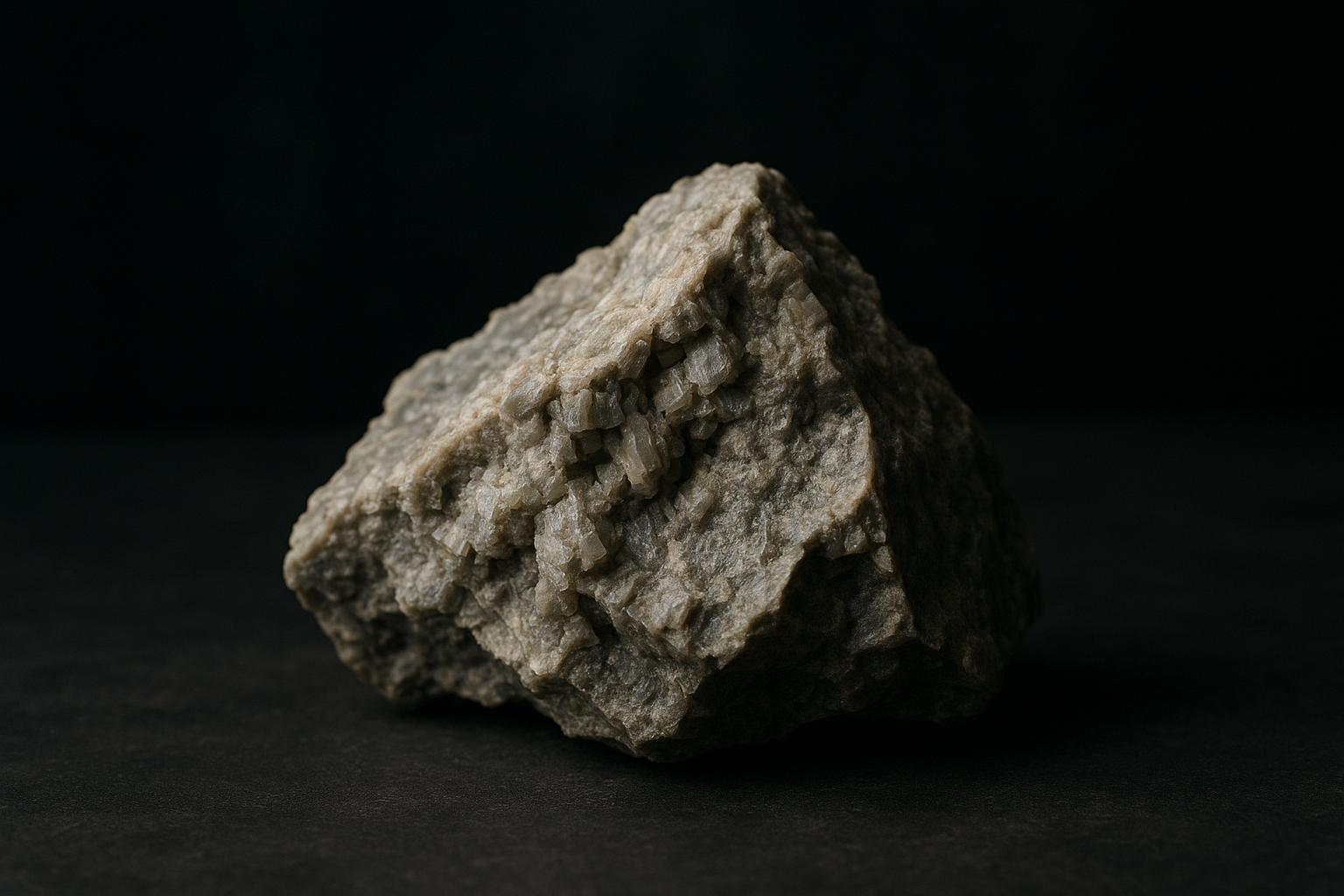
Natural clinoptilolite (CEC 1.6–2.0 meq/g, 97% purity) selectively exchanges low-hydration-energy Cs⁺ even in effluents where Na⁺ is present at hundreds to thousands of times its concentration. In practice, the UK's Sellafield SIXEP plant has treated ¹³⁷Cs·⁹⁰Sr from nuclear facility effluent using clinoptilolite-packed columns since the 1980s (Dyer et al., 2018). This page organizes the particle-size, EBCT and breakthrough design, along with spent-media solidification/disposal review points, on the basis of peer-reviewed references.
Why cesium and strontium removal is difficult in radioactive contamination management
In nuclear plant operation and decommissioning, nuclear-medicine effluents, and accident-response sites, the most challenging radionuclides are cesium-137 (¹³⁷Cs, half-life about 30 years) and strontium-90 (⁹⁰Sr, half-life about 29 years). Both are highly water-soluble and remain dissolved in leachate, cooling water, and decontamination effluent, making them difficult to separate by ordinary settling and filtration alone. Moreover, real effluents contain competing cations such as Na⁺·K⁺·Ca²⁺·Mg²⁺ at hundreds to thousands of times the concentration, so ion selectivity—capturing only the trace radioactive cations selectively—becomes the core requirement for the adsorbent material. In the actual Sellafield SIXEP effluent study, clinoptilolite columns were reported to selectively extract the target radionuclides even in the presence of competing ions on the order of 7.5×10⁵ mol relative to Cs⁺ (Dyer et al., 2018).
On top of this, radiation stability—keeping the material framework from decomposing under an intense radiation field (γ-rays)—and solidification/volume-reduction (cement·vitrification) compatibility of the spent media generated after treatment are also required. The structure of natural clinoptilolite is maintained even under γ irradiation, and there are even reports that an appropriate dose of radiation modification can improve liquid nuclear-waste purification performance (Scientific Reports, 2013). Therefore, the material-selection stage must consider the radionuclide type, effluent chemistry (pH·competing-ion concentration), and disposal route together.
Removal mechanism: ion exchange and the hydration-energy hierarchy
Radionuclide removal by clinoptilolite is essentially not adsorption but ion exchange between the exchangeable cations (Na⁺·K⁺·Ca²⁺) that offset the framework's negative charge and the Cs⁺·Sr²⁺ in the effluent. In the aluminosilicate framework, the fixed negative charge generated as Al³⁺ substitutes for Si⁴⁺ sites creates cation-exchange sites, and the lower an ion's hydration energy (the easier its dehydration), the more strongly it binds. Cs⁺ has a small hydration radius and low hydration energy, so it preferentially enters sites inside the pores; thus clinoptilolite generally shows a monovalent-cation selectivity in the order of Cs⁺ > K⁺ > Na⁺, and among divalent cations a good selectivity for Sr²⁺ over Ca²⁺ (Dyer et al., 2018; Belousov et al., 2019). This selectivity hierarchy is the basis for capturing trace radionuclides even in real effluents where Na⁺·Ca²⁺ are overwhelmingly abundant.
Why clinoptilolite is considered for radionuclide removal
Based on the 4.0–7.0 Å micropores created by its aluminosilicate framework and a cation exchange capacity (CEC) of 1.6–2.0 meq/g, natural clinoptilolite relatively selectively exchanges and fixes the small-hydration-radius Cs⁺·Sr²⁺ even in environments with abundant competing ions. Cs⁺ is known to bind strongly to exchange sites inside the pores because of its low hydration energy, and this in-framework fixation property also works favorably in suppressing radionuclide leaching from the spent media. The use of this field is not recent: in 1965, Rhodes and Wilding at the US INL (then NRTS) already reported decontamination of radioactive effluent with clinoptilolite (DOI 10.2172/4579289), and in 1981 Smyth and Caporuscio organized a review applying the thermal stability and cation-exchange characteristics of clinoptilolite and mordenite to barriers for siliceous-tuff repositories.
KMIZEOLITE's natural clinoptilolite is 97% purity, mined and processed at the Amargosa Valley mine in Nevada, USA. With a specific surface area of 40.0 m²/g, pore diameter of 4.0–7.0 Å, stable pH range of 3.0–10.0, thermal stability of 700°C, and hardness of 4.0–5.0 Mohs, the framework remains stable under both acidic-to-mildly-alkaline effluent conditions and packed-column operation. However, in highly alkaline processes operated at pH above 11, as in the SIXEP case, the risk of framework silicon dissolution (degradation) increases, so a pretreatment design that adjusts the pH and contacts the column in the mildly alkaline range is recommended (Dyer et al., 2018). The inclusion of Cs⁺·Sr²⁺ in the list of exchangeable cations also provides a basis for review in this field.
Research evidence: cesium/strontium selectivity and column application
Field demonstration (Sellafield SIXEP). Dyer et al. (2018, Journal of Radioanalytical and Nuclear Chemistry) compiled operating data on how the UK's Site Ion Exchange Effluent Plant (SIXEP) at Sellafield has removed ¹³⁷Cs·⁹⁰Sr from nuclear-reprocessing effluent (fuel storage pond purge water, etc., on the order of several hundred m³/day) using natural clinoptilolite-packed columns. The laboratory 5 mL column was a scaled-down version of the full plant; to reduce edge effects, a particle size of 420–500 μm was adopted, and even at a high flow with a surface loading of about 22 m³·m⁻²·h⁻¹, a contact time with the clinoptilolite of about 8 minutes selectively captured Cs⁺·Sr²⁺ over Na⁺. This result demonstrates that the packed-column approach is a proven, practical method for radioactive-effluent purification (DOI 10.1007/s10967-018-6329-8).
Competing ions and selectivity. Faghihian et al. (1999, Applied Radiation and Isotopes) reported that natural clinoptilolite effectively removes radioactive cesium and strontium together with competing cations such as Pb²⁺·Ni²⁺·Cd²⁺·Ba²⁺, showing particularly high selectivity for Cs⁺ (DOI 10.1016/S0969-8043(98)00134-1), and Belousov et al. (2019, Minerals) quantitatively compared the Cs⁺ sorption/desorption behavior and reversibility of zeolite against glauconite, bentonite, and diatomite (DOI 10.3390/min9100625).
Modification/pretreatment effects and review. Abdel-Galil et al. (2023, Materials) reported that thermally treated natural zeolite improves Cs⁺·Sr²⁺ adsorption performance (PMC10145197), and the review by Jimenez-Reyes et al. (2021, Journal of Environmental Radioactivity) summarized how zeolites have been widely used in radioactive-waste treatment, including the Fukushima accident response (DOI 10.1016/j.jenvrad.2021.106610). On the solidification side of spent media, Komljenović et al. (2019, Journal of Hazardous Materials) quantitatively evaluated cesium immobilization by an alkali-activated slag matrix, providing a basis for the capture-to-solidification disposal route (DOI 10.1016/j.jhazmat.2019.121765).
Caution (limits of quantitative values). The adsorption capacities and distribution coefficients above depend strongly on the test effluent composition, temperature, pH, and solid-to-liquid ratio, so they must not be borrowed directly as general design values. When evaluating deployment, you must perform batch tests and column breakthrough tests with your actual effluent to obtain your own data.
KMIZEOLITE Key Properties
| Item | Value |
|---|---|
| Clinoptilolite purity | 97% |
| Cation Exchange Capacity (CEC) | 1.6–2.0 meq/g |
| Specific surface area | 40.0 m²/g |
| Pore diameter | 4.0–7.0 Å |
| Stable pH range | 3.0–10.0 |
| Hardness | 4.0–5.0 Mohs |
| Thermal stability | 700°C |
| Specific gravity | 1.89 |
| Bulk density | 45–54 lbs/ft³ |
| Certifications | OMRI KMI-10365, FDA GRAS, TSCA, EN-71-3 |
Application examples of zeolite for radioactive contamination management
Below are representative scenarios in which clinoptilolite is considered in the field of radionuclide (Cs⁺·Sr²⁺, etc.) management.
- Packed ion-exchange columns: passing cooling water, decontamination effluent, and nuclear-medicine effluent through a Fine~Coarse Granule packed bed to continuously capture Cs⁺·Sr²⁺. SIXEP is operated at around an 8-minute contact time and a surface loading of 22 m³·m⁻²·h⁻¹, which implies that the column cross-sectional area, bed height, and flow rate must be designed on an EBCT basis (Dyer et al., 2018)
- Leachate/effluent pretreatment: placing a zeolite stage ahead of downstream RO/evaporative-concentration processes to first lower the radioactivity load. Reducing the solid/ionic load with a zeolite stage has the effect of reducing the volume of downstream concentrated waste
- Contaminated-soil/sludge stabilization: mixing Powder into soil/sludge to fix Cs⁺ within the framework and suppress re-leaching by rainwater. In decontamination of farmland near Fukushima, demonstrations using wet classification combined with geomaterials (including zeolite) to reduce the volume and stabilize Cs-contaminated media have been reported (Ito et al., 2021)
- Spent-media solidification/disposal: embedding radionuclide-loaded zeolite in a cement, alkali-activated slag, or vitrification matrix for volume reduction and solidification. The cesium immobilization performance of an alkali-activated matrix was quantitatively evaluated by Komljenović et al. (2019)
- Field-applicability pilot: first performing batch tests with the actual effluent composition (pH·competing ions) to confirm the distribution coefficient (Kd), adsorption capacity, and column breakthrough point
Recommended particle size and product specifications
In radionuclide management, the particle size varies with the application method. For soil/sludge stabilization, Powder (100 mesh and finer), which increases the in-framework fixation area, is considered; for packed ion-exchange columns through which effluent passes, Fine~Coarse Granule (30×50~8×14 mesh), which balances pressure drop and contact area, is considered. The smaller the particle size, the lower the external mass-transfer resistance and the later the breakthrough, but the greater the risk of pressure drop and fines loss, so in the field the particle size is selected to match the column diameter and bed height. For reference, the SIXEP laboratory column used a 420–500 μm (about the 30×40 mesh range) particle size to suppress edge effects (Dyer et al., 2018).
The key variable in column operation is the empty-bed contact time (EBCT = packed-bed volume ÷ flow rate). If the EBCT is too short, unreacted leakage occurs; if it is excessively long, throughput drops, so the EBCT, bed height, and replacement cycle are determined by considering the Kd obtained from batch tests together with the target treated-water quality. During operation, the radioactivity concentration of the effluent is continuously monitored, and the column is replaced/regenerated before the breakthrough point is reached.
| Product line | Mesh | Particle size | Typical use |
|---|---|---|---|
| Powder | 100 mesh and finer | <150μm | Pozzolan, feed, powder adsorption |
| Fine Granule | 30×50 mesh | 0.3–0.6mm | Water treatment, filtration, soil |
| Medium Granule | 14×40 mesh | 0.4–1.4mm | Filter media, bedding, litter |
| Coarse Granule | 8×14 mesh | 1.4–2.4mm | Swimming pools, de-icing, large filtration |
| Extra Coarse | 4×8 mesh | 2.4–4.8mm | Packed beds, air scrubbers |
→ View products by mesh size · Product selection guide by application
Pilot test and field review points
When applying clinoptilolite to radioactive contamination management, the following items must always be checked together.
- Characterize the radionuclides and effluent chemistry: measure the target radionuclides (¹³⁷Cs·⁹⁰Sr, etc.) and radioactivity concentration, pH, and the concentrations of Na⁺·K⁺·Ca²⁺ competing ions
- Confirm selectivity and distribution coefficient: perform batch tests with the actual effluent composition to determine the distribution coefficient (Kd) and adsorption capacity
- Design column operation: determine the empty-bed contact time (EBCT), flow rate, breakthrough point, and replacement cycle
- Review radiation resistance and solidification: evaluate framework stability under a radiation field and the cement/vitrification solidification compatibility of the spent media
- Regulatory/disposal route: establish in advance the radioactive-waste classification of the spent zeolite and the licensing/disposal route (compliance with nuclear safety regulations)
- Specialized review first: handling radioactive materials is subject to licensing and permits, so nuclear/radiation specialized engineering review must always come first
→ View TDS (Technical Data Sheet) · View MSDS (Safety Data Sheet)
Radioactive Contamination Management FAQ
Does clinoptilolite actually remove cesium and strontium?
Yes. Numerous studies report that natural clinoptilolite captures radioactive cesium (Cs⁺) and strontium (Sr²⁺) by ion exchange. Faghihian et al. (1999) confirmed high selectivity for Cs⁺ even in the presence of competing cations, and field applications including the Fukushima accident response have been documented (Jimenez-Reyes et al., 2021). However, real-world performance depends strongly on effluent pH and competing-ion concentrations, so a pilot test with your actual effluent composition is required before deployment.
Is selectivity maintained even with high concentrations of competing ions (Na⁺·Ca²⁺)?
Cs⁺ has a small hydration radius and low hydration energy, so it binds strongly to exchange sites inside the clinoptilolite pores (selectivity hierarchy roughly Cs⁺ > K⁺ > Na⁺), allowing relatively selective capture even in effluents with abundant competing cations. In the actual Sellafield SIXEP effluent study, clinoptilolite columns selectively extracted Cs⁺·Sr²⁺ even in the presence of large amounts of competing ions (Dyer et al., 2018). Because the degree of selectivity varies with the ion-concentration ratio and pH, it is advisable to determine the distribution coefficient (Kd) via batch tests and reflect it in the design.
Which particle size is suitable for treating radioactive effluent?
For packed ion-exchange columns, Fine~Coarse Granule (30×50~8×14 mesh) offers a balance of pressure drop and contact area; for soil/sludge stabilization, Powder (100 mesh and finer) is considered. Design the column with empty-bed contact time (EBCT) and breakthrough point together. Refer to the product selection guide by application.
How is spent zeolite that has captured radionuclides handled?
Spent zeolite is classified as radioactive waste. With the radionuclides fixed within the framework, it is typically embedded in a cement, alkali-activated slag, or vitrification matrix for volume reduction and solidification, then disposed of according to regulations. Cesium immobilization performance in alkali-activated matrices was quantitatively evaluated by Komljenović et al. (2019). Because classification and disposal routes are governed by nuclear safety regulations, specialized engineering review must always come first.
Is the framework stable even in highly alkaline effluent?
The stable pH range of natural clinoptilolite is approximately 3.0–10.0, and its structure is maintained even under γ irradiation. However, in highly alkaline processes operated at pH 11 or above, as in SIXEP, framework silicon gradually dissolves and performance can degrade, so a pretreatment design that adjusts the pH into the mildly alkaline range before contacting the column is recommended (Dyer et al., 2018).
Can I receive a test sample?
Yes. KMIZEOLITE supports the provision of samples for real application evaluation. Please leave your application purpose and desired particle size on the sample request page.
Inquiries and sample requests
If you are considering applying zeolite in the field of radioactive contamination management, please contact us through the channels below.
Notice
Applicability may vary depending on site conditions, regulations, and test results. Before actual application, a test review tailored to the site conditions must always come first. Zeolite should be understood not as a universal solution for this field, but as a material that supports existing processes.
Related pages
science Related Papers
Academic papers addressing zeolite application in this field. Please consult them when evaluating deployment.
- Use of columns of zeolite clinoptilolite in remediation of aqueous nuclear waste
Dyer, A. et al. — Journal of Radioanalytical and Nuclear Chemistry, 2018 - Use of clinoptilolite for removal of radioactive cesium, strontium and Pb2+, Ni2+, Cd2+, Ba2+
Faghihian, H. et al. — Applied Radiation and Isotopes, 1999 - Removal of Cesium and Strontium Ions by Thermally Treated Natural Zeolite
Abdel-Galil, E.A. et al. — Materials, 2023 - Cesium Sorption and Desorption on Glauconite, Bentonite, Zeolite, and Diatomite
Belousov, P.E. et al. — Minerals, 2019 - Immobilization of cesium with alkali-activated blast furnace slag
Komljenović, M. et al. — Journal of Hazardous Materials, 2019 - Radioactive waste treatments by using zeolites. A short review
Jimenez-Reyes, M. et al. — Journal of Environmental Radioactivity, 2021
The papers above are reference materials; actual application requires a separate review tailored to the site conditions.