Water-Retention Soil Zeolite
Natural clinoptilolite delivers capillary water retention through 4–7Å micropores and cation nutrient holding via a CEC of 1.6–2.0 meq/g—both within a single particle—making it a non-degrading soil amendment that simultaneously raises the plant-available water and nitrogen-holding capacity of sandy soils, decomposed granite, and artificial growing media. Starting from a dose of 2–5% in the field and 5–10% in growing media, we summarize the quantitative mechanism, process parameters, and research evidence below.
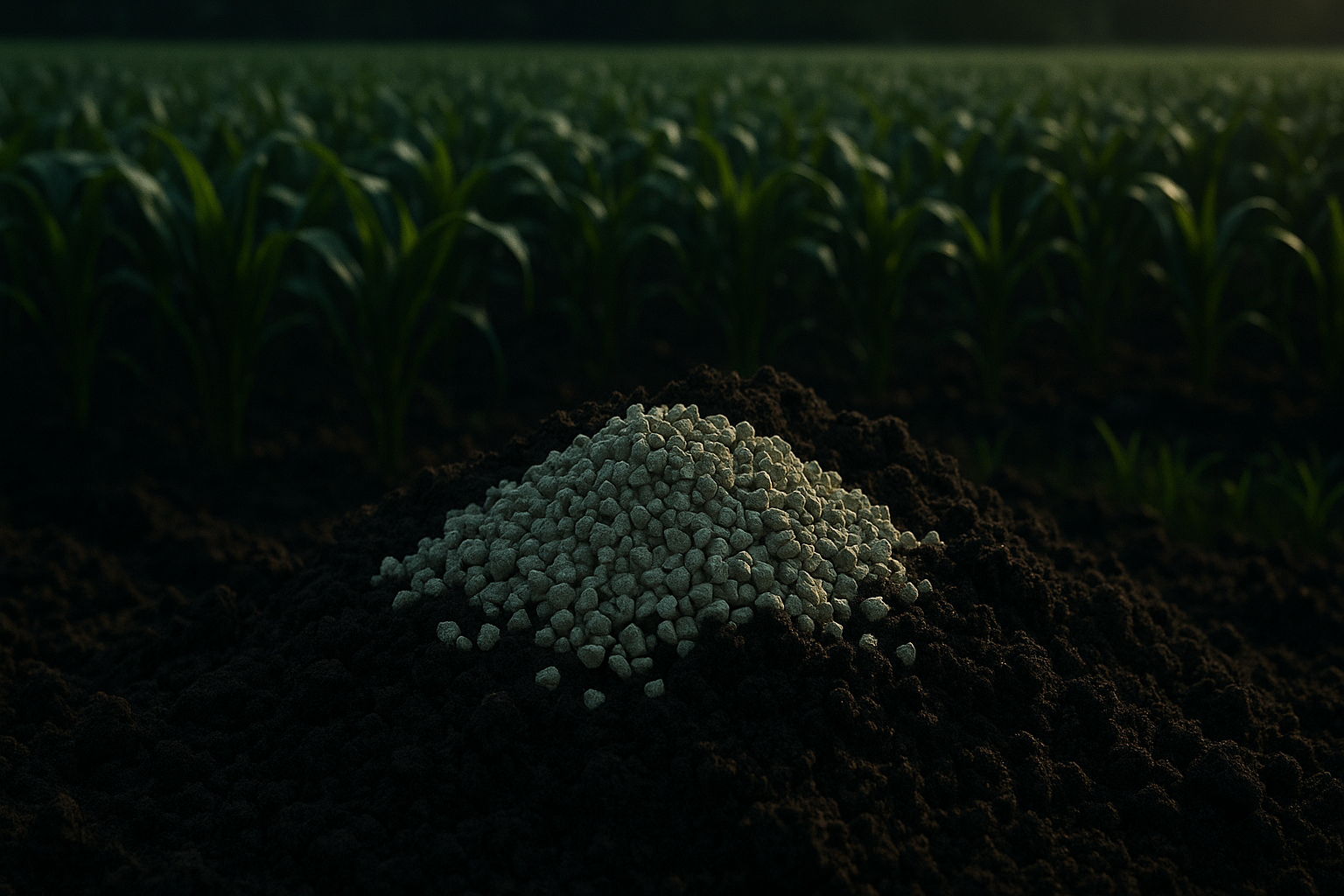
The Water-Retention Deficit of Sandy and Lightweight Soils
Sandy soils with high sand content, decomposed granite, and artificial growing media are dominated by non-capillary macropores, so water drains quickly. As gravitational water drains below the rootzone within hours of irrigation, the band of plant-available water (the moisture between field capacity and wilting point) that crops can actually use becomes narrow. The result is more frequent irrigation, and soluble nutrients such as nitrate nitrogen (NO₃⁻) and potassium (K⁺) leach away with the water, causing losses in both fertilizer efficiency and environmental load. During summer drought or high-temperature periods in greenhouses, this water-retention deficit translates directly into wilting and stalled growth.
A soil's water-holding and nutrient-holding capacities are ultimately a function of its cation exchange capacity (CEC) and fine pore space. Sandy soils often have a low CEC of under 5 cmol/kg and thus a weak ability to hold water and nutrients, so applying an amendment that raises the soil's own CEC and capillary porosity is the fundamental approach. The key is not simply to hold water, but the ability to release the held water gradually within a tension range the plant can absorb.
Why Zeolite Is Considered as a Soil Water-Retention Material
Natural clinoptilolite is a hydrated aluminosilicate with 4.0–7.0 Å micropores developed as three-dimensional channels inside the crystal. This pore-and-channel network, combining zeolitic water and adsorbed water, holds water amounting to up to about 10% of the mineral weight by capillary force, then acts as a micro-reservoir that releases it gradually as soil moisture tension rises (as it dries). Unlike ordinary clay, its framework does not collapse through heating, drying, or re-wetting cycles, allowing reversible moisture uptake and release to repeat.
Separate from the retention mechanism, a negatively charged framework with a CEC of 1.6–2.0 meq/g (a permanent negative charge created as Al³⁺ substitutes for Si⁴⁺ sites) electrostatically retains cation nutrients such as NH₄⁺, K⁺, and Ca²⁺. In other words, the dual function of holding both water (capillary retention) and nutrients (ion-exchange holding) in a single particle is the core differentiator for this use. Clinoptilolite's cation selectivity generally follows the order NH₄⁺ ≈ K⁺ > Ca²⁺ > Na⁺, retaining nitrogen (ammonium) and potassium preferentially and thus directly targeting the nitrogen and potassium leaching that is the weakness of sandy soils.
Because zeolite does not biodegrade or compact in soil, a single application maintains the pore structure across multiple growing seasons—a strength that distinguishes it from single-use, biodegradable retention materials such as perlite and coco peat. Ramesh & Reddy (2017, Water, Air, & Soil Pollution) comprehensively reviewed zeolite as a multifunctional soil amendment that raises soil water-holding and plant-available water to extend irrigation intervals and reduce nutrient leaching (DOI: 10.1007/s11270-017-3649-1). In studies targeting sandy soils and rootzones, reports have accumulated that mixing in clinoptilolite significantly reduces nitrate nitrogen leaching and improves crop growth (J. Hazardous Materials, 2011).
KMIZEOLITE's natural clinoptilolite is 97% pure and is mined and processed at a mine in Amargosa Valley, Nevada, USA. With a specific surface area of 40.0 m²/g, a stable pH range of 3.0–10.0, hardness of 4.0–5.0 Mohs, and thermal stability of 700°C, it can be considered for long-term use across acidic to alkaline soils without changes in its physical properties.
KMIZEOLITE Key Properties
| Property | Value |
|---|---|
| Clinoptilolite purity | 97% |
| Cation exchange capacity (CEC) | 1.6–2.0 meq/g |
| Specific surface area | 40.0 m²/g |
| Pore diameter | 4.0–7.0 Å |
| Stable pH range | 3.0–10.0 |
| Hardness | 4.0–5.0 Mohs |
| Thermal stability | 700°C |
| Specific gravity | 1.89 |
| Bulk density | 45–54 lbs/ft³ |
| Certifications | OMRI KMI-10365, FDA GRAS, TSCA, EN-71-3 |
Application Examples for Improving Soil Water Retention
Below are representative scenarios and specific dosing conditions for applying zeolite to soil and growing media to improve water retention. All mix ratios are starting points based on soil texture and crop, to be confirmed by a field pilot.
- Full incorporation into sandy field soil: Rotary-incorporate 30×50 mesh Fine Granule into the tillage layer (0–20 cm) at about 2–5% of soil volume (roughly 2–5 t/ha). This raises plant-available water in the rootzone of field crops prone to drought and rapid drainage, and reduces NO₃⁻ leaching.
- Potting and growing media blends: Blend 100 mesh Powder or Fine Granule at 5–10% by volume into growing media for pots and plug trays. This supplements the plant-available water and nutrient buffering capacity of artificial media. McConnell et al. (2001, HortTechnology) reported that zeolite-blended media improved nutrient retention and growth in container plants (HortTechnology, 2001).
- Sports turf and golf green rootzones: Mix in at about 5% into USGA rootzones with over 90% sand content to supplement retention and nutrient holding. Reports indicate that mixing clinoptilolite into a sandy rootzone improves water retention and nutrient holding (Agronomy Journal, 1986; Sains Tanah, 2019).
- Localized application in planting holes and transplant points: A localized approach that mixes granular zeolite into the backfill soil when transplanting seedlings or fruit trees to ease moisture stress during establishment. A cost-effective method that reduces the required amount compared with full incorporation.
- Use together with a slow-release fertilizer carrier: Charge zeolite with nutrients (e.g., NH₄⁺, K⁺) for gradual release during irrigation; by holding water and nutrients simultaneously, it reduces the number of fertilizer applications. The controlled-release behavior of clinoptilolite-based slow-release fertilizers has also been examined in the literature.
- Trial/pilot application: An approach that pre-verifies changes in mix ratio and irrigation interval by soil type and crop using a small sample.
Zeolite's Position Versus Single-Use Retention Materials
| Category | Zeolite (clinoptilolite) | Perlite | Coco peat / peat moss |
|---|---|---|---|
| Retention mechanism | Micropore capillary + ion-exchange holding | Surface/pore retention (almost no nutrient holding) | Organic-matter absorption retention + weak CEC |
| Nutrient holding (CEC) | 1.6–2.0 meq/g, NH₄⁺/K⁺ selective | Almost none | Moderate (depends on raw material and maturity) |
| Durability | Non-degrading, non-compacting; lasts multiple years | Non-degrading but no nutrient-holding function | Lost through decomposition and shrinkage over growing seasons |
| Suitable role | Simultaneous retention + nutrient-holding improvement | Aeration/drainage improvement | Organic-matter and retention reinforcement |
In practice, zeolite is commonly combined with perlite (aeration) and organic matter (retention) in a blend that balances aeration, retention, and nutrient holding.
Recommended Particle Size and Product Specifications
For soil water-retention use, 100 mesh Powder suits media blending and fertilizer coating, while 30×50 mesh Fine Granule suits field incorporation and potting soil. Using only very fine powder alone risks pore clogging, so it is best to distinguish granules and powder by purpose. Refer to the table below to select the product group that fits your purpose.
| Product group | Mesh | Particle size | Typical use |
|---|---|---|---|
| Powder | 100 mesh and finer | <150μm | Pozzolan, feed, powder adsorption |
| Fine Granule | 30×50 mesh | 0.3–0.6mm | Water treatment, filtration, soil |
| Medium Granule | 14×40 mesh | 0.4–1.4mm | Filter media, bedding, litter |
| Coarse Granule | 8×14 mesh | 1.4–2.4mm | Swimming pools, de-icing, large-scale filtration |
| Extra Coarse | 4×8 mesh | 2.4–4.8mm | Packed beds, air scrubbers |
→ View products by mesh size · Product selection guide by application
Pilot Testing and Field Review Points
When applying zeolite for soil water retention, the following items should be checked as well.
- Soil diagnosis: Before application, analyze soil texture (sandy/clayey) and current CEC and pH to determine the degree of retention deficit and the target mix ratio.
- Setting the mix ratio: Full field incorporation typically starts at 2–5% by volume and media blends at 5–10%, adjusted according to crop and rootzone depth.
- Particle size selection: Since adding powder alone in large amounts risks pore clogging and reduced aeration, favor granules (30×50 mesh) to balance retention and aeration.
- Consider nutrient charging: Freshly applied zeolite can temporarily lower initially available nutrients by adsorbing them, so consider nutrient charging (pretreatment) or adjusting fertilizer rates at basal application.
- Redesign irrigation: As retention rises, reduce and readjust irrigation frequency and per-application volume to prevent waterlogging and root oxygen deficiency.
- Confirm regulations: For organic farming, confirming the OMRI Listed status (KMI-10365) is essential.
- Durability: Zeolite does not decompose or compact in soil, so a single application maintains retention and nutrient-holding effects across multiple growing seasons. Jarosz et al. (2022, Applied Sciences) reported that zeolite soil amendment raised water and nutrient use efficiency, improving yield and nutrient efficiency in strawberry, tomato, pepper, and others (DOI: 10.3390/app12010350). Internal reference materials cite a case of roughly 70% reduction in nitrogen leaching for potted plants.
→ View TDS (product data sheet) · View MSDS (safety data sheet)
Soil Water-Retention FAQ
How does zeolite hold soil moisture?
Natural clinoptilolite has 4.0–7.0 Å micropores and channels developed in three dimensions, retaining water by capillary force and releasing it slowly as the soil dries. Its moisture content, including zeolitic water, can reach roughly up to 10% of the mineral weight, while at the same time a negatively charged framework with a CEC of 1.6–2.0 meq/g electrostatically holds NH₄⁺ and K⁺ nutrients. Holding both water and nutrients—raising plant-available water and nutrient-holding capacity simultaneously—is the core effect in sandy soil improvement.
How much do irrigation and nutrient leaching actually decrease?
The effect size varies with soil texture, crop, and mix ratio, so it cannot be generalized to a single figure. The literature reports that mixing clinoptilolite into a sandy rootzone raises water retention and plant-available water, extending irrigation intervals and significantly reducing nitrate nitrogen (NO₃⁻) leaching. Internal reference materials cite a case of roughly 70% reduction in nitrogen leaching for potted plants, but field performance must always be pre-verified through small-scale pilots.
How much should be added to sandy soil?
Full incorporation into the field tillage layer is generally 2–5% by soil volume (about 2–5 t/ha), while potting and plug growing media blends start at 5–10%. Greens and rootzones with a very high sand ratio show retention benefits even at the 5% level. The exact dose depends on soil texture, current CEC, and crop, so it is best confirmed with a small pilot trial before adoption.
Which particle size (mesh) is suitable?
100 mesh Powder suits media blending and fertilizer coating, while 30×50 mesh Fine Granule suits field incorporation and potting soil. Adding powder alone in large amounts risks pore clogging and reduced aeration, so it is better to favor granules and balance retention with aeration. Please refer to the product selection guide by application.
Does the effect last only one growing season?
No. Zeolite does not biodegrade or compact in soil, and its crystal structure is stable up to 700°C, so a single application maintains its retention and nutrient-holding structure across multiple growing seasons. However, freshly applied zeolite can temporarily lower initially available nutrients by adsorbing them, so it is advisable to adjust fertilizer rates at basal application or apply a nutrient-charging pretreatment.
Can it be used in organic farming?
Yes. KMIZEOLITE natural zeolite is OMRI Listed (KMI-10365), permitting its use as an organic soil amendment, and holds certifications including FDA GRAS (general use 21 CFR 182.2729), TSCA compliance, and EN-71-3 PASS. Please confirm on the certifications page.
Inquiries and Sample Requests
If you are considering applying zeolite in the water-retention soil field, please contact us through the channels below.
Notice
Applicability may vary depending on field conditions, regulations, and test results. Before actual application, a test review suited to the field conditions must always be conducted first. Zeolite is best understood not as a cure-all for this field, but as a material that supports existing processes.
Related Pages
science Related Papers
These are academic papers addressing zeolite application in this field. Please refer to them when reviewing adoption.
- Application of Zeolite for Sustainable Agriculture: Water and Nutrient Retention
Ramesh, K. and Reddy, D.D. — Water, Air, & Soil Pollution, 2017 - Influences of clinoptilolite on nitrate leaching and plant growth
Journal of Hazardous Materials, 2011 - Growth of Creeping Bentgrass on Clinoptilolite Zeolite-Amended Sand
Ferguson, G.A. et al. — Agronomy Journal, 1986 - Amendments on Salinity and Water Retention of Sand Base Rootzone and Turfgrass Yield
Rahayu, R. et al. — Sains Tanah, 2019 - The role of natural zeolites as soil amendments to increase crop yield and nutrient efficiency
Jarosz, R. et al. — Applied Sciences, 2022 - Application of Zeolites in Agriculture: A Review
Cataldo, E. et al. — Agronomy, 2021
The papers above are reference materials; actual application requires a separate review suited to the field conditions.