Landscaping & Tree Care
Natural clinoptilolite is a planting-hole and substrate blend-in soil amendment that uses CEC 1.6-2.0 meq/g cation exchange to hold the NH₄⁺ and K⁺ applied at planting in the root zone, while its porous structure (about 50% porosity, 40 m²/g surface area) supports water retention. Blended at 5-15% by volume into street trees, rooftop gardens, and planters, it supports early establishment and nutrient buffering.
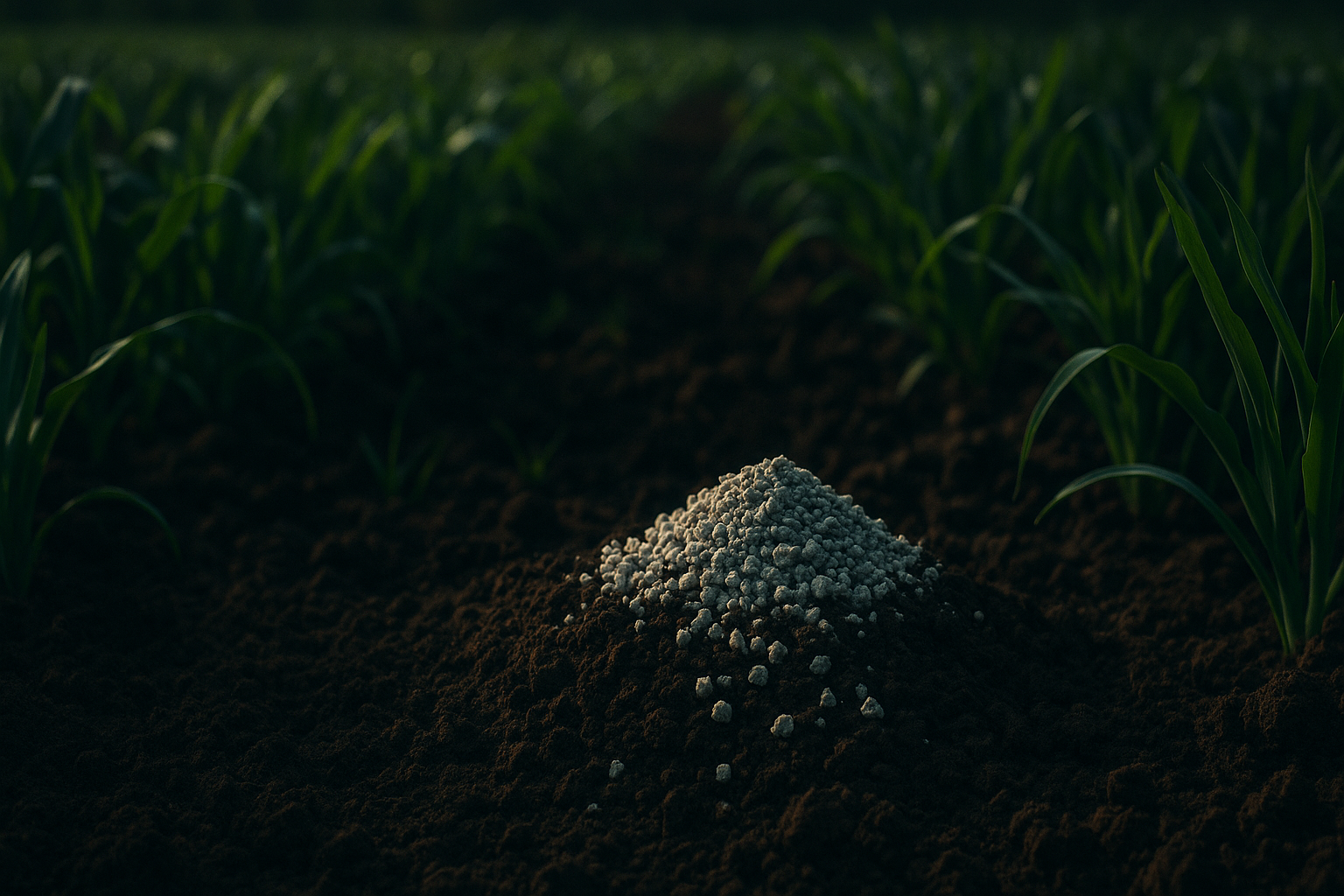
Natural Clinoptilolite Zeolite for Landscaping & Tree Care
The Special Nature of Landscape Soils
Unlike farmland, landscape sites have uneven soil conditions, and management labor is often limited after planting. In landscape environments such as street trees, park trees, rooftop gardens, and planters, once planted, the soil cannot easily be replaced, so the quality of the initial soil blend has a long-term effect on tree growth. Urban planting soils lose their pore space to compaction, nutrients escape through surface runoff and deep leaching during rainfall, and when irrigation intervals lengthen, as in street-tree planting holes, drought stress accumulates. In such environments the once-blended soil stays in that state for years, so a structurally durable material that does not collapse over time is advantageous.
Natural clinoptilolite zeolite, with cation-retention capacity of CEC 1.6-2.0 meq/g (about 150-200 cmol/kg) and physical durability of 4.0-5.0 Mohs hardness, is a material that can support long-term water and nutrient management in landscape soils. Its working mechanism combines two effects. ① Cation exchange: the negative charge created when Al substitutes for Si in the framework is neutralized by Na⁺, K⁺, and Ca²⁺, and these exchangeable cations swap places with the NH₄⁺ and K⁺ in the soil solution, holding fertilizer nutrients in the root zone. Clinoptilolite has especially high selectivity for NH₄⁺ and K⁺, making it suitable for retaining landscape-fertilization nutrients (Bhattacharyya, IJCMAS, 2020, DOI link). ② Physical water retention: the roughly 50% void volume within the crystal and the 40.0 m²/g surface area hold capillary moisture, buffering soil water between dry spells. In other words, chemical nutrient retention and physical water retention occur simultaneously in one material.
Key Properties
| Property | Value | Landscape Significance |
|---|---|---|
| CEC | 1.6-2.0 meq/g | Long-term nutrient retention |
| Surface area | 40.0 m²/g | Supports water retention |
| Hardness | 4.0-5.0 Mohs | Maintains long-term structure in soil |
| pH stability range | 3.0-10.0 | Handles diverse landscape soils |
| Bulk density | 720-865 kg/m³ | Light weight, suitable for rooftop gardens |
Suitable Particle Size for Landscaping
| Product | Mesh | Particle Size | Application Method |
|---|---|---|---|
| KMI 14×40 | 14×40 mesh | 0.4-1.4mm | Planting-hole soil mixing, flower-bed blending |
| KMI 30×50 | 30×50 mesh | 0.3-0.6mm | Planters, small flower beds, root-zone backfill |
For landscaping, 14×40 mesh (0.4-1.4mm) disperses easily when mixed into soil and is advantageous for long-term structural retention. If the particle size is too fine (e.g., powder grade), compaction and breakdown into fines can clog pores; if too coarse, the exchange surface per unit volume decreases and the nutrient-buffering effect weakens. In landscaping, 14×40 mesh is the balance point: it mixes homogeneously with soil while keeping its crystal structure intact. For cases that require tightly packing around roots, such as planters and small flower beds, use 30×50 mesh (0.3-0.6mm).
Blend-Ratio Guide by Use
| Application | Recommended Particle Size | Volume Blend Ratio | Key Point |
|---|---|---|---|
| Street-tree & park-tree planting holes | 14×40 mesh | 5-15% | Homogeneous mix with backfill soil, early-establishment nutrient buffering |
| Rooftop-garden lightweight medium | 14×40 mesh | 8-15% | Load reduction + nutrient retention in a limited medium |
| Planters & small flower beds | 30×50 mesh | 10-20% | Root-zone backfill, water retention between frequent irrigations |
| Slopes & dry roadsides | 14×40 mesh | 10-15% | Water-retention support, maintain drainage balance (avoid over-application) |
The blend ratios are general by-volume ranges and should be adjusted according to soil texture, tree species, irrigation frequency, and existing organic-matter content. In sandy soils, apply closer to the upper limit to reinforce water and nutrient retention; in clayey, poorly drained soils, apply closer to the lower limit so as not to impede drainage.
Application Examples
Street-Tree and Park-Tree Planting
Mixing 14×40 mesh zeolite at 5-15% by volume into the backfill soil of the planting hole supports the early establishment environment. The CEC 1.6-2.0 meq/g cation-exchange capacity holds the ammonium (NH₄⁺) and potassium (K⁺) of the slow-release fertilizer applied at planting at the exchange sites within the 4.0-7.0 Å pore framework, retaining nutrients even in environments with long irrigation intervals and high rainfall runoff, such as street trees. Mechanistically, the held NH₄⁺ is released again when the soil-solution concentration drops, a reversible exchange that works like a slow-release nutrient pool in the root zone; at the same time, while NH₄⁺ remains in the framework, nitrification progresses more slowly, and a reduction in conversion to NO₃⁻ and leaching is reported.
A study that jointly evaluated nitrate leaching and plant growth (Journal of Hazardous Materials, 2011, DOI link) reported that clinoptilolite application reduced nitrate leaching in soil while improving plant growth, a direction consistent with our internal data showing about a 70% reduction in nitrogen runoff from potted plants. A comprehensive review of crop yield and nutrient efficiency (Jarosz et al., Applied Sciences, 2022, DOI link) likewise summarized that natural zeolite, as a soil amendment, raises nutrient-use efficiency. However, these quantitative effects vary widely with soil, fertilization, and rainfall conditions, so at sites with inconsistent conditions such as street trees, it is safer to take them as a directional "leaching buffer" rather than as absolute figures.
Rooftop Gardens & Planters
In rooftop gardens and large planters where soil volume and load are limited, the lightweight zeolite with a bulk density of 720-865 kg/m³ reduces structural load while helping retain water and nutrients. Partially replacing an equal volume of ordinary sandy medium (about 1,400-1,600 kg/m³) with zeolite lowers the load per unit volume, which is advantageous for rooftop structures with strict load limits. McConnell et al.'s study growing container-cultivated plants in zeolite-amended substrate (HortTechnology, 2001, full-text link) showed that zeolite-amended substrate raises nutrient (especially nitrogen and potassium) retention, stabilizing nutrient availability between irrigation and fertilization. A study comparing zeolite and perlite substrates in vegetable crops (Scientia Horticulturae, 2005, DOI link) also confirmed the nutrient-retention and buffering characteristics of zeolite substrate. This has direct implications for planter landscaping, where, in a limited medium volume, nutrients flushing out all at once make it easy to swing between deficiency and excess.
Dry-Environment Landscaping
In roadside and slope landscaping where irrigation intervals can lengthen, a porous framework with 40.0 m²/g surface area and about 50% pore volume supports soil water retention and relieves drought stress. Ramesh & Reddy's review summarizing zeolite's water and nutrient-retention effects (Water, Air, & Soil Pollution, 2017, DOI link) summarized that clinoptilolite simultaneously improves soil water retention and nutrient-use efficiency. However, zeolite is a water-retention material that holds capillary and surface moisture, not a superabsorbent polymer (SAP) that absorbs hundreds of times its own volume in water. Therefore the water-retention effect is gradual, and in planting areas where drainage is critical, the key is to avoid over-application and blend it in balance with soil, sand, and organic matter.
Certification Information
This natural clinoptilolite is OMRI Listed (KMI-10365, NOP Allowed), so it can be used at landscaping and planting sites where the U.S. organic certification standard (NOP) applies. In addition, clinoptilolite is treated by the U.S. FDA as GRAS (Generally Recognized As Safe) for food and general uses, and the general-use classification other than animal-feed ingestion falls under 21 CFR 182.2729 (the animal-feed-additive ingestion use is separately under 21 CFR 582.2729). Since landscape soil improvement is a soil-mixing use rather than ingestion, certification and safety documentation can be reviewed under the NOP/OMRI and general GRAS (182.2729) standards.
Adoption Review Points
Landscaping and tree-care effects can vary with the tree species planted, soil condition, irrigation frequency, level of maintenance, seasonal conditions, and more. Checking the following before adoption can reduce trial and error.
- Check soil texture: Sandy soils gain a large benefit in water and nutrient retention, while clayey, poorly drained soils can have their aeration and drainage impaired by over-application, so lower the blend ratio.
- Link with fertilization: Since cation exchange is a mechanism that holds NH₄⁺ and K⁺, the nutrient-buffering effect is most evident when used together with slow-release and ammonium-based fertilizers.
- Homogeneous mixing: Do not clump it in one spot of the planting hole; mix it evenly throughout the entire backfill soil so it works across the whole root zone.
- Initial charging (pre-treatment): New product can temporarily adsorb soil nutrients right after planting, so sufficient base fertilizer or pre-charging of nutrients is recommended.
- Differentiated application by target: Transplanted trees, large trees, flower beds, and rooftop gardens differ in load, drainage, and irrigation conditions, so do not apply the same blend ratio uniformly.
Frequently Asked Questions (FAQ)
Q. How much zeolite should be mixed into street-tree and park-tree planting holes?
It is common to mix 14×40 mesh (0.4-1.4mm) product at 5-15% by volume into the backfill soil of the planting hole. The CEC 1.6-2.0 meq/g cation exchange reduces loss of the NH₄⁺ and K⁺ applied at planting, supporting the early establishment environment. Use closer to the upper limit (about 15%) for sandy soils and closer to the lower limit (about 5%) for clayey, poorly drained soils, adjusting the ratio by tree species and irrigation frequency. It is important to mix it evenly throughout the entire backfill soil so it does not clump in one spot of the planting hole.
Q. Why is it suitable for rooftop gardens and planters?
With a bulk density of 720-865 kg/m³ it is lighter than ordinary sandy media, so it adds less structural load, and as confirmed in container-cultivation research (McConnell et al., 2001) it raises nitrogen and potassium retention in a limited medium, stabilizing nutrient availability between irrigation and fertilization. The smaller the medium volume, the easier it is to swing between deficiency and excess when nutrients flush out all at once; the zeolite's nutrient buffering reduces this fluctuation.
Q. Does it reduce the irrigation burden in dry landscaped areas?
A porous framework with 40.0 m²/g surface area and about 50% porosity holds capillary moisture, supporting soil water retention and relieving drought stress. However, zeolite is not a superabsorbent polymer (SAP) that holds hundreds of times its own volume in water; it is a water-retention material that works gradually, so in areas where drainage is critical, avoid over-application and blend it in balance with soil, sand, and organic matter.
Q. How does zeolite hold onto nutrients (fertilizer) and release them again?
The clinoptilolite framework carries a negative charge created when Al substitutes for Si, and exchangeable cations (Na⁺, K⁺, Ca²⁺) attach at these sites. The NH₄⁺ and K⁺ in the soil solution undergo reversible exchange with these sites and are held, then released again when the solution concentration drops due to root uptake. In other words, it works like a slow-release nutrient pool. Clinoptilolite has especially high selectivity for NH₄⁺ and K⁺, which is advantageous for retaining nitrogen and potassium fertilizer nutrients. Conversely, because the framework is negatively charged, anions (nitrate NO₃⁻ itself, phosphates, etc.) are not directly held in the unmodified state, so the nutrient-retention effect on this page is based on cations (NH₄⁺, K⁺).
Q. When first applied, won't it actually adsorb the soil nutrients?
New zeolite has empty exchange sites, so it can temporarily adsorb soil nutrients (especially NH₄⁺ and K⁺) right after planting. This is not a deficiency but a "charging" process; if you apply sufficient base fertilizer or pre-charge the nutrients together, it quickly reaches equilibrium and thereafter works as a buffer. It is good to factor this in when designing the early planting fertilization.
Q. Can it be used in organic-certified landscaping?
Yes. This zeolite is an OMRI Listed (KMI-10365, NOP Allowed) material, so it can be used at landscaping and planting sites where organic standards apply. Clinoptilolite is treated by the FDA as GRAS for general use (21 CFR 182.2729), and the animal-feed ingestion use is classified separately (21 CFR 582.2729). Landscape soil improvement is a soil-mixing use, not an ingestion use.
Related pages: Soil Amendment · Golf Course Turf · What Is Zeolite
science Related Research Papers
Academic papers addressing zeolite application in this field. Please refer to them when reviewing adoption.
- Application of Zeolite for Sustainable Agriculture: Water and Nutrient Retention
Ramesh, K. and Reddy, D.D. — Water, Air, & Soil Pollution, 2017 - Application of Zeolites in Agriculture: A Review
Cataldo, E. et al. — Agronomy, 2021 - Natural zeolite clinoptilolite: new way of its application in agriculture
Polat, E. et al. — Journal of Food, Agriculture & Environment, 2004 - The role of natural zeolites as soil amendments to increase crop yield and nutrient efficiency
Jarosz, R. et al. — Applied Sciences, 2022 - Zeolites and Their Potential Uses in Agriculture
Ramesh, K. et al. — Advances in Agronomy, 2011 - Substrate Nutrient Retention and Growth of Container-grown Plants in Zeolite-amended Substrates
McConnell, D.B. et al. — HortTechnology, 2001 - Influences of clinoptilolite on nitrate leaching and plant growth
Journal of Hazardous Materials, 2011 - Zeolite: A Soil Conditioner
Bhattacharyya, T. et al. — Int. J. Curr. Microbiol. Appl. Sci., 2020 - Comparison of zeolite and perlite as substrate for crisp-head lettuce
Scientia Horticulturae, 2005
The papers above are reference materials, and actual application requires separate review suited to on-site conditions.