Zeolite for Ginseng Soil Management
We organize, on a quantitative basis, a nutrient-buffering design in which natural clinoptilolite with CEC 1.6–2.0 meq/g (≈160–200 cmol/kg) is incorporated into the topsoil 15–20 cm at 1–3 t/ha during the pre-plant field stage of ginseng — capturing the ammonium and potassium that escape from sandy soil via ion exchange and buffering the salt shock of fast-acting nitrogen. Because ginseng cultivation makes disturbance impossible after transplanting, the timing, particle size, and incorporation depth of application determine the effect.
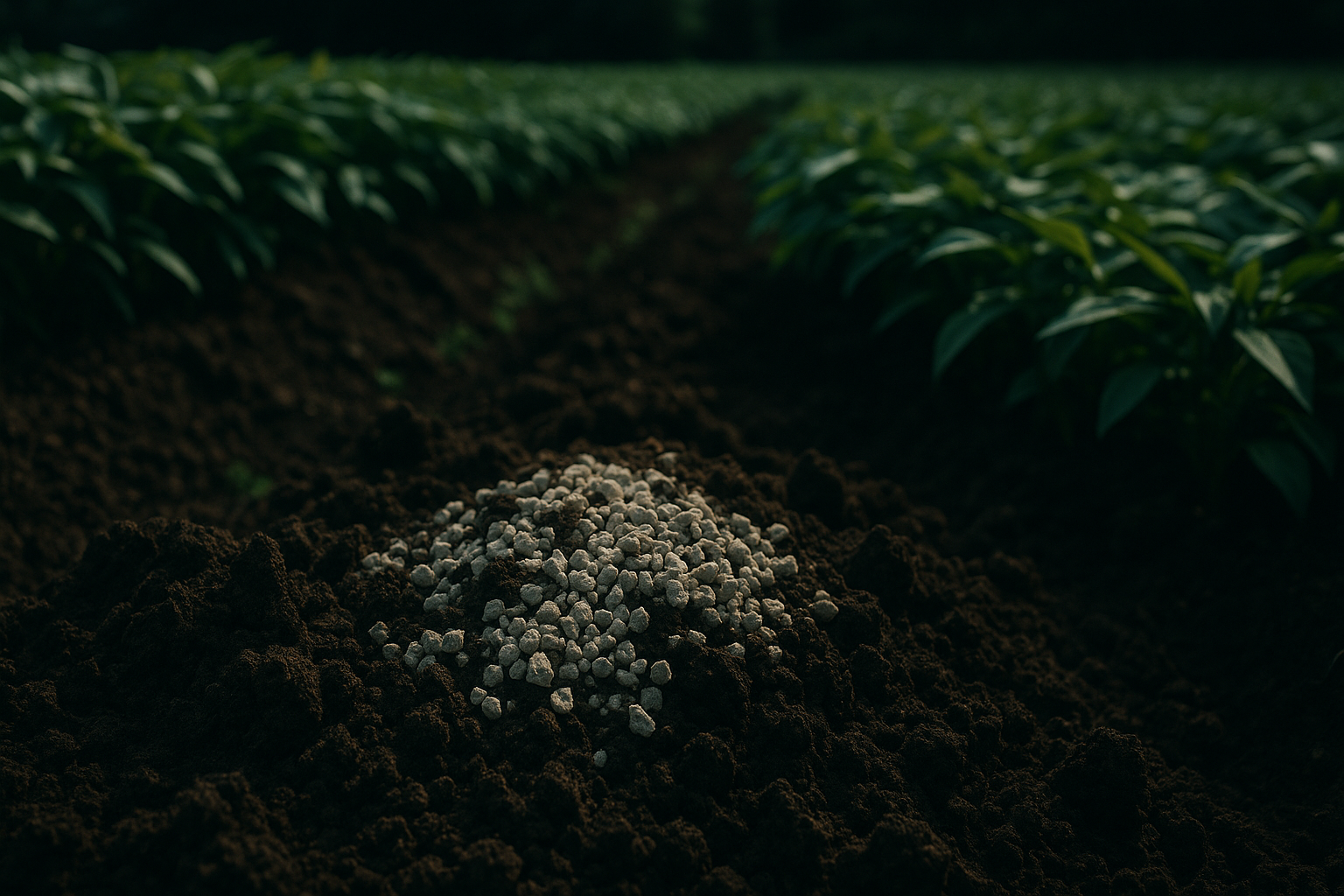
Why soil management is demanding in ginseng pre-plant fields
Ginseng (Panax ginseng) is a perennial, semi-shade crop that grows in one spot for 4–6 years. Unlike other vegetables and fruit-vegetables, once it is transplanted you cannot freely till the soil or apply top-dressing midway. That is why fixing the soil's physical properties and nutrient environment in advance during the pre-plant field (intended cultivation site) management stage governs both yield and red-ginseng grade. The problems repeatedly raised in the field fall broadly into three categories.
- Replant disorder: Ginseng suffers replant disorder so severe that a field, once cultivated, must usually be rested for more than 10 years. Salt accumulation and nutrient imbalance in the soil underlie root rot and physiological disorders.
- Salt accumulation and fertilizer hypersensitivity: Ginseng is highly sensitive to high salt concentrations and rapid nitrogen fertilization. Fast-acting nutrients that dissolve all at once readily cause leaf-tip burn (reddening) and root damage.
- Nutrient and moisture loss in sandy soil: Ginseng prefers well-drained sandy loam and clay loam, yet such soils have weak nutrient-holding capacity, so nitrogen and potassium are easily washed away by rainfall.
In other words, the core of ginseng soil management is securing, at the pre-plant field stage, the buffering capacity to "hold nutrients near the roots and release them slowly rather than letting them burst out all at once."
Why zeolite is considered for ginseng soil — the ion-exchange mechanism
Natural clinoptilolite is an aluminosilicate whose entire framework carries a permanent negative charge as aluminum substitutes for silicon sites. To neutralize this negative charge, exchangeable cations such as Na⁺·K⁺·Ca²⁺ occupy the internal pores, and when mixed into soil they ion-exchange with the ammonium (NH₄⁺) and potassium (K⁺) in the soil solution. The key point is that clinoptilolite's cation selectivity sequence runs in the order NH₄⁺ ≈ K⁺ > Ca²⁺ > Na⁺ > Mg²⁺, preferentially capturing the potassium that ginseng requires and the ammonium-nitrogen supplied by fertilization. Kalita et al. (2020), in a review, summarize clinoptilolite's CEC as 150–250 cmol/kg (≈1.5–2.5 meq/g) and report that when used together with inorganic and organic fertilizers, N·P·K leaching decreased and nutrient uptake into crop tissue was highest.
The nutrients thus retained follow a reversible equilibrium, releasing again when the soil-solution concentration drops (as the crop absorbs them or rainfall dilutes them). As a result, a "nutrient reservoir/buffer" action arises that flattens the concentration near the roots rather than releasing nutrients all at once — particularly meaningful for ginseng, which is sensitive to high salt concentrations and rapid nitrogen fertilization. However, this mechanism is limited to cations. Because the framework is negatively charged, anions such as nitrate (NO₃⁻) and phosphate cannot be captured directly by ion exchange, and the nitrate-leaching reduction described later should be understood as an indirect effect of capturing ammonium and thereby reducing the nitrogen pool that converts to nitrate.
Physically, the uniform crystal framework with a pore diameter of 4.0–7.0 Å and a high porosity of around 50% hold water molecules and nutrient ions by capillary force, supplementing the water- and nutrient-holding capacity of sandy soil, while a specific surface area of 40.0 m²/g provides exchange and adsorption surfaces. In addition, clinoptilolite retains its structure across a pH stability range of 3.0–10.0 and is not decomposed by soil microorganisms, so once applied its effect persists throughout ginseng's entire 4–6 year cultivation period — a distinction from one-time organic materials.
KMIZEOLITE's natural clinoptilolite, at 97% purity, is mined and processed at the Amargosa Valley mine in Nevada, USA. It conforms to FDA GRAS (21 CFR 182.2729) for general soil-application use and is OMRI Listed (KMI-10365), so its use can also be considered in organic ginseng cultivation.
KMIZEOLITE key properties
| Item | Value |
|---|---|
| Clinoptilolite purity | 97% |
| Cation exchange capacity (CEC) | 1.6–2.0 meq/g |
| Specific surface area | 40.0 m²/g |
| Pore diameter | 4.0–7.0 Å |
| pH stability range | 3.0–10.0 |
| Hardness | 4.0–5.0 Mohs |
| Thermal stability | 700°C |
| Specific gravity | 1.89 |
| Bulk density | 45–54 lbs/ft³ |
| Certifications | OMRI KMI-10365, FDA GRAS, TSCA, EN-71-3 |
Application examples of zeolite for ginseng soil management
Below are representative application scenarios in which zeolite is considered in ginseng pre-plant and cultivation fields. Because ginseng is difficult to disturb after transplanting, most uses concentrate on the pre-plant field preparation stage (base-fertilizer incorporation).
- Pre-plant soil incorporation type: During bed formation and rotary tilling, Powder (100 mesh) zeolite is evenly incorporated into the topsoil 15–20 cm at about 1–3 t/ha (100–300 kg per 10 a) to raise nutrient-holding capacity.
- Base-fertilizer nutrient buffer: Applied together with nitrogen/potassium base fertilizer to slow the all-at-once dissolution of fast-acting nutrients and mitigate salt shock.
- Sandy pre-plant field water-retention reinforcement: In excessively drained sandy loam, Fine Granule (30×50 mesh) is incorporated to supplement moisture- and nutrient-holding capacity.
- Compost/organic-matter mixing aid: During the pre-plant field composting stage, zeolite is mixed into the compost to reduce ammonia volatilization and odor and lower nitrogen loss.
- Small-scale pilot: Trial application to only some beds within the same field, comparing emergence rate and root development against a control plot before deciding the main dosage.
Process parameter summary
Below is a representative parameter range based on the pre-plant incorporation type. All values must be calibrated with soil-analysis (EC/pH/CEC) results and are starting points derived from general-crop evidence rather than ginseng-specific test data.
| Parameter | Recommended range | Basis / Notes |
|---|---|---|
| Dosage (Powder 100 mesh) | 1–3 t/ha (100–300 kg per 10 a) | Sandier ↑ upper limit, more clayey ↑ lower limit |
| Incorporation depth | Topsoil 15–20 cm | Ginseng main-root active layer, uniform rotary mixing |
| CEC contribution | 1.6–2.0 meq/g (≈160–200 cmol/kg) | Selective retention of NH₄⁺·K⁺ |
| Particle size selection | 100 mesh / 30×50 mesh | Full incorporation / sandy water-retention reinforcement |
| Application timing | Pre-plant field work 6–12 months before transplanting | Disturbance impossible after transplanting |
| Residual persistence | Entire 4–6 year cultivation period | Non-degrading in soil, single incorporation |
Recommended particle size and product specifications
For ginseng soil, Powder (100 mesh) with its large specific surface area is generally considered for full topsoil incorporation, while Fine Granule (30×50 mesh) is considered for adjusting the water-retention/drainage balance of sandy beds. Refer to the table below to select the product group that fits your purpose.
| Product group | Mesh | Particle size | Typical use |
|---|---|---|---|
| Powder | 100 mesh or finer | <150μm | Pozzolan, feed, powder adsorption |
| Fine Granule | 30×50 mesh | 0.3–0.6mm | Water treatment, filtration, soil |
| Medium Granule | 14×40 mesh | 0.4–1.4mm | Filter beds, litter, bedding |
| Coarse Granule | 8×14 mesh | 1.4–2.4mm | Pools, de-icing, large-scale filtration |
| Extra Coarse | 4×8 mesh | 2.4–4.8mm | Packed beds, air scrubbers |
→ View products by mesh size · Product selection guide by application
Research basis: soil nutrient retention and nitrogen loss reduction
The key to zeolite's attention in ginseng soil is its nitrogen-retention capacity. He et al. (2002, Plant and Soil) reported that when clinoptilolite was applied to calcareous sandy soil with weak nutrient-holding capacity, the soil's cation-exchange sites increased, ammonia volatilization decreased, and soil retention of ammonium-nitrogen rose (He, Z.L. et al., Plant and Soil, 2002). This result directly aligns with the goal of ginseng soil management — holding nitrogen in sandy pre-plant fields.
On the nitrogen-loss side as well, results have been reported in which nitrate (NO₃⁻) leaching decreased and plant-growth indicators improved in soil mixed with clinoptilolite (Influences of clinoptilolite on nitrate leaching and plant growth, J. Hazardous Materials, 2011). As explained earlier, the negatively charged framework cannot directly capture nitrate, so this effect is interpreted as an indirect action in which clinoptilolite retains ammonium and thereby reduces the very nitrogen pool that converts to nitrate in soil, while increased water-holding capacity slows the infiltration of leaching water during rainfall.
Ramesh and Reddy (2017, Water, Air, & Soil Pollution) summarized in a review that zeolite raises soil water-holding capacity and nutrient-use efficiency (NUE), aiding slow-release nutrient supply (Ramesh, K. & Reddy, D.D., 2017), while Jarosz et al. (2022, Applied Sciences) synthesized the mechanisms and dosage ranges by which using natural zeolite as a soil amendment improves crop yield and nutrient efficiency (Jarosz, R. et al., Applied Sciences, 2022). Kalita et al. (2020, IJCMAS) summarized clinoptilolite's NH₄⁺·K⁺ selectivity and slow-release effect, reporting that N·P·K uptake was greatest when used together with inorganic and organic fertilizers (Kalita, B. et al., IJCMAS, 2020). However, since these studies were conducted under general crop and soil conditions rather than ginseng, ginseng pre-plant fields must always be verified with an in-house pilot.
Pilot testing and on-site review points
When applying zeolite to a ginseng pre-plant field, be sure to confirm the following items together.
- Pre-plant soil diagnosis: One year before transplanting, analyze EC (electrical conductivity), pH, CEC, and salt concentration to first determine whether salt accumulation is present. Ginseng is especially vulnerable to soils with high EC.
- Dosage design: Start in the range of about 1–3 t/ha (100–300 kg per 10 a) based on Powder (100 mesh), but consider the upper limit the sandier the soil and the lower limit the heavier the soil texture.
- Incorporation depth: Mix uniformly with a rotary tiller into the topsoil 15–20 cm where ginseng roots are active, to reduce local concentration variation.
- Base-fertilizer linkage: Apply together with nitrogen/potassium base fertilizer to aim for a nutrient-buffering effect, but since ginseng is weak against over-fertilization, do not exceed the standard fertilization amount.
- Regulatory check: If organic ginseng certification is required, confirm whether the material is OMRI Listed (KMI-10365).
- Persistence: Because zeolite does not decompose in soil, once incorporated its effect is maintained throughout ginseng's 4–6 year cultivation period. However, it should be understood as a nutrient-retention/buffering aid, not an all-purpose fertilizer.
→ Check TDS (Technical Data Sheet) · Check MSDS (Material Safety Data Sheet)
Ginseng soil FAQ
Does adding zeolite to a ginseng pre-plant field solve replant disorder?
Zeolite is not a direct cure for replant disorder. However, it is considered as an auxiliary material that buffers salt accumulation and sudden nitrogen swings while supplying nutrients gradually. He et al. (2002) reported that in sandy soil, clinoptilolite increases ammonium-nitrogen retention and reduces ammonia volatilization. Because ginseng has demanding cultivation requirements, use it alongside soil sterilization, crop rotation, and drainage management, and we recommend confirming the effect with a small pilot before adoption.
Which particle size (mesh) is suitable for ginseng soil?
For full topsoil incorporation and base-fertilizer buffering, Powder (100 mesh) with its large specific surface area is generally considered, while Fine Granule (30×50 mesh) is considered for reinforcing the water-holding/drainage balance of sandy beds. Because disturbance is difficult after transplanting, incorporating the material during the pre-plant field preparation stage is key.
How much should be applied to a ginseng field?
A starting range of about 1–3 t/ha (100–300 kg per 10 a) based on Powder (100 mesh) is considered. Lean toward the upper limit the sandier the soil and toward the lower limit the more clayey it is, and it is advisable to determine the final dosage through soil EC/CEC analysis results and pilot testing.
Does zeolite also directly prevent nitrate (NO₃⁻) leaching?
No, not directly. Because the clinoptilolite framework carries a negative charge, it cannot capture the anion nitrate via ion exchange. The reported reduction in nitrate leaching is an indirect effect: (1) clinoptilolite retains NH₄⁺·K⁺ cations, reducing the nitrogen pool that converts via nitrification, and (2) increased water-holding capacity slows the infiltration of leaching water during rainfall. Therefore it should not be mistaken for a material that adsorbs nitrate-nitrogen itself, and it should be viewed together with fertilization design and irrigation management.
Can it also be used in organic ginseng cultivation?
KMIZEOLITE natural clinoptilolite is registered as OMRI Listed (KMI-10365), so its use in organic crop cultivation can be considered. However, certification requirements may vary by certifying body and year, so please verify material eligibility with your responsible certifying body before application.
Can I receive a sample for testing?
Yes, KMIZEOLITE supports sample provision for real-world application review. On the sample request page, please leave your application purpose (e.g., ginseng pre-plant soil incorporation) and desired particle size.
Inquiries and sample requests
If you are considering applying zeolite in the field of ginseng soil management, please contact us through the channels below.
Notice
Applicability may vary depending on site conditions, regulations, and test results. Before actual application, a test review suited to the site conditions must always be conducted first. Zeolite should be understood not as an all-purpose solution for the field, but as a material that supports existing processes.
Related pages
science Related Papers
These are academic papers addressing zeolite application in this field. Please refer to them when reviewing adoption.
- Clinoptilolite zeolite reduces ammonia volatilization in calcareous sandy soil
He, Z.L. et al. — Plant and Soil, 2002 - Influences of clinoptilolite on nitrate leaching and plant growth
Journal of Hazardous Materials, 2011 - Application of Zeolite for Sustainable Agriculture: Water and Nutrient Retention
Ramesh, K. and Reddy, D.D. — Water, Air, & Soil Pollution, 2017 - The role of natural zeolites as soil amendments to increase crop yield and nutrient efficiency
Jarosz, R. et al. — Applied Sciences, 2022 - Application of Zeolites in Agriculture: A Review
Cataldo, E. et al. — Agronomy, 2021 - Zeolite: A Soil Conditioner
Kalita, B., Bora, S.S. and Gogoi, B. — Int. J. Current Microbiology and Applied Sciences, 2020
The papers above are reference material; actual application requires separate review suited to site conditions.