Blog & Insights
Blog and insights on zeolite.
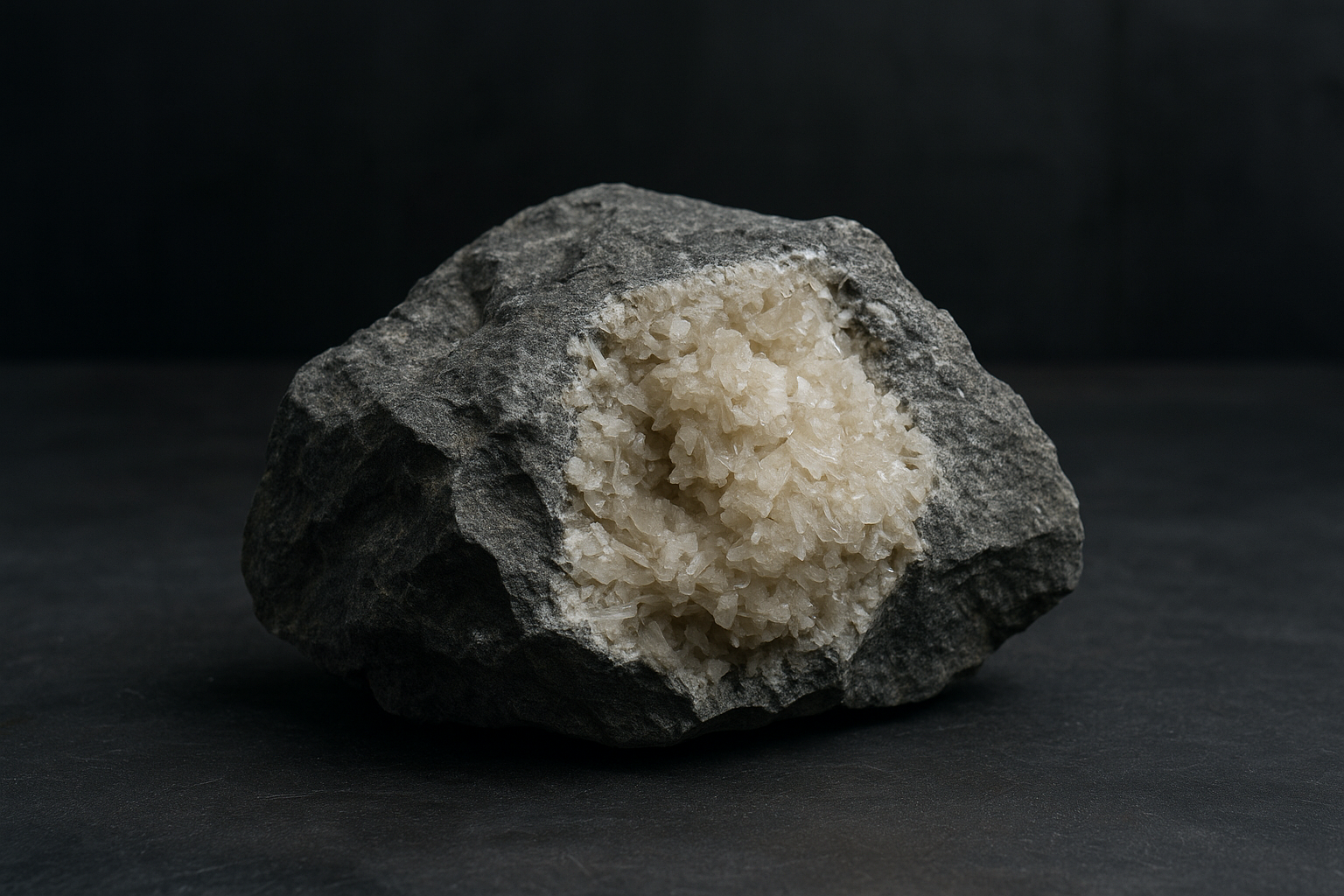
Blog
Because zeolite is a material with a very broad range of fields, product information alone is often not enough. Customers want to know, all at once, "exactly what this material is," "why it is used in particular fields," and "how to select it to suit their own application."
The KMIZEOLITE blog is an informational content hub operated to answer these questions. It covers a wide scope — from the basic concepts of KMI natural clinoptilolite (97.0% purity, CEC 1.6-2.0 meq/g, sourced from Nevada, USA) to application fields, particle-size selection, document interpretation, and pre-deployment checkpoints for the field.
Core Topics Covered in the Blog
1. Zeolite Fundamentals
- What is zeolite — the formation process of minerals of volcanic ash origin
- Characteristics of clinoptilolite — the meaning of the molecular formula Na₆[Al₆Si₃₀O₇₂]·24H₂O
- Understanding the micropore structure (4.0-7.0 Å) and CEC
- Why purity (97%) and physical properties matter — the difference from low-purity zeolite
2. Industry Application Guide
- Understanding zeolite for water treatment — sand filter media replacement, ammonium management
- How to use zeolite in agriculture and horticulture — OMRI Listed organic application
- Application points in the livestock and feed sector — FDA GRAS standard, 2% inclusion regulation
- Review points for the construction and pozzolan sector — ASTM C618, SiO₂ 66.7%
- Application ideas for consumer and pet use — EN-71-3 safety standard
3. Product Selection Guide
- How to choose mesh size and particle size — comparison of five specifications from 100 mesh to 4×8 mesh
- The difference between powder (100 mesh) and granular (30×50 to 4×8 mesh)
- How to choose the product form by application
- Pre-sample-test checklist — what to verify with a 2.2 kg sample
4. Technical Data Explained
- What is the difference between SDS and TDS — safety data sheet vs product technical data sheet
- How to interpret the CEC 1.6-2.0 meq/g figure
- The meaning of high-purity (97%) zeolite — what changes when purity is lower
- How far should you verify OMRI, FDA GRAS, and TSCA certification documents
5. Practical Content
- Items to prepare before a B2B inquiry — particle size, usage volume, process conditions
- Check points for public-sector and corporate supply — MSDS, certificates, test reports
- Basic questions for application testing
- Industry-specific inquiry templates — for water treatment / agriculture / livestock / construction
Recommended Blog Topic Suggestions
These are specific topic suggestions for planning blog content. They are categorized with SEO keywords and customer search intent in mind.
Concept Explainer (for search traffic)
- "What is zeolite? Everything about natural clinoptilolite"
- "What is CEC (cation exchange capacity) — the difference between 1.6 meq/g and 2.0 meq/g"
- "Why zeolite purity matters — the performance difference between 97% and 60%"
- "What is natural pozzolan? An explanation of the ASTM C618 standard"
Comparison (purchase decision support)
- "Activated carbon vs zeolite — the difference in adsorption principle and application"
- "Sand filter media vs zeolite filter media — pools and aquaculture compared"
- "Bentonite vs zeolite — a soil amendment selection guide"
- "Natural zeolite vs synthetic zeolite — what is the difference"
Selection Guide (practical help)
- "How to choose zeolite particle size by application — from 100 mesh to 4×8 mesh"
- "How to choose mesh size for water treatment zeolite"
- "What is the appropriate zeolite application rate for agriculture"
- "FDA GRAS regulations you must verify before adding zeolite to livestock feed"
Industry Explainer (building expertise)
- "Five criteria to review when considering zeolite for aquaculture"
- "Why zeolite is considered for ammonia management in livestock housing"
- "What to know when considering zeolite as a concrete pozzolan admixture"
- "Why zeolite is drawing attention as a pet odor-control material"
Document Interpretation (technical trust)
- "How to read an MSDS (SDS) — a guide to interpreting a zeolite safety data sheet"
- "Five items you must verify in a TDS (technical data sheet)"
- "What does OMRI Listed mean — an explanation of organic certification"
- "The safety standard implied by California Prop 65 compliance"
FAQ (conversion driver)
- "The 10 most frequently asked questions before a zeolite inquiry"
- "Information you must provide when requesting a zeolite sample"
- "A checklist before requesting a bulk quote"
- "Creating a zeolite branded product via OEM/ODM — a process guide"
The Role of the Blog
This blog is not a simple promotional board. Its core purposes are as follows.
- Securing search traffic: serving as an SEO channel through industry-specific keywords
- Customer education: improving inquiry quality by raising material understanding
- Improving product understanding: explaining differences by particle size and the meaning of each certification in advance
- Providing information before inquiry: delivering the knowledge needed for preliminary review in advance
- Building trust: demonstrating expertise through data-based content
In other words, the blog is an SEO channel for the site and, at the same time, an explanatory tool that supports sales conversion.
KMIZEOLITE Blog Operating Principles
- Fact-based explanation over exaggeration — presented on the basis of physical-property data and certification information
- Indicating both application potential and limitations together — clearly explaining the role as a "supplementary material"
- Creating content linked to technical data — including links to TDS, MSDS, and certification information
- Using a writing style that industry customers can immediately understand
- Considering SEO while minimizing promotional expressions
Recommended CTA
- See more blog posts — explore in-depth content by sector
- Review technical data together — review TDS, MSDS, and certification information together
- Inquire about a product suited to your application — consult based on the information you found on the blog
Notice
Blog content is informational guidance for information purposes. Actual applicability may vary depending on site conditions and use, and where necessary, please review technical data and sample testing together.