Zeolite for Paddy Soil Amendment
In paddy fields where flooding and reduction cause nitrogen to escape through denitrification and ammonia volatilization, negatively charged clinoptilolite retains ammonium in the plow layer by ion exchange at a CEC of 1.6–2.0 meq/g (equivalent to about 29–36 mg/g of NH₄⁺), making it a soil amendment that raises fertilizer nitrogen use efficiency. Positioned as a complement to your existing fertilization regime, this page organizes plow-layer incorporation rates, recommended particle size, and AWD rice cultivation research evidence into quantitative criteria.
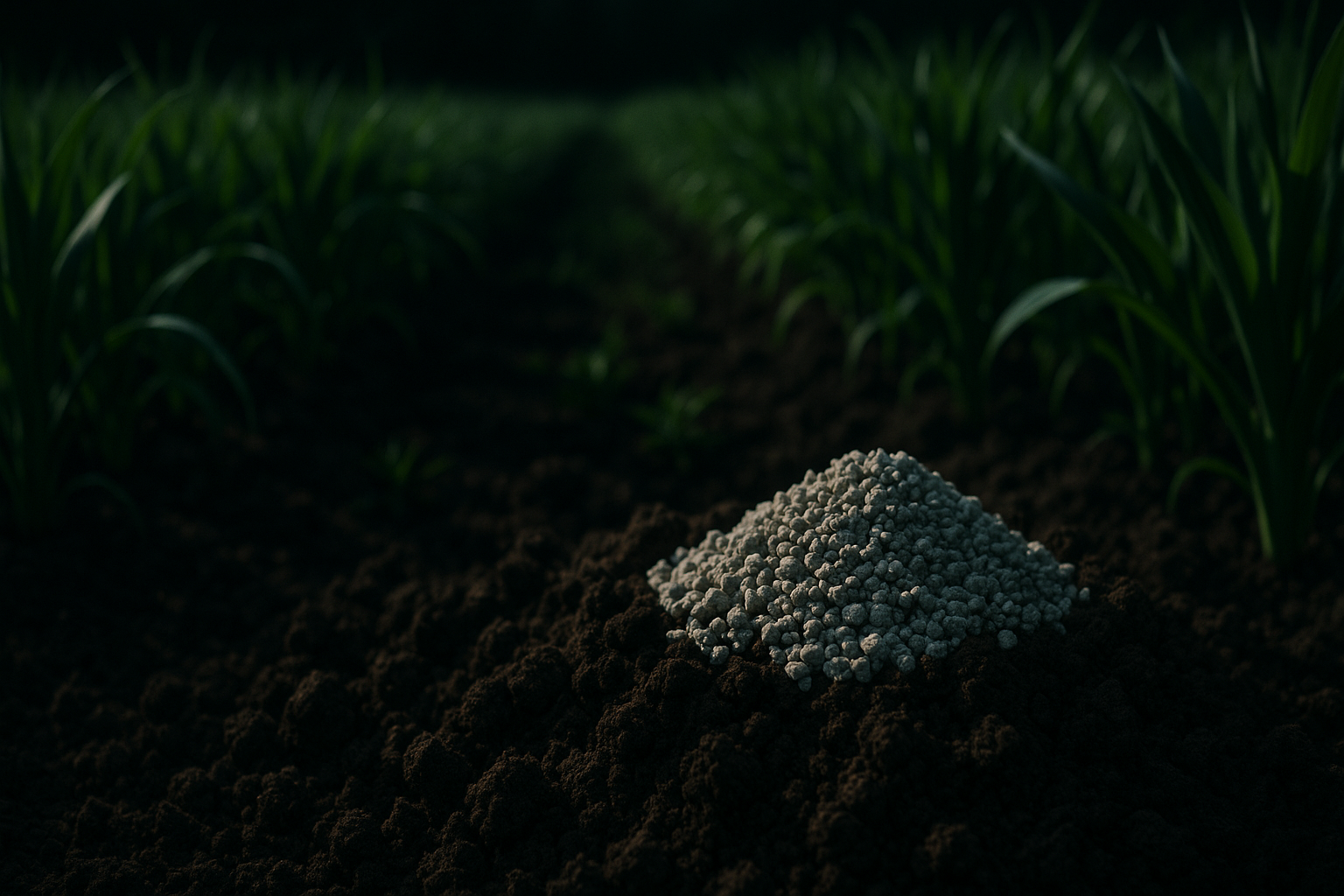
Why does nitrogen loss occur in paddy soils
A paddy field is a special soil environment that is kept flooded for most of the growing season. The submerged plow layer is cut off from oxygen and becomes a reduced state; the applied urea and ammonium-form nitrogen (NH₄⁺-N) is nitrified (to NO₃⁻) in the thin oxidized surface layer, then moves into the reduced layer where denitrification converts it to N₂ and N₂O that escape into the atmosphere, or it volatilizes as ammonia (NH₃) at the flooded surface. As a result, a substantial portion of the applied nitrogen is lost before crops can take it up, which not only raises fertilizer costs but also drives eutrophication of nearby waters and greenhouse gas emissions.
On top of this, soils with low cation exchange capacity (CEC), such as sandy paddies and reclaimed land, have weak nutrient retention and are highly dependent on topdressing, and in fields with heavy seepage, nitrogen and potassium are lost to percolating water along with irrigation water. In other words, the core task of paddy soil improvement is holding NH₄⁺ in the plow layer under flooded conditions, and because simply adjusting fertilizer rates has its limits, complementing it with a material that physically retains nutrients is worth considering.
Why zeolite is considered for paddy soils
Natural clinoptilolite carries a permanent negative charge created when Al³⁺ partially substitutes for Si⁴⁺ sites in the crystal framework. This negative charge is balanced by exchangeable cations (Na⁺, K⁺, Ca²⁺) trapped in the framework, and in the flooded, reduced environment the predominant form, the NH₄⁺ cation, swaps places with these (ion exchange) and is selectively retained (CEC 1.6–2.0 meq/g). Since 1 meq/g corresponds to 18 mg/g of NH₄⁺, this product's CEC range theoretically corresponds to a retention potential of about 29–36 mg/g of NH₄⁺. The facts that NH₄⁺ adsorption onto clinoptilolite is well described by a Langmuir isotherm and that its selectivity for ammonium is higher than for other coexisting cations were quantitatively reported in the study on ammonium ion adsorption onto natural clinoptilolite (Lebedynets et al., Adsorption Science & Technology, 2004).
The framework's 4.0–7.0 Å pores are sized just right for hydrated ammonium and potassium ions to pass in and out, so they temporarily retain the NH₄⁺ in the soil solution that spikes sharply right after fertilization and release it again when the concentration near the crop roots drops, providing a buffering, slow-release action. This retention–release is nondestructive, so NH₄⁺ held in the plow layer is delayed from escaping by both (1) the path of being nitrified→denitrified at the surface oxidized film into N₂ and N₂O and (2) the path of volatilizing as NH₃ at the flooded surface, widening the window during which crop roots can take it up and thereby raising fertilizer nitrogen use efficiency (NUE).
In addition, a specific surface area of 40.0 m²/g and a pore volume reaching about 50% complement the water-holding capacity of the plow layer, easing soil moisture fluctuations during the draining and dry-field periods when flooding water decreases. With a stable pH range of 3.0–10.0 and thermal stability up to 700°C, it does not decompose in the paddy environment of repeated flooding–draining–dry conditions and maintains its function over multiple cropping seasons. Ramesh & Reddy (Water, Air, & Soil Pollution, 2017) comprehensively summarized the mechanism by which zeolite simultaneously raises soil water and nutrient retention to improve fertilizer use efficiency and crop productivity, and the agricultural application review by Cataldo et al. (Agronomy, 2021) also supports clinoptilolite's nitrogen retention and slow-release behavior. KMIZEOLITE's natural clinoptilolite is 97% pure, mined and processed at the Amargosa Valley mine in Nevada, USA, and is OMRI Listed (KMI-10365, NOP Allowed), so it can be used as a soil amendment in organic rice cultivation. For general food-grade uses it conforms to FDA GRAS (21 CFR 182.2729), and for animal feed ingestion uses it conforms to 21 CFR 582.2729.
In fact, a study that applied zeolite to an AWD (alternate wetting and drying) rice cultivation system (Science of the Total Environment, 2022) reported that, while saving irrigation water through intermittent flooding, rice grain yield increased in the zeolite-treated plots. AWD has a large water-saving effect, but the repeated flooding–draining promotes nitrification–denitrification and can increase nitrogen loss, and an NH₄⁺ buffering material in the plow layer becomes a complement that reduces this loss. Furthermore, He, Z.L. et al. (Plant and Soil, 2002) quantitatively showed that applying clinoptilolite significantly reduces ammonia volatilization in soil, which is directly relevant to paddy environments where NH₃ loss at the flooded surface is large.
KMIZEOLITE key properties
| Item | Value |
|---|---|
| Clinoptilolite purity | 97% |
| Cation exchange capacity (CEC) | 1.6–2.0 meq/g |
| Specific surface area | 40.0 m²/g |
| Pore diameter | 4.0–7.0 Å |
| pH stability range | 3.0–10.0 |
| Hardness | 4.0–5.0 Mohs |
| Thermal stability | 700°C |
| Specific gravity | 1.89 |
| Bulk density | 45–54 lbs/ft³ |
| Certifications | OMRI KMI-10365 (NOP Allowed), FDA GRAS (food 182.2729 / feed 582.2729), TSCA, EN-71-3 |
Application examples for zeolite in paddy soil amendment
Below are representative application methods and operating criteria for which zeolite is considered in paddy soils. Dosage varies with soil conditions and should, as a rule, be confirmed through pilot trials.
- Pre-tillage broadcast and rotary incorporation: a method of evenly mixing powder to fine granules into the plow layer (0–15 cm) during the pre-transplanting plowing stage to build an NH₄⁺ retention base. It is considered first for low-CEC fields such as sandy paddies and reclaimed land.
- Simultaneous application with basal fertilizer: a method of adding zeolite together when applying the base fertilizer to buffer the volatilization and loss of early-applied nitrogen
- Coating material for coated (slow-release) nitrogen fertilizer: a method that uses 100 mesh powder as a carrier to assist stepwise nitrogen release
- Localized application (nursery bed / transplant zone): a method of concentrated placement in the nursery soil or directly beneath the transplant to assist nutrient supply during the establishment period
- Trial/pilot application: a method of dividing treated and untreated plots within the same field and comparing yield and nitrogen use efficiency over at least one cropping season
Dosage is generally considered in the range of 1–5 t/ha (about 100–500 kg per 10 ares) of plow-layer area, applying the upper limit for sandy, low-CEC soils and the lower limit for nutrient-rich clay loams. For reference, incorporating 3 t/ha into the 0–15 cm plow layer (about 1,800 t/ha per area at a bulk density of about 1.2 t/m³) corresponds to a mass ratio of about 0.17% relative to the soil, and this level adds meaningful exchange capacity to buffer the soil-solution NH₄⁺ peak that temporarily rises right after fertilization. Since zeolite does not decompose in soil, a single incorporation accumulates its effect over multiple cropping seasons, and supplemental application rates can be lowered in subsequent seasons.
Recommended particle size and product specifications
In paddy soil amendment, Powder (100 mesh), suitable for full incorporation into the plow layer, is the default, and in leaky paddies and reclaimed land where surface loss is a concern, Fine Granule (30×50 mesh), which is less likely to be washed away by rain and irrigation water, is blended in. Powder is suitable for slow-release fertilizer coating. Refer to the table below to select the product group that fits your use.
| Product group | Mesh | Particle size | Typical use |
|---|---|---|---|
| Powder | 100 mesh and finer | <150μm | Pozzolan, feed, powder adsorption |
| Fine Granule | 30×50 mesh | 0.3–0.6mm | Water treatment, filtration, soil |
| Medium Granule | 14×40 mesh | 0.4–1.4mm | Filter media, bedding, litter |
| Coarse Granule | 8×14 mesh | 1.4–2.4mm | Swimming pools, de-icing, large filtration |
| Extra Coarse | 4×8 mesh | 2.4–4.8mm | Packed beds, air scrubbers |
→ View products by mesh size · Product selection guide by application
Pilot testing and on-site review points
When applying zeolite to paddy soils, be sure to check the following items together.
- Soil diagnosis: Analyze the current CEC, pH, and texture (sandy/clay loam) of the plow layer to set the dosage range. The effect is greater for low-CEC sandy paddies and reclaimed land.
- Water management design: Because nitrogen loss pathways differ depending on the cultivation regime, such as continuous flooding, AWD (alternate wetting and drying), or dry direct seeding, set the application timing accordingly.
- Fertilization integration: Understand the existing urea/compound fertilizer rates and the split-application system (basal, additional, and panicle fertilizer) to estimate the topdressing amount that can be reduced by applying zeolite.
- Incorporation depth and loss management: Mix evenly into 0–15 cm with a rotary tiller, and in leaky paddies use granular forms in combination to reduce surface loss.
- Regulatory check: For organic rice cultivation, verify OMRI Listed (KMI-10365, NOP Allowed) status.
- Field-specific notes: Zeolite does not decompose, so a single incorporation accumulates its effect over multiple cropping seasons. The AWD rice system study (2022) reported grain yield increases together with water-saving irrigation, and He et al. (2002) reported reduced ammonia volatilization.
→ View TDS (Technical Data Sheet) · View MSDS (Safety Data Sheet)
Paddy soil amendment FAQ
Does zeolite still retain nitrogen even in a flooded paddy field?
Yes. Under flooded, reduced conditions nitrogen exists mainly as ammonium (NH₄⁺), and clinoptilolite, with its negatively charged framework, selectively retains NH₄⁺ by ion exchange (CEC 1.6–2.0 meq/g, equivalent to roughly 29–36 mg/g of NH₄⁺). Nitrogen held in this way in the plow layer buys time for crop roots to take it up before it escapes via nitrification, denitrification, or ammonia volatilization. He et al. (2002, Plant and Soil) reported that clinoptilolite significantly reduces soil ammonia volatilization, and Lebedynets et al. (2004) quantitatively showed that NH₄⁺ adsorption onto clinoptilolite is well described by a Langmuir isotherm.
How much should be applied per paddy area?
Typically a range of 1–5 t/ha (about 100–500 kg per 10 ares) is considered. Low-CEC sandy paddies and reclaimed land use the upper end, while nutrient-rich clay loams use the lower end, and the precise amount is best confirmed through soil diagnosis and pilot trials. Because it does not decompose, a single incorporation accumulates its effect over multiple cropping seasons.
Which particle size (mesh) is suitable for paddy soil?
For full incorporation into the plow layer, Powder (100 mesh) is the default, and Fine Granule (30×50 mesh) is blended in for fields where surface loss is a concern, such as leaky paddies and reclaimed land. Powder is suitable as a coating for slow-release nitrogen fertilizers. Refer to the product selection guide by application.
Does it also retain nitrate nitrogen (NO₃⁻) or phosphate?
No. Unmodified natural clinoptilolite has a negatively charged framework, so it is strong at retaining cations (NH₄⁺, K⁺) but electrostatically repels and barely holds anions such as nitrate nitrogen (NO₃⁻) or phosphate (PO₄³⁻). Fortunately, in flooded, reduced paddy soils nitrogen exists mainly as NH₄⁺, so the cation-retention action remains fully effective. To adsorb anions as well, a separate material with a surface modified using metals (e.g., Fe, La) or cationic surfactants is required, which is distinct from this product's general soil-amendment use.
Can it be used in organic rice cultivation?
Yes. KMIZEOLITE natural clinoptilolite is OMRI Listed (KMI-10365, NOP Allowed) and can be used as a soil amendment in organic rice cultivation. See the certifications page for certification details.
Can I get a sample for testing?
Yes, KMIZEOLITE supports providing samples for real-world application evaluation. On the sample request page, please leave your field area, soil texture, and desired particle size.
Inquiries and sample requests
If you are considering applying zeolite in the paddy soil amendment field, please contact us through the channels below.
Notice
Applicability may vary depending on site conditions, regulations, and test results. Before actual application, a test review suited to the site conditions must always be carried out first. Zeolite should be understood not as a cure-all for this field, but as a material that complements existing processes.
Related pages
science Related Papers
Academic papers covering zeolite application in this field. Please refer to them when evaluating adoption.
- Zeolite application increases grain yield under alternate wetting and drying rice system
Science of the Total Environment, 2022 - Clinoptilolite zeolite reduces ammonia volatilization in calcareous sandy soil
He, Z.L. et al. — Plant and Soil, 2002 - Application of Zeolite for Sustainable Agriculture: Water and Nutrient Retention
Ramesh, K. and Reddy, D.D. — Water, Air, & Soil Pollution, 2017 - Natural zeolite clinoptilolite: new way of its application in agriculture
Polat, E. et al. — Journal of Food, Agriculture & Environment, 2004 - Application of Zeolites in Agriculture: A Review
Cataldo, E. et al. — Agronomy, 2021 - Adsorption of Ammonium Ions onto a Natural Zeolite: Transcarpathian Clinoptilolite
Lebedynets, M. et al. — Adsorption Science & Technology, 2004
The papers above are reference materials, and actual application requires a separate review suited to site conditions.