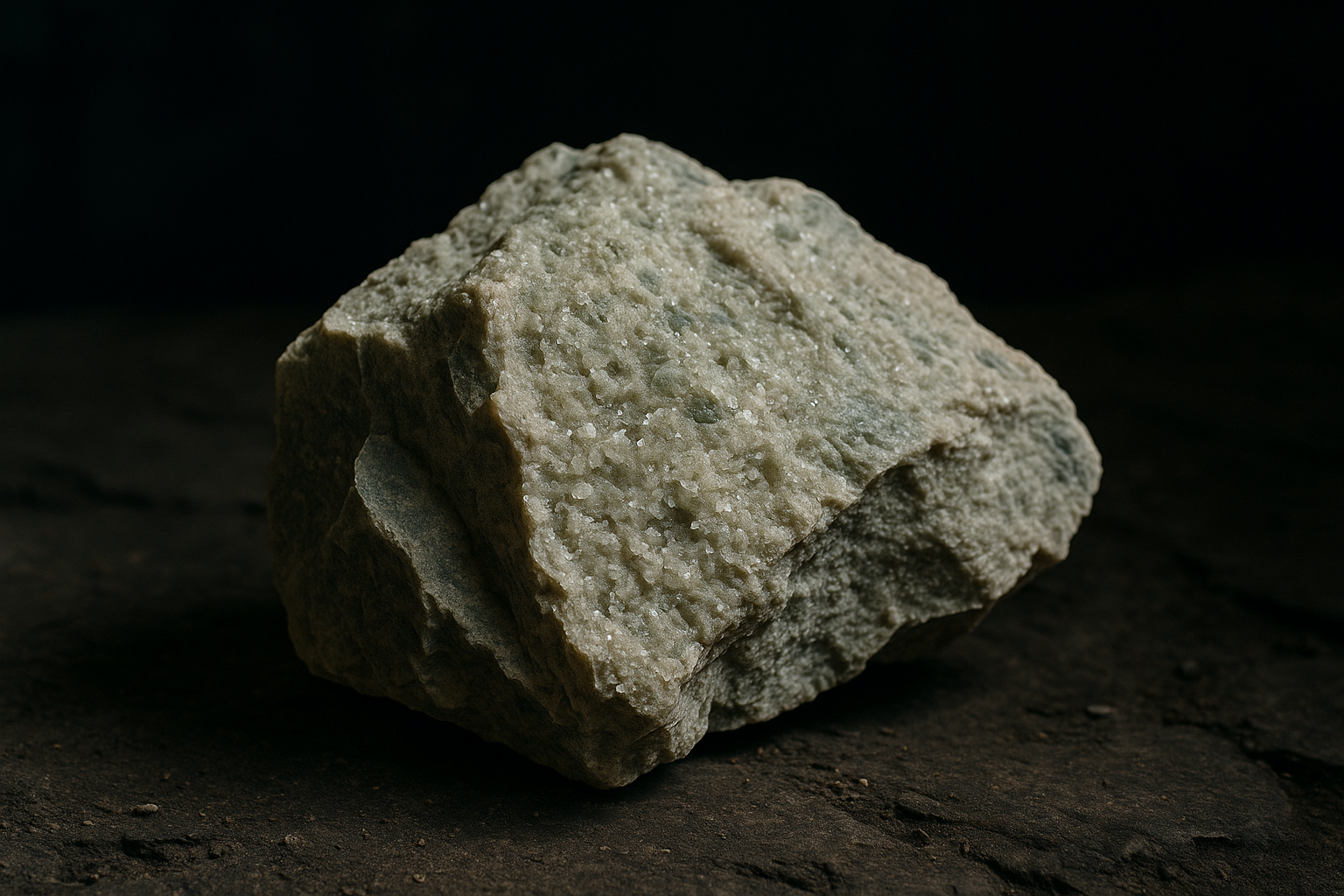
What Is a Zeolite Mine?
A zeolite mine is a site where naturally formed zeolite minerals are extracted. These minerals are primarily created through chemical reactions that occur when volcanic lava meets seawater. In South Korea, they are found mainly near Pohang, Yeongil Bay, and Gyeongju in Gyeongsangbuk-do. Zeolite possesses a regular microporous structure that gives it a high cation exchange capacity (CEC), enabling a wide range of industrial applications such as heavy metal removal and soil improvement.
Main Components and Properties of Zeolite
The main components of zeolite include mordenite and clinoptilolite, and it is composed primarily of elements such as Si, Al, Na, K, Mg, Ca, and Fe. The pore ratio of zeolite can reach up to 50% of its total volume, and its cation exchange capacity ranges from 200 to 400 cmol+/kg—more than double that of bentonite.
Impurity Content
Zeolite can contain more than 10 wt% of impurities such as quartz and feldspar. The amount of these impurities is an important factor in evaluating zeolite quality. For example, the zeolite from the Guryongpo C area in Pohang is known for its excellent cation exchange capacity.
Main Uses of Zeolite
Zeolite is used across a wide range of industries. In addition to its role as a heavy metal adsorbent, it is used as a soil moisture retainer, a concrete additive, a feed additive, and a construction material. These applications are made possible by zeolite's high CEC and porous structure.
Domestic and International Zeolite Mine Examples
One of South Korea's major zeolite mines is the Dongshin Zeolite No. 1 Mine, with reserves of approximately one million tons. The zeolite from this mine boasts high quality, with a CEC of 70 meq/100 g or higher.
The Guotou Shengshi Mine in Chengde, Hebei Province, China, also boasts large-scale reserves, demonstrating the international importance of zeolite.
Environmental Benefits of Zeolite
Zeolite can make a significant contribution to environmental remediation. Its heavy metal adsorption capacity makes it particularly effective in improving contaminated soil and water quality.
Additional information on this topic can be found on the Use of Zeolite in Environmental Remediation page.
FAQ
Where are zeolite mines mainly located?
Zeolite mines are mainly distributed near Pohang, Yeongil Bay, and Gyeongju in Gyeongsangbuk-do, South Korea.
What are the main components of zeolite?
Mordenite and clinoptilolite are the main components, containing elements such as Si, Al, Na, K, Mg, Ca, and Fe.
What are the main uses of zeolite?
It is used for heavy metal adsorption, soil improvement, construction materials, feed additives, and more.
Why is impurity content important?
Impurity content affects the quality and applicability of zeolite.
How does zeolite contribute to environmental improvement?
With its high heavy metal adsorption capacity, it helps improve contaminated soil and water quality.
Conclusion
Thanks to its unique structure and properties, zeolite has established itself as an essential resource across a wide range of industries. Its value is drawing increasing attention, particularly in fields related to environmental remediation. South Korea's diverse zeolite mines play an important role in meeting this demand.